The people
Who Joseph Smith Was
Mayor, lieutenant general, presidential candidate, and a prophet hunted by mobs. The whole 1844 record, from the Church’s own sources.
The point in one sentence
By the Church’s own record, in the spring of 1844 Joseph Smith was at once a prophet hunted by mobs and the mayor of Nauvoo, the lieutenant general of its militia, a candidate for President of the United States, and the man a secret council voted to receive as “our Prophet, Priest & King”; he said himself that he had “more to boast of than ever any man had,” and when the mob reached the jail he fired back. The one-line story of a gentle martyr leaves most of that out.
If you grew up in the Church, the picture you were probably given is a gentle one: a young prophet who saw a vision, was driven from town to town, and went “like a lamb to the slaughter” at Carthage. Those words are in scripture (D&C 135:4), and the danger he was in was real. This page shows the rest of what the Church’s own sources say about his last years.
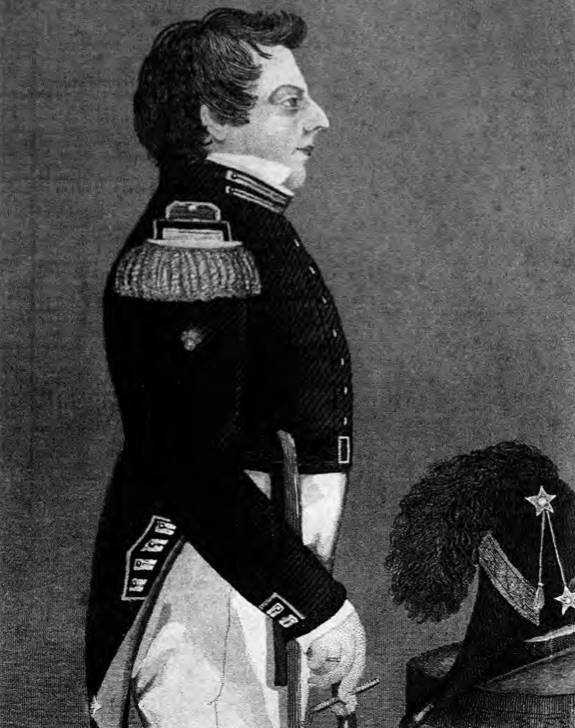
What is true on the other side
Start here, because it is the strongest part of the story and it is real. Joseph Smith was not a man who held power in a quiet time. He held it while being hunted.
- The state tried to drive his people out. On October 27, 1838, Missouri’s governor ordered that the Saints be “exterminated or driven from the State if necessary.” In 1976 Missouri’s governor rescinded it, saying it “clearly contravened the rights to life, liberty, property and religious freedom” and expressing “deep regret for the injustice and undue suffering” it caused. (Church History Topics)
- He was jailed and mobbed. The Church’s biography says “In Ohio, critics tarred and feathered Joseph,” and that he “remained imprisoned through the winter of 1838–39” in Missouri. (Church History Topics)
- He was killed while in the state’s custody. “Governor Thomas Ford had promised them protection, but they felt uneasy being jailed in a hostile town.” “Five men were indicted for the murders and stood trial in Carthage in May 1845.” “Without Latter-day Saint witnesses, the prosecuting attorney could present little credible testimony, and he dismissed all the key evidence, leading the jury to acquit all five men.” The Church adds that “some scholars” view it “as a sham trial.” (Church History Topics)
- His closest followers stood with him. He was 38 when he died. John Taylor, who printed his campaign pamphlet, took four balls in the same room (D&C 135:2), and the Church’s canon calls the two brothers’ deaths a seal on their work (D&C 135, below).
- His 1844 platform was not self-serving on its face. The Church’s page says: “Joseph also called for the abolition of slavery in the United States by the government using revenues generated from the sale of federal lands in the western United States to purchase the freedom of enslaved men and women.” It also lists closing the prison system, a national bank, and expansion “conditioned upon receiving the consent of American Indians.” (Church History Topics)
Joseph Smith, from the Liberty Jail letters, March 1839 (Doctrine and Covenants 121:1-2, canonized)
O God, where art thou? And where is the pavilion that covereth thy hiding place? How long shall thy hand be stayed, and thine eye, yea thy pure eye, behold from the eternal heavens the wrongs of thy people and of thy servants, and thine ear be penetrated with their cries?
This is the man in his own voice at his lowest point, in jail, with his people being driven out. Nothing on this page asks you to forget it.
D&C 121 on churchofjesuschrist.orgDoctrine and Covenants 135:1, the 1844 announcement of his death, later canonized; the source’s dashes are shown as ellipses
They were shot in Carthage jail, on the 27th of June, 1844, about five o’clock p.m., by an armed mob ... painted black ... of from 150 to 200 persons. Hyrum was shot first and fell calmly, exclaiming: I am a dead man! Joseph leaped from the window, and was shot dead in the attempt, exclaiming: O Lord my God! They were both shot after they were dead, in a brutal manner, and both received four balls.
The believing account at full strength: two men held in a jail under a governor’s promise of protection (the Church’s history page), two companions with them, and a mob. Everything below is added to that account, not subtracted from it.
D&C 135 on churchofjesuschrist.orgThe Church’s canon then makes its own claim about him, in the third verse: “Joseph Smith, the Prophet and Seer of the Lord, has done more, save Jesus only, for the salvation of men in this world, than any other man that ever lived in it.” (D&C 135:3) That is the standard this page measures the record against, and it is why the record matters.
The world he came from
To see why one man ended up holding so many offices, start with where the Saints had just been. They were driven out of Missouri in 1838 under the extermination order. Joseph “remained imprisoned through the winter of 1838–39.” Then “Joseph joined fellow Church members in Illinois… and then founded the city of Nauvoo, which grew quickly.”
The lesson the Saints took from Missouri is stated in the Church’s own essay: “As a result of their experience in Missouri, the Latter-day Saints created a large, state-sanctioned militia, the Nauvoo Legion, to protect themselves after they moved to Illinois.” (Gospel Topics Essay) The Illinois legislature “approved 16 December 1840” the charter that made the Legion and the city’s own court possible. (Joseph Smith Papers)
Seen from inside, each office was a wall against a mob. Seen from outside, it was one man holding the pulpit, the courtroom, the army, and a campaign. The Church’s own history page records that outside view in its own words: “in the young United States, politicians often worried minority groups could swing an election by voting as a bloc, which the early Saints often did,” and “many Americans were suspicious with the way Joseph Smith and later Brigham Young combined political and religious authority.” (Church History Topics) The dissenters who published the Nauvoo Expositor made the same complaint, and the Church’s page states it plainly: they “voiced their discontent with the practice of plural marriage, Joseph Smith’s teachings on the nature of God from his recent King Follett sermon, and his mixing of religious and civic authority in Nauvoo.”
Several other parts of this man’s story have their own pages, so they are linked here and not repeated. The seer stone, the Bainbridge trial of 1826, and what the Church’s own essay says about his treasure-seeking years are on the translation page; the Church’s essay says “As a young man during the 1820s, Joseph Smith, like others in his day, used a seer stone to look for lost objects and buried treasure.” What the Expositor printed is on the polygamy page. The Kirtland bank is on the When Prophets Were Wrong page, and the persecution that surrounded him is on the persecution page.
Five roles in the spring of 1844
Each line below is from the Joseph Smith Papers or the Church’s own history pages.
| Role | What the source says | Source |
|---|---|---|
| Prophet and Church president | “the founding prophet and first President of The Church of Jesus Christ of Latter-day Saints.” | Church History Topics |
| Mayor of Nauvoo | Appointed by the city council 19 May 1842 and served until 27 June 1844. “The mayor also served as chief justice of the municipal court.” | Joseph Smith Papers |
| Lieutenant general | “On 4 February 1841, JS was appointed lieutenant general, the commanding officer of the Nauvoo Legion.” BYU Studies puts the Legion at “twenty-five hundred” members. | Joseph Smith Papers |
| Candidate for President | Nominated by the Twelve; “over 300 Church members served electioneering missions throughout the country.” | Church History Topics |
| “Prophet, Priest & King” | “On 11 April 1844, the council voted to receive JS as ‘our Prophet, Priest & King.’” | Joseph Smith Papers |
The Church’s own history page puts the council’s vote in context; see the exhibits.
What Joseph said about himself
Campaign pamphlet, “General Smith’s Views of the Powers and Policy of the Government of the United States,” Nauvoo, 1844 (title page, transcribed)
GENERAL SMITH’S VIEWS OF THE POWERS AND POLICY OF THE GOVERNMENT of the UNITED STATES. … JOHN TAYLOR, PRINTER: NAUVOO, ILLINOIS, 1844.
The title page uses his military rank, not his religious one. The Joseph Smith Papers date the twelve-page pamphlet to 26 January–7 February 1844 and note it was printed by John Taylor, the same man who was wounded by four balls at Carthage four and a half months later. Why he ran, in his words as the Church’s campaign page quotes him: “I would not have suffered my name to have been used by my friends on any wise as president of the United States or candidate for that office if I and my friends could have had the privilege of enjoying our religious and civil rights as American citizens.”
See the title page in the Joseph Smith PapersFour weeks before he died, on May 26, 1844, Joseph preached at the Stand in Nauvoo amid escalating conflict with adversaries the Joseph Smith Papers name as Joseph H. Jackson, William Law, and Francis M. Higbee. Here is how Thomas Bullock’s notes begin, so that the famous line is read where it was said:
Thomas Bullock’s notes of Joseph Smith’s discourse, 26 May 1844, 10 A.M. (Joseph Smith Papers; the transcriber’s dashes are shown here as commas)
Prest. J. Smith read 11th Ch 2nd Corinthians. My object is to let you know that I am right here on the spot where I intend to stay. I, like Paul have been in perils, and oftener than any one in this generation, as Paul boasted, I have suffered more than Paul did. … I should be like a fish out of water if I were out of persecution, and it requires all this to keep me humble, the Lord has constituted me so curiously that I glory in persecution … I am not near so humble as if I was not persecuted. …
He opens with Paul’s own boasting chapter. Paul’s list there is of stripes and prisons: “in stripes above measure, in prisons more frequent, in deaths oft” (2 Corinthians 11:23, KJV). Joseph is setting his own persecution beside it. He says persecution keeps him humble. Then, further on in the same sermon, the boast. That is the context, and it is real.
Bullock’s notes in the Joseph Smith PapersThe same sermon, as copied into the Church’s manuscript history (Joseph Smith Papers, History, 1838–1856, volume F-1)
Come on ye prosecutors, ye false swearers; all hell boil over; ye burning mountains roll down your lava; for I will come out on the top at last. I have more to boast of than ever any man had; I am the only man that ever has been able to keep a whole church together since the days of Adam; a large majority of the whole have stood by me: neither Paul, John, Peter, nor Jesus ever did it. I boast that no man ever did such a work as me; the followers of Jesus ran away from him; the latter day saints never ran away from me yet.
Two true things at once. The sentences just before it are a defiant answer to indictments, and the ones just after it are about his clerks keeping a daily record to clear him. And the sentence itself sets his record against Peter, John, Paul, and Jesus on one measure: keeping a church together. Bullock’s own page ends at “I have more to boast of than ever any man had”; this fuller wording is from the Church’s manuscript history, volume F-1.
The page in the Joseph Smith PapersJoseph Smith on the road to Carthage, June 1844 (Doctrine and Covenants 135:4; the verse’s dash is shown as an ellipsis)
I am going like a lamb to the slaughter; but I am calm as a summer’s morning; I have a conscience void of offense towards God, and towards all men. I shall die innocent, and it shall yet be said of me ... he was murdered in cold blood.
The line the Church puts in scripture. The Church’s own Saints volume says the same words and, in the same chapter, says guns were smuggled in “in case of an attack.” Both are in the record.
D&C 135 on churchofjesuschrist.orgA man who said no one ever did such a work as he did, and who had the offices to match.
The question is not whether he was persecuted. The record says he was. The question is what else the record says.
From a Vermont farm to Carthage, 1805 to 1844
The dates are from the Joseph Smith Papers and the Church’s history pages.
Sources: Church History Topics (Joseph Smith Jr., Extermination Order, Nauvoo Expositor, 1844 Campaign); Joseph Smith Papers (Nauvoo Legion, Council of Fifty); Saints, volume 1, chapter 44
The exhibits
Church sources first, each quoted from the page itself and linked.
Joseph Smith Papers, topic: Nauvoo Legion
Church-published
What it establishes: A military rank held while also serving as mayor and Church president. The Church’s own essay says the Legion was created “to protect themselves after they moved to Illinois.”
Read it at the Joseph Smith PapersJoseph Smith Papers, Nauvoo City Officers, 1841–1844
Church-published
What it establishes: The mayor’s office was also a judgeship: “The mayor also served as chief justice of the municipal court.” Hyrum, his brother, was vice mayor.
Read it at the Joseph Smith PapersJoseph Smith Papers, topic: Council of Fifty
Church-published
What it establishes: The Church’s history page gives the believing reading in full: “Because council members anticipated that Joseph Smith would serve as both the religious and political leader of the government of the kingdom of God, they chose him … to be their ‘Prophet, Priest & King.’ Council participants understood that this action would have no immediate political consequences.” The same page calls the council “a temporal or political body created to protect the Church and provide it space to flourish.” The Joseph Smith Papers add that on 11 March the members organized, as William Clayton recounted, to “establish a Theocracy” somewhere in western North America.
Read it at the Joseph Smith PapersChurch History Topics, Council of Fifty
Church-published
What it establishes: What the council was for, in the Church’s words. Joseph, as quoted in the Church’s history article on the council minutes: “The church is a spiritual matter and a spiritual kingdom; but the kingdom which Daniel saw … was designed to be got up for the safety and salvation of the saints …” He also said of it: “It is an entire, distinct and separate government.”
Read it on churchofjesuschrist.orgChurch History Topics, Nauvoo Expositor
Church-published
What it establishes: The Church’s page gives the council’s reasons (fear of violence, honor culture, a public-nuisance reading of the law, and a First Amendment that then bound only the federal government) and ends: “Though he accepted Ford’s promise of protection and submitted to arrest, Joseph Smith never stood trial to defend his actions as mayor.” The detail of what the paper printed is on the polygamy page.
Read it on churchofjesuschrist.orgCarthage, the part the one-line version leaves out
Doctrine and Covenants 135, the official announcement, says Joseph “leaped from the window, and was shot dead in the attempt.” It does not mention a weapon. The Church’s fuller histories do, and they are not hiding it: the Church’s Saints volume says “Earlier in the day, visitors had smuggled two guns to the prisoners ... a six-shooter revolver and a single-shot pistol ... in case of an attack.” (The source’s dashes are shown as ellipses.) Here is the place, and the gun.
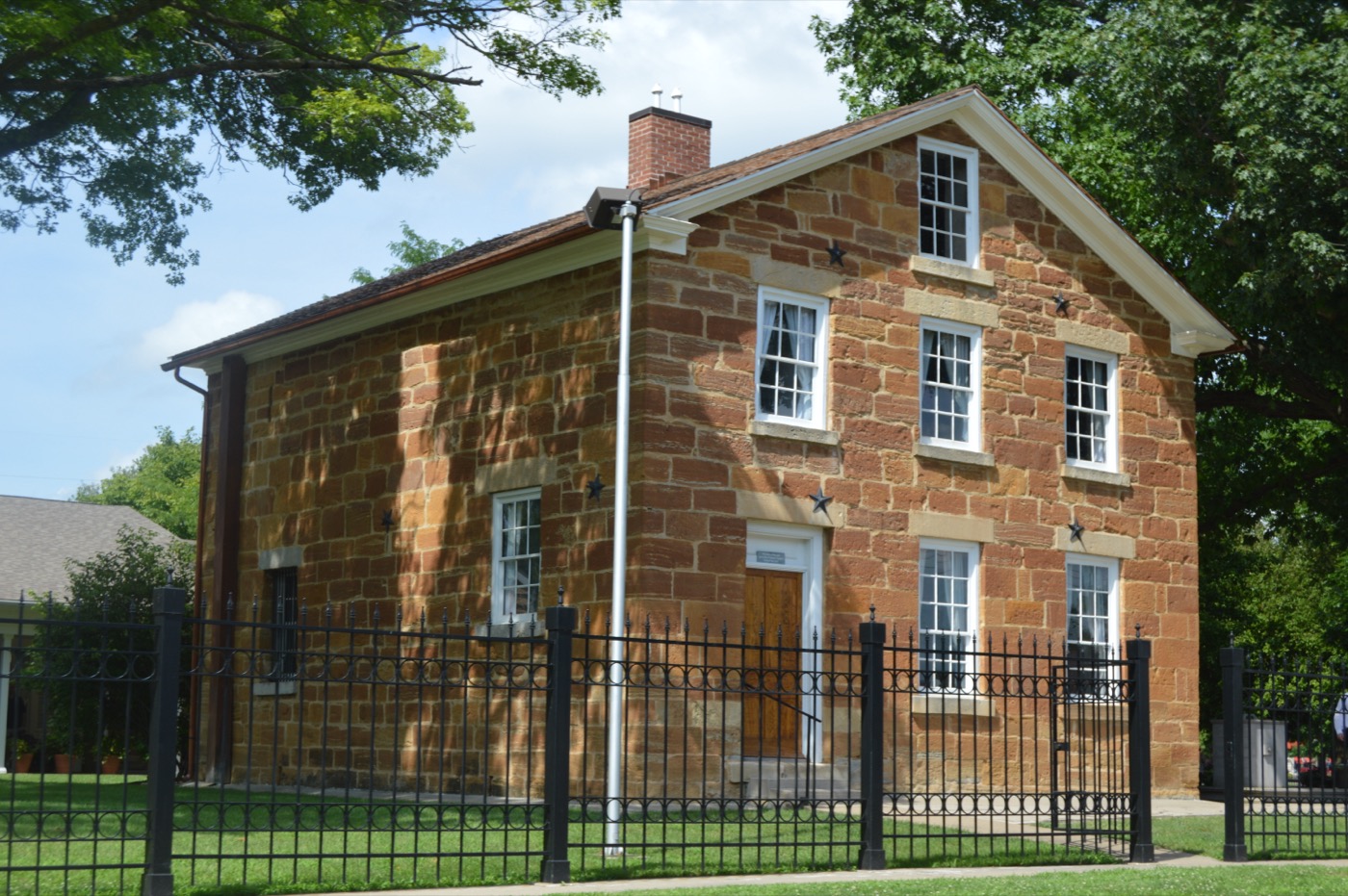
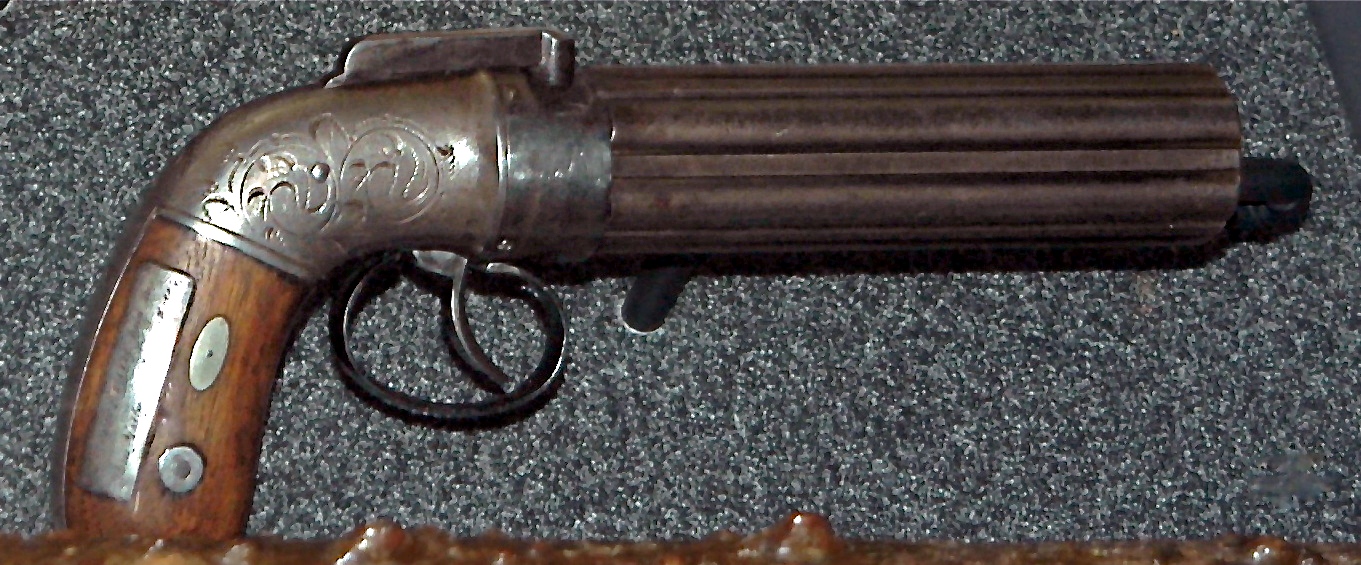
Check it yourself. Four of these six accounts say he fired; two do not mention a weapon. The accounts differ on wounds and deaths: Taylor says two or three were wounded and, he is informed, two died; the Church’s manual says three were wounded.
| Account | What it says | Counts |
|---|---|---|
| D&C 135 (announcement published 1844; later canonized) | “Joseph leaped from the window, and was shot dead in the attempt.” No weapon mentioned. | Silent |
| Willard Richards, in the Church’s manuscript history | Joseph, “opening the door two or three inches with his left hand, discharged one barrel of a six shooter (pistol) at random in the entry,” then “continued snapping his revolver… three barrels of which missed fire.” | One discharged, three misfired (the other two not described) |
| John Taylor, as quoted in BYU Studies 47:4 | “I afterwards understood that two or three were wounded by these discharges, two of whom, I am informed, died.” | Wounded two or three; “I am informed” two died |
| Church History in the Fulness of Times (Church manual) | “Joseph then stepped to the door, reached around the door casing, and discharged his six-shooter into the crowded hall.” The manual adds that only three of the six chambers fired, wounding three assailants. | Three fired, three wounded |
| Saints, vol. 1, ch. 44 (Church history) | “Gripping his six-shooter, he opened the door a few inches and fired once. More musket balls flew into the room, and Joseph fired haphazardly at the mob” and later “Joseph’s revolver misfired two or three times.” | Once, then haphazardly; misfired two or three times |
| Church History Topics, “Deaths of Joseph and Hyrum Smith” | “Joseph rushed to the window, was shot in the chest and the back, and fell to the ground below, where he was likely shot again.” No weapon mentioned. | Silent |
“Joseph killed two men at Carthage” does not hold up. The only source on this page for two deaths is John Taylor’s secondhand “I am informed”; BYU Studies says one man was said to have died later. The Church’s own manual says he wounded three assailants. BYU Studies (Lyon and Lyon) says the balls “struck three men, two in the upper arm and a third in the face. None of these wounds was immediately fatal, though one of the men was said to have died later from the injuries.” That he shot at his attackers is in the Church’s own histories. That he killed two of them is not what the Church’s manual says. Likewise, “convicted in 1826” is disputed, not established; see the translation page.
The common rebuttals
“He was a prisoner under attack. Of course he fired. Nobody should criticize that.”
Agreed, and this page does not. A man held in jail under a governor’s promise, with a mob coming up the stairs, who fires back, is doing what most people would do. The point is smaller than that. “Lamb to the slaughter” is how the story is usually told, D&C 135 does not mention the weapon, the Church’s own histories give a fuller picture, and the accounts differ on how many men were hit and whether any died. The record is bigger than the one-line version.
“The ‘king’ thing is anti-Mormon propaganda.”
It is the Church’s own Joseph Smith Papers that says the council “voted to receive JS as ‘our Prophet, Priest & King.’” Nothing here goes beyond that sentence. It is also true that the council’s stated job was protecting the Saints. The Church’s history page says the members chose him because they “anticipated that Joseph Smith would serve as both the religious and political leader of the government of the kingdom of God,” and adds that “Council participants understood that this action would have no immediate political consequences.” Both halves stand. That kingdom is understood, in the Church’s words, as a government in preparation for the millennial reign of Jesus Christ. Clayton’s word for the aim, as the Papers quote it, was “Theocracy.”
“The boast is taken out of context. He was quoting Paul.”
That is half right, and the half is shown above: he opened by reading 2 Corinthians 11 and saying “as Paul boasted.” The rest of the passage is also in his own words: he was “the only man that ever has been able to keep a whole church together since the days of Adam,” and “neither Paul, John, Peter, nor Jesus ever did it.” Paul’s chapter lists shipwrecks and beatings, and also “the care of all the churches” (2 Corinthians 11:28), and he says he will glory in his “infirmities” (11:30). Joseph’s list is of one measure, a church that never left him, and he says it is a record no one else holds. Both the setting and the claim are real, and the page prints both.
Hunted by a mob, and holding the Church, the mayor’s court, the Legion, and a candidacy.
Both are in the Church’s own sources. The one-line story tells only the first.
What this means
Put the whole record on one table. A man born poor in Vermont; a church founded at 24; a state that ordered his people exterminated or driven out, and a jail winter in Missouri; a charter, a city, and an army the Church’s own essay says was built to protect them. Then, in 1844, a mayor who was also a chief justice, a lieutenant general, a presidential candidate whose campaign pamphlet carried his military rank, the man a council voted to receive as “Prophet, Priest & King,” a sermon with the words “more to boast of than ever any man had,” a press burned, a surrender, and a jail in which the Church’s histories say he fired a smuggled revolver at the men coming through the door, and in which a mob killed him and his brother while a governor’s promise failed.
The Church’s own sources do not show a quiet martyr. They show a man of enormous power, holding the pulpit, the courtroom, the army and a campaign at once, who was also in real danger and who fired back when the mob came.
The Church’s scripture sets the standard in D&C 135:3: he “has done more, save Jesus only, for the salvation of men in this world, than any other man that ever lived in it.” His own sermon makes a claim of the same size, that he kept a whole church together as no one else ever had. The record on this page is what a reader holds up against both.