The God question
The Brain, the Soul, and the Spirit
The Church teaches a spirit that thinks, remembers and feels without the body. Brain injury, the biggest near-death studies, and the science of belief all point the other way.
The point in one sentence
The Church teaches that the real you is a spirit that thinks, remembers and feels without the body, and that the feeling of the Spirit is God telling you what is true. But decades of trying have produced no confirmed case of the mind seeing from outside the body. Damage to the brain changes the very things the Church says the spirit carries: memory, personality and moral judgment. And the science of belief explains why human minds produce the feeling of a presence whether or not a god exists. That is why the feeling cannot be the proof.
What you were taught
If you grew up in the Church, you learned this before you could read well. In Primary you sang about being a child of God. In Sunday School you learned that before you were born you lived with Heavenly Father as a spirit, and that when you die your spirit goes on living. It is one of the most comforting things the Church teaches, and it is a comfort many families hold on to at funerals.
The teaching is specific. The spirit is not a vague force. It is you, the one who thinks, remembers, feels happy or sorrowful and does things, and it does all of that without the body.
Alma 40:12-13, Book of Mormon
“…it has been made known unto me by an angel, that the spirits of all men, as soon as they are departed from this mortal body, yea, the spirits of all men, whether they be good or evil, are taken home to that God who gave them life. And then shall it come to pass, that the spirits of those who are righteous are received into a state of happiness, which is called paradise, a state of rest, a state of peace, where they shall rest from all their troubles and from all care, and sorrow.”
Look at what the spirit is doing here: it is taken home, it is happy, it is at peace, it rests from sorrow. A spirit that can be happy, at peace and free of sorrow is a spirit that feels.
Alma 40, on churchofjesuschrist.org“The Family: A Proclamation to the World,” the First Presidency and Quorum of the Twelve, read by President Gordon B. Hinckley, September 23, 1995
“Each is a beloved spirit son or daughter of heavenly parents, and, as such, each has a divine nature and destiny.” … “In the premortal realm, spirit sons and daughters knew and worshipped God as their Eternal Father and accepted His plan…”
The spirit is who you are, and in the premortal life it knew, chose and worshipped. A spirit that can know and worship is a spirit that thinks.
The Proclamation, on churchofjesuschrist.orgThe Church’s Gospel Topics article, “Spirit World”
“The postmortal spirit world is a place where the spirits of those who have died dwell before the Resurrection.” … “Those who were faithful and kept their covenants in mortality will be able to be with their families there.” … “Faithful, righteous women will also be authorized and empowered to preach the gospel and minister.”
The article says faithful spirits will be with their families, and that they will preach the gospel. To be with your family and to teach, a spirit has to recognize people, remember, and speak. Those are the abilities the next sections look at.
The article, on churchofjesuschrist.orgTwo more verses are worth knowing. Doctrine and Covenants 88:15 says, “And the spirit and the body are the soul of man.” And 131:7-8 says the spirit is physical: “There is no such thing as immaterial matter. All spirit is matter, but it is more fine or pure, and can only be discerned by purer eyes; We cannot see it; but when our bodies are purified we shall see that it is all matter.” Members will say this means spirit matter cannot be seen with our instruments. That may be so. It also means the Church’s spirit is not a ghost outside of nature, and that is why this page looks at what the brain does.
We found no Church statement that explains how the spirit and the brain are connected. So this page asks one thing: what would that spirit have to be able to do? Then it looks.
The second teaching: the feeling is the Spirit
The other thing you were taught is how to know. You pray, and you feel something: peace, warmth, a quiet certainty. The Church teaches that this is the Holy Ghost, speaking to your spirit.
Moroni 10:4-5, Doctrine and Covenants 6:23, and the Church’s Gospel Topics article, “Holy Ghost”
“…if ye shall ask with a sincere heart, with real intent, having faith in Christ, he will manifest the truth of it unto you, by the power of the Holy Ghost. And by the power of the Holy Ghost ye may know the truth of all things.” … “Did I not speak peace to your mind concerning the matter? What greater witness can you have than from God?” … “His communication to our spirit carries far more certainty than any communication we can receive through our natural senses.”
Two claims: that the feeling is a message from God, and that it is more certain than anything you could see or hear. Everything below is about whether that feeling can carry that much weight. For how the Church uses the feeling as the test of truth, see Believing Without Evidence.
The article, on churchofjesuschrist.orgYou were taught that the real you lives apart from the body, and that the feeling of the Spirit is how it hears God.
Both of these are claims about something the brain does. Science has now looked at both.
How the question was tested, step by step
From one railroad accident to the biggest near-death studies.
Sources are in the notes below each section.
The exhibits: what the brain does
This section asks one thing. If the spirit is the real you and does the thinking, remembering and feeling, then what happens to those things when part of the brain changes? Every source below is a study or a historical record, linked so you can read it.
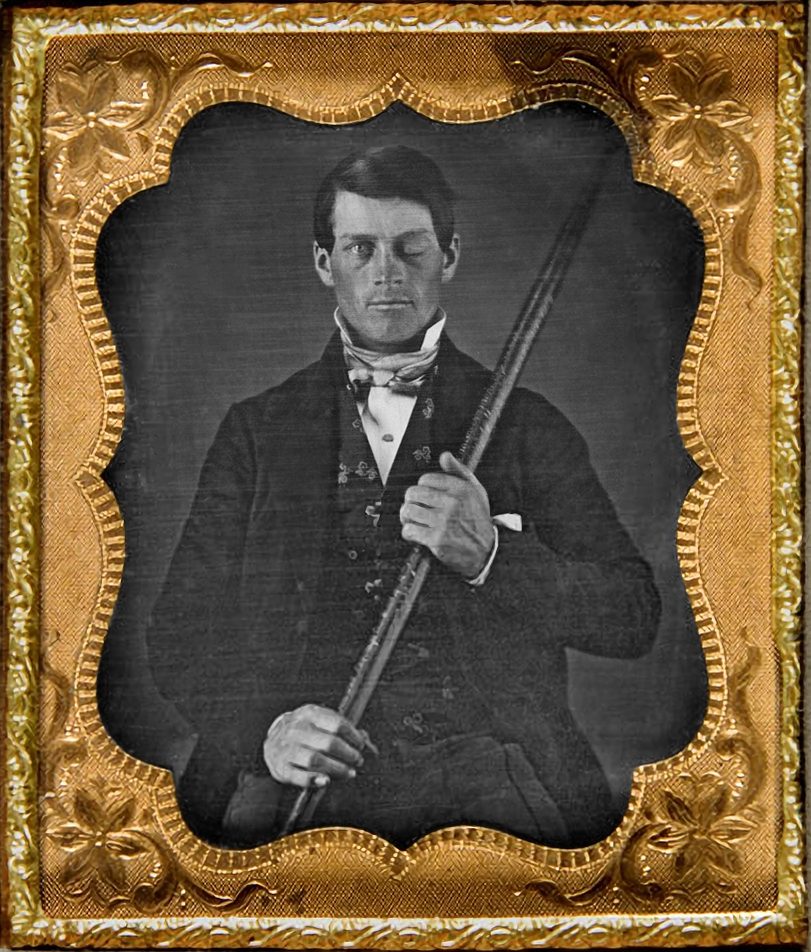
Dr. John M. Harlow on Phineas Gage, Publications of the Massachusetts Medical Society, 1868
20 years after the accident, 8 after Gage died
What it establishes: This is the famous case, and it is often told wrong (see the box just below). The words “no longer Gage” belong to his friends and acquaintances, as Harlow reports them. The order of events is the point: a physical injury to the left front of the brain, and then, according to those who knew him, a different man.
Harlow’s 1868 paper, on WikisourceHenry Molaison (“patient H.M.”), surgery by William Scoville, September 1, 1953
What it establishes: Surgeons removed the inner parts of both temporal lobes, including the hippocampi, to stop his seizures. His childhood memories, his intelligence and his personality were largely intact, and he could still learn motor skills. What he lost was the ability to form new memories of events and facts. Taking out that tissue took away that ability.
Summary on Wikipedia, citing the medical literatureMario F. Mendez, “The Implications of Moral Neuroscience for Brain Disease,” Cognitive and Behavioral Neurology
2023
What it establishes: “These regions” are the parts of the front and side of the brain that the paper describes as the hub of moral intuition. Frontotemporal dementia is a disease that kills cells there. It changes how a person behaves toward others, sometimes seriously.
Abstract on PubMedCosimo Urgesi and colleagues, “The spiritual brain: selective cortical lesions modulate human self-transcendence,” Neuron
2010
What it establishes: Psychologists measure how spiritual a person is with a scale called self-transcendence. Patients were tested before and after brain surgery. Damage to one specific area made the score go up, not down. The feeling responds to the tissue.
Abstract on PubMedOrrin Devinsky and Gloria Lai, “Spirituality and religion in epilepsy,” Epilepsy & Behavior
2008
What it establishes: Rare, and the paper is careful to say that “psychologic and social factors” also matter. But it concludes that “a neurologic mechanism most likely plays a large role.” A misfiring temporal lobe can produce a religious experience.
Abstract on PubMedThat a feeling depends on the brain does not make it false, since sight does too. The reason these findings matter is different: they show that memory, character and moral judgment, the things the Church says the spirit carries, change when the tissue changes. The feeling’s own problem comes later on this page.
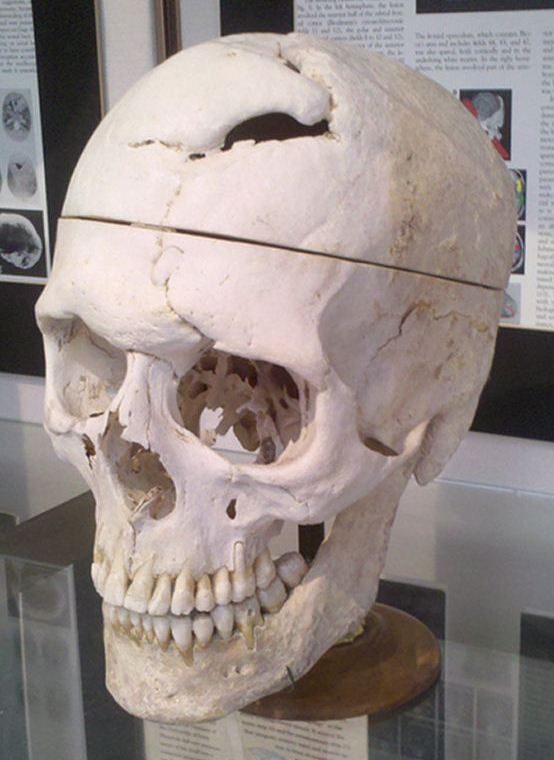
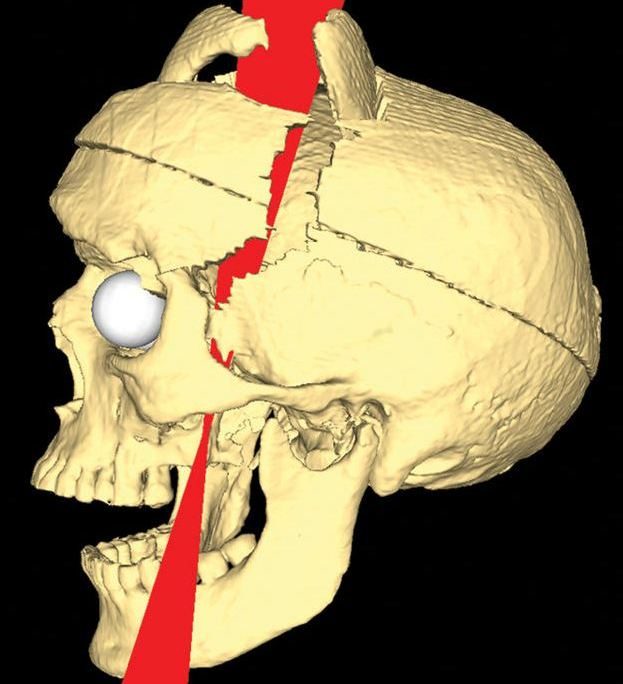
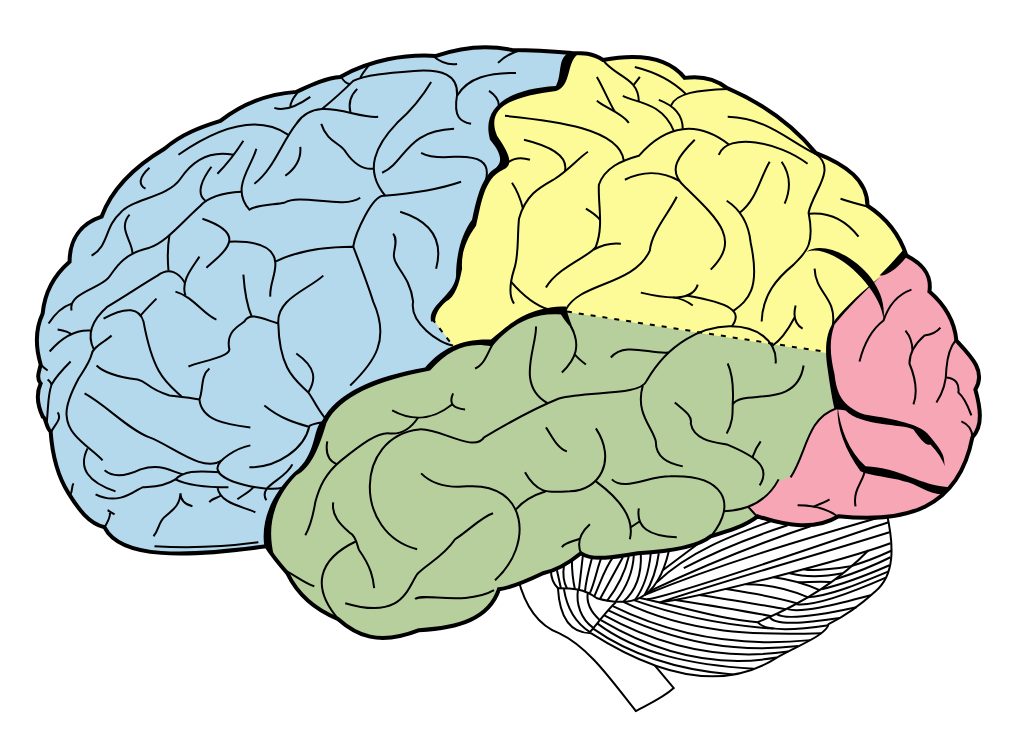
The visual breakdown: what the spirit is taught to do, and what the brain shows
The Church teaches that the spirit remembers, feels, chooses, and receives God’s word. Put the teaching beside the findings, one job at a time.
Four jobs of the spirit, and where each one turns out to depend on tissue
Left: what the teaching says the spirit does. Right: what a specific change in the brain does to that same job.
| What the spirit is taught to do | What the brain studies show |
|---|---|
| Remember your life, and know your family (Spirit World article) | Surgery on the inner temporal lobes (H.M., 1953): he could no longer form new memories of events and facts. His old ones and his personality stayed. |
| Be you, with your character and your choices (the Proclamation: spirits “knew and worshipped God”) | Gage, as Harlow’s informants described him; and behavioral variant frontotemporal dementia, which Mendez (2023) ties to “primary disturbances of moral behavior.” |
| Feel the Spirit, a certainty “far more” than the senses (Gospel Topics) | Damage to one area of the parietal lobes raises spiritual feeling (Urgesi 2010). Seizures in the temporal lobe can produce religious experiences (Devinsky and Lai 2008). |
| If the spirit leaves the body at death (Alma 40:12), and near-death stories describe that leaving: see and hear what is happening, from outside the body | Tested in two large hospital studies, AWARE (2014) and AWARE II (2023). See below. Near-death accounts are what people report, not Church doctrine. |
Each row is sourced in the exhibits above and below. These findings show what the brain does. They do not prove nothing else exists.
The exhibits: what happens when people die and come back
If the spirit can leave the body, the best place to catch it is a hospital room during a cardiac arrest, when the heart has stopped and people are being resuscitated. Many people who come back describe floating above the bed, a tunnel, a light, someone waiting. Those experiences are real, nobody says they are faked, and many readers have heard a story like this from someone they love. These accounts are what people report, not something the Church teaches. The question is whether any of them can be shown to have happened outside the body.
In 2014 a team led by Dr. Sam Parnia ran the largest study yet. In some resuscitation rooms they put shelves near the ceiling, with pictures that face up, where no one in the room could see them. A person floating above the bed could read one. A person lying on the bed could not.
The AWARE study, 2014, shown to scale
Top grid: each square is one cardiac arrest, and the lit squares are the survivors who completed the first interview. Bottom grid: each square is one survivor who finished the second, longer interview.
Each square above is one cardiac arrest. 2,060 cardiac arrests in 15 hospitals. 140 survivors completed the first interview. That is about 7 in 100.
Each square above is one survivor who finished the second interview. Of the 101, 46 had some memory from the time they were being resuscitated. The themes were fear, animals or plants, a bright light, violence, déjà vu, family, and events after the arrest. About 9 in 100 had an experience that fit the usual near-death pattern.
Source: Parnia et al., Resuscitation, 2014 (abstract); the visual detail of the verified case is from the University of Southampton press release; the shelf detail is from the review quoted in the Wikipedia summary of Parnia’s study. Counts of 9 and 2 are the percentages of 101.
Sam Parnia and colleagues, “AWARE: AWAreness during REsuscitation,” Resuscitation
2014
What it establishes: This is the result, in the researchers’ words (NDE means near-death experience). The last sentence is the believer’s strongest card, and it is taken up below. Before that: the study did not find that anyone left the body and read a picture. It could not test the two who described awareness, because neither arrest happened in a room with shelves.
Abstract on PubMedSam Parnia and colleagues, “AWAreness during REsuscitation - II,” Resuscitation
2023
What it establishes: This time the pictures were on a screen above the bed in 25 hospitals. Of 567 arrests, 53 people survived, and 28 of them could be interviewed. 11 reported memories suggestive of consciousness, and 6 described what the authors call a “transcendent recalled experience of death.” Not one named the picture. One of the 28 did identify the sound that was played. It is a small group, and this does not settle everything. But it is the first test that could actually be run on interviewed survivors, and none of the 28 named the picture.
Abstract on PubMedWhat is true on the other side
This is the part that deserves full strength, and for some readers it is the center of the page.
The experiences are real. People come back changed. They are not lying. A 2001 study in the Lancet followed 344 cardiac arrest survivors in ten Dutch hospitals; 62 of them (18 percent) reported a near-death experience. Its authors wrote: “With a purely physiological explanation such as cerebral anoxia for the experience, most patients who have been clinically dead should report one.” They did not know why so few reported one, “although age plays a part.” (van Lommel et al., 2001.) That is a fair point against one explanation, oxygen starvation alone. It does not test whether the experience happens outside the brain, which is what the hidden pictures were for.
One account in AWARE held up. The researchers could check one patient’s account against the resuscitation. The University of Southampton’s release says the patient’s awareness appeared to occur “during a three-minute period when there was no heartbeat,” and that “the detailed recollections of visual awareness in this case were consistent with verified events.” The release adds that the experiences could not be absolutely proved, but that “it was impossible to disclaim them either and more work is needed.” That is a real case, and a believer is right not to wave it away. The release does not describe any recording of that patient’s brain.
AWARE II found brain activity that was not expected, and one person named the sound. One of the 28 interviewed survivors identified the sound that was played, which is a hit, though a single one. The same paper reported that “normal EEG activity (delta, theta and alpha) consistent with consciousness emerged as long as 35-60 minutes into CPR” (an EEG is a recording of the brain’s electrical activity), and the authors call the experiences “authentic ‘near-death’ experiences.” The abstract says this happened “Despite marked cerebral ischemia (Mean rSO2 = 43%),” which means the brain’s oxygen level was low. Some people were aware during resuscitation. That does matter. What was measured, though, was a brain still working at low blood flow. It is activity in the brain, not a mind apart from it.
Some people with severe brain disease have become clear shortly before death. Many members have heard of a grandparent with dementia who woke up near the end and knew everyone. A 2012 review in Archives of Gerontology and Geriatrics by Nahm, Greyson, Kelly and Haraldsson collected cases going back 250 years. It describes “the unexpected return of mental clarity and memory shortly before death in patients suffering from severe psychiatric and neurologic disorders,” called “terminal lucidity,” and says that in some accounts “memory and cognitive abilities may function by neurologic processes different from those of the normal brain.” (Nahm et al., 2012.) It is a collection of case reports, not a controlled study, and the cause is not known. It is what a receiver view would predict, and it deserves a real look. It is also still a living person with a brain in a body, so it does not show a mind working apart from one.
The brain may be a receiver, not a maker. In his 1898 lecture Human Immortality, the philosopher William James asked: why must a brain’s link to the mind mean the brain makes the mind? He wrote that we are “entitled also to consider permissive or transmissive function,” and compared the brain to colored glass, a prism, or the keys of an organ, which shape and limit light or air that they do not make. On that view, the mind comes from somewhere else, and the brain shapes what gets through. James offered this as something to consider, not as a finding. It is the best reply a believer has to everything above.
The Spirit feels different from emotion. Many members say, with complete sincerity, that they know the difference between being moved by music and being taught by God. Nobody is telling members they are wrong about what they felt.
What that leaves standing, and what it costs
It leaves some things standing. The AWARE case, the one correct sound, the brain waves and terminal lucidity are real puzzles, and something might exist beyond the brain that these studies did not rule out. Here is what they do not leave.
Why minds produce the feeling of God
There is a third piece, and it concerns the feeling itself. Since around 2000, scientists have studied why human beings come to believe in gods and spirits. The field is called the cognitive science of religion. Some of its researchers are believers: the Stanford Encyclopedia of Philosophy notes that “many theistic scientists, including Justin Barrett, not only seek to incorporate CSR’s findings into their religious worldview; they further contribute to the theoretical and empirical literature.”
- We see someone behind things. People are quick to read events as the work of an agent, a person with intentions, even when no one is there. The Stanford Encyclopedia of Philosophy says some theorists propose that the mind “automatically leads us to interpret certain ambiguous stimuli (such as movements and sounds) in terms of agency, even when no one is present.”
- Some ideas stick. The anthropologist Pascal Boyer proposes that we are “more likely to remember and spread stories” with ideas that break our expectations a little.
- Belief comes naturally. Justin Barrett wrote in 2000 that religion “may be understood as the product of aggregated ordinary cognition.” Ordinary cognition is the kind every human mind has, whatever church it sits in.
Barrett is a Christian, and he has argued that if science explained why I think my wife loves me, I should not then stop believing she does (summary on Wikipedia). That is a fair point, and it is the limit of the argument.
So what does it do? It answers a narrower question, and it is the one the Church actually asks you. Moroni 10:4-5 and D&C 6:23 make the feeling the proof: “What greater witness can you have than from God?” (For the arguments about the kind of God the Church teaches, see The Case Against the God You Were Taught.) Seeing and hearing are trusted because other people and instruments can check them. The feeling of a presence cannot be checked that way. It comes from ordinary human thinking, which is the same machinery in every mind and every faith, and a feeling produced by that machinery is going to arrive whether or not the belief behind it is true. That is why it cannot be what tells you which church is right. How this works across different churches, with sources, is laid out in how the method fails its own test and Believing Without Evidence. The brain studies above show the feeling is something tissue can raise or lower. And the science of belief says belief in gods and spirits comes naturally to human minds.
A feeling that comes from ordinary human thinking, and that cannot be checked against anything outside you, cannot tell you which faith is true.
This does not show there is no God. It shows that the one door the Church asked you to walk through, the feeling, does not lead to evidence.
The common rebuttals
“I had an experience near death, or someone I love did, and it was real.” It was real to the person who had it, and no study says otherwise. In AWARE, 46 of the 101 survivors interviewed remembered something from the resuscitation, and about 9 in 100 described the classic experience. The question the studies asked is narrower: did it happen where the person was not? When pictures were put where only someone outside the body could read them, nobody who was interviewed named one. That leaves the experience, which no one denies. It does not show a spirit left the room.
“The brain is a receiver. Damage the radio and the music changes, but the source is fine.” This is the best reply, and it is why this does not claim brain damage disproves the spirit. It is also why brain damage cannot prove it. A radio, though, is a thing with a broadcast that other instruments can pick up, and the receiver idea has been given its one direct test so far: hidden pictures. Nobody has named one. No one has detected the broadcast. And the receiver view has a price. It needs a spirit that holds your memory, your character and your feeling by itself, and the only direct test of a mind working apart from a brain has not found one.
“I know what the Spirit feels like, and it is different from emotion.” You know what you felt, and that is real. The feeling is a real thing happening in a real person. What it cannot do is tell you what caused it, and the Church’s claim that it carries “far more certainty” than the senses is the part that cannot be checked. What you see and hear can be checked against other people and instruments. The feeling cannot. People in other faiths say they were given the same kind of answer to prayer, about beliefs that contradict each other; see how the method fails its own test.
“Scientists cannot even explain how the brain makes consciousness.” True, and it is a real open question. But not knowing how something works is not evidence for a specific explanation. We do not know how a brain makes consciousness, and the Church does not say how a spirit would. What we do have is a long record of the abilities changing when the brain changes.
No one has ever shown a thought, a memory or a feeling that works without a brain.
The Church teaches that the real you is a spirit that does all three. The one direct test of that has been tried twice, and so far nobody has named the hidden picture.
What this means
You were taught two things: that the real you is a spirit, and that the feeling of the Spirit is how God speaks to it. You have now seen what the evidence says about both. A patient known as H.M. lost the ability to form new memories when a surgeon removed a piece of his brain. A disease that kills cells in the front of the brain changes how people treat others. Damage to one region raised spiritual feeling, and seizures in another can produce a religious experience. And when scientists went to the hospital rooms where the spirit should have been caught outside the body, with pictures only a floating person could read, nobody who was interviewed named one. One account in AWARE held up, one survivor named a sound, and some dying patients became clear again. Those are real, and they leave open only whether something exists beyond the brain, not whether the Church’s spirit has ever been shown.
Memory, character and spiritual feeling all change when the brain changes, and in the one direct test, nobody has shown a mind working without one. The Church’s spirit, a being that does all of this on its own, has never been shown.
This does not mean you did not feel what you felt, or that the person you lost was not real. It means the thing that was supposed to prove the Church true, the Spirit’s witness, is a feeling that ordinary human minds produce.
That leaves one question. If a feeling cannot tell you what is true, what does? That is the last section: how belief itself works, in everyone, including you and me.