The God question
Believing Without Evidence
The Church says evidence can neither prove nor disprove the Book of Mormon. Sagan’s dragon and Clifford’s shipowner show where that leads.
The point in one sentence
Latter-day Saints are taught that the Spirit’s confirmation settles whether the Church is true, and the Church’s own essays say outside evidence “can neither prove nor disprove” the Book of Mormon. A belief that evidence is not allowed to settle is Sagan’s dragon, and being sincere does not keep anyone from being wrong.
What you were taught
If you grew up in the Church, you know how this works without anyone having to explain it. Once a month, on fast Sunday, members stand at the pulpit and bear their testimonies. Missionaries invite investigators to pray and ask God whether the Book of Mormon is true. The Book of Mormon closes with an invitation to do exactly that, and most members can recite the verse.
That verse is Moroni 10:4. It promises that if you ask God with a sincere heart, he “will manifest the truth of it unto you, by the power of the Holy Ghost.” The next verse says you may know “the truth of all things” the same way. A second scripture, Doctrine and Covenants 9:8, was given to Oliver Cowdery about translating, and Latter-day Saints apply it to prayer in general. It says first “you must study it out in your mind,” and then describes what the answer feels like: “I will cause that your bosom shall burn within you; therefore, you shall feel that it is right.”
Many members have felt something like this. It was warm and real, and it came when they were praying or singing or listening to a talk. Nothing on this page says you did not feel it. This page is about what the feeling is being asked to prove.
In a 1982 talk to new mission presidents, Elder Boyd K. Packer answered a question missionaries ask: how can they bear testimony before they have one? His answer shows how the method is meant to run: the testifying comes first, and the knowing follows.
Elder Boyd K. Packer, “The Candle of the Lord,” talk of 1982, printed in the Ensign, January 1983
“A testimony is to be found in the bearing of it!” … “Bear testimony of the things that you hope are true, as an act of faith. It is something of an experiment, akin to the experiment that the prophet Alma proposed to his followers.”
The missionary’s worry is about honesty: “If I do not have such a testimony, would that not be dishonest?” Packer’s answer is to testify of what you hope is true, and he says a witness from reading or from another person “is a necessary beginning.” He also calls part of the road a “leap of faith.” Taken at its kindest, faith grows when you act on it. But look at the order: you testify first, and the confirmation is supposed to follow. What it asks of a member is to stand and say it is true before the confirmation has come.
The talk, on churchofjesuschrist.orgThe page How We Know Things shows what happens when the same method is run by people of other faiths: they report the same warmth and the same certainty about beliefs that cannot all be true. This page asks a different question, one that comes before that one. Set aside which religion the method points to. What would it take for the method to ever say no?
The dragon in the garage
In 1995 the astronomer Carl Sagan told a short story in a book called The Demon-Haunted World. It is one of the best-known pictures of a claim that cannot be tested. Here is the story in brief. Someone says a dragon lives in his garage. You ask to see it. He says it is invisible. You offer to spread flour on the floor to catch its footprints. He says it floats. You offer an infrared camera to catch its fire. He says the fire is heatless. Each time you propose a test, he has an answer ready.
Carl Sagan, The Demon-Haunted World: Science as a Candle in the Dark, 1995, the dragon passage, as quoted on Wikipedia
“Now what’s the difference between an invisible, incorporeal, floating dragon who spits heatless fire and no dragon at all? If there’s no way to disprove my contention, no conceivable experiment that would count against it, what does it mean to say that my dragon exists? Your inability to invalidate my hypothesis is not at all the same thing as proving it true.”
Incorporeal means having no body. Nothing in the story requires the man to be lying. The point is about the claim: when nothing could count against it, it has stopped saying anything about the garage.
The passage, quoted on Wikipedia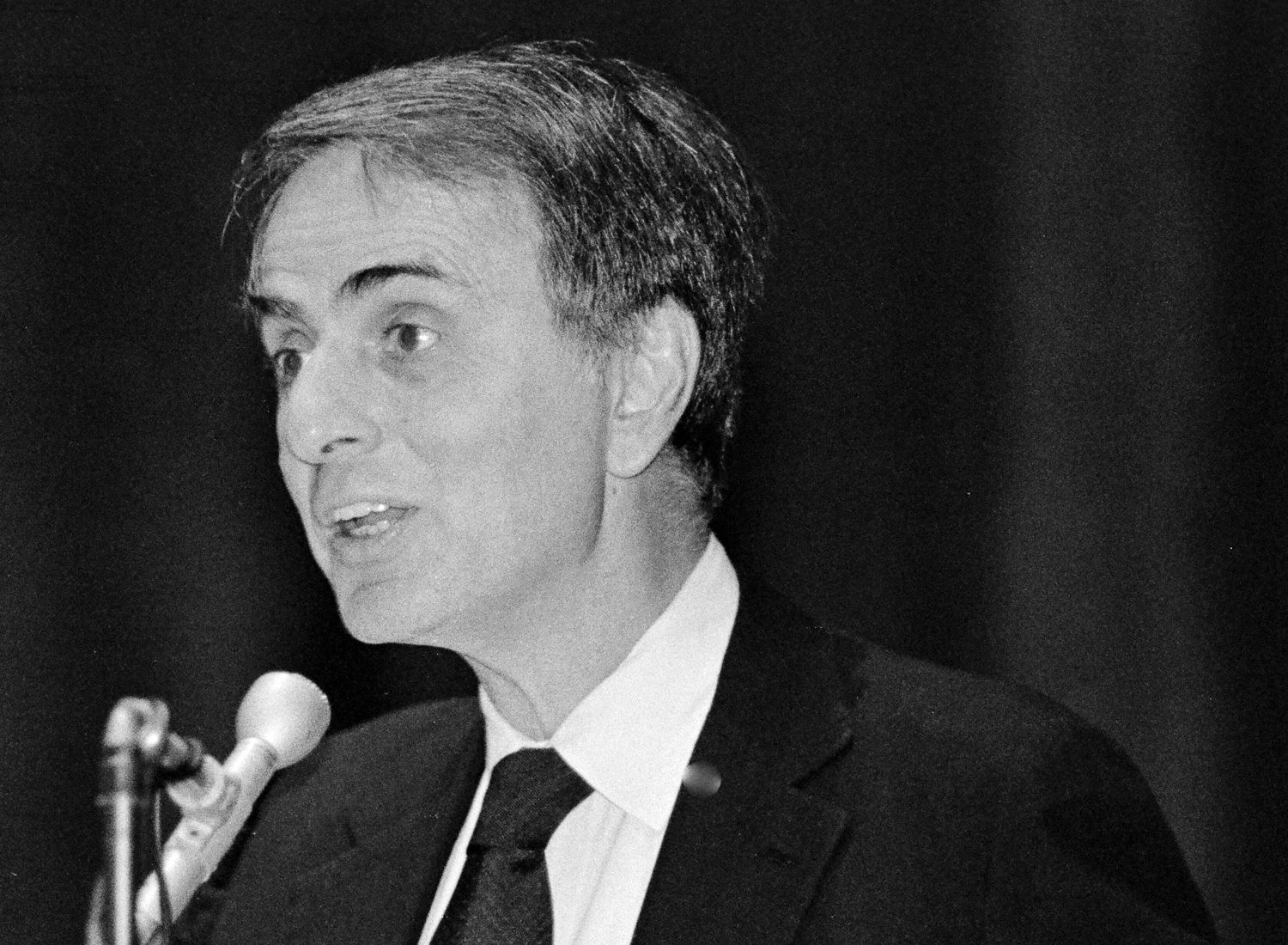
Now ask the testimony the same question
Now put Sagan’s question to the way testimonies are gained. Suppose you pray about the Book of Mormon. If you feel the burning, the method says it is true. What would a “no” look like? The scriptures do describe one. Doctrine and Covenants 9:9 says that if it is not right, “you shall have no such feelings, but you shall have a stupor of thought.” So a no exists, and it is fair to say so.
But look at what both answers are. Each is a feeling inside the person who is asking. The yes is a feeling. The no is a feeling. The Church does publish the outside facts: its essays say Egyptologists (scholars of ancient Egypt) agree the Book of Abraham papyri “do not match the translation,” and that nobody knows the DNA of Book of Mormon peoples. But the same essays say these facts cannot decide the question. The Abraham essay says its truth “cannot be settled by scholarly debate” and is found through “the confirmation of the Spirit.” Elder Oaks puts it as “secular evidence can neither prove nor disprove the authenticity of the Book of Mormon.” So the facts get a hearing, and the feeling gets the last word.
Elder Dallin H. Oaks, “The Historicity of the Book of Mormon,” 2001, quoted in the Church’s Gospel Topics essay on DNA studies
“It is our position that secular evidence can neither prove nor disprove the authenticity of the Book of Mormon.”
That is the Church’s own statement. Both sides can read it two ways. A believer reads it as: the evidence is not the point. This page reads it as: then no evidence can ever correct the testimony.
The essay, on churchofjesuschrist.orgThat is the shape of the dragon. Nothing in it requires the believer to be dishonest. The tests are heard, and then set aside, because the Church has placed the final answer where no test can reach.
A claim, and what could count against it
The question is not whether you believe it. The question is what, if anything, you would accept as a no.
| The claim | A test someone could run | What the believer says, or what happened | Could the test ever count against it? |
|---|---|---|---|
| A dragon lives in my garage | Look. Flour on the floor. An infrared camera. | “It is invisible.” “It floats.” “The fire is heatless.” | No. Each test was answered before it was run. |
| The Book of Abraham is a translation of Abraham’s writings | Ask Egyptologists (scholars of ancient Egypt) to read the papyri. | The Church’s own Gospel Topics essay says Latter-day Saint and non-Latter-day Saint Egyptologists agree the characters on the fragments “do not match the translation given in the book of Abraham.” It then says the book’s truth “cannot be settled by scholarly debate” and is found through “the confirmation of the Spirit.” | The test came back no. The Church’s answer is that the test does not decide it. See The Book of Abraham. |
Sources: Sagan, The Demon-Haunted World; Church Gospel Topics essay on the Book of Abraham
What members are told about doubt
In October 2013 President Dieter F. Uchtdorf spoke at general conference to members who have questions. He said it kindly. He said the questions are natural. He also gave this advice:
President Dieter F. Uchtdorf, “Come, Join with Us,” general conference, October 2013
“…please, first doubt your doubts before you doubt your faith.”
In the paragraph before, he says “the acorn of honest inquiry has often sprouted and matured into a great oak of understanding.” Just after the quote he says: “We must never allow doubt to hold us prisoner and keep us from the divine love, peace, and gifts that come through faith in the Lord Jesus Christ.” Look at what the advice protects. When doubt and faith disagree, doubt is the one asked to give way. The talk is kind, and it says questions are natural. Put it next to the dragon story: in both, the thing being questioned is the thing the advice protects.
The talk, on churchofjesuschrist.orgYou are not being asked to stop believing, only to ask what could ever show the belief was wrong.
A belief that no evidence is allowed to settle is a dragon in the garage.
It was never a question of whether the person is sincere. It is a question of whether the belief could ever be told it was wrong.
The shipowner
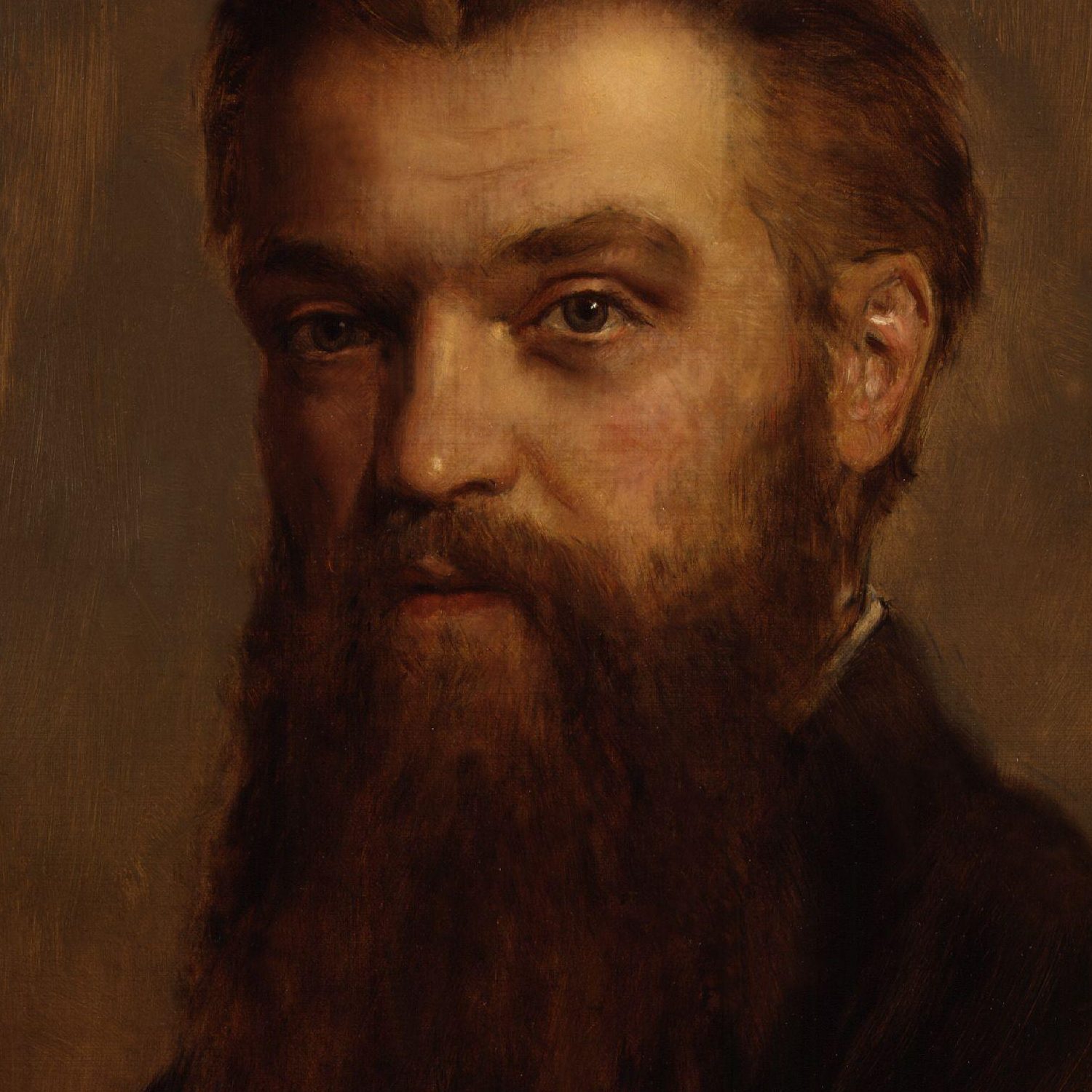
Is that harmless? In 1877 an English mathematician named William Kingdon Clifford wrote an essay in the journal Contemporary Review arguing that it is not. He told a made-up story to make the point.
A shipowner is about to send an emigrant ship to sea. Clifford says he knew “she was old, and not over-well built at the first,” and that she “often had needed repairs.” Doubts had been suggested to him “that possibly she was not seaworthy.” He thought that perhaps he ought to have her “thoroughly overhauled and refitted, even though this should put him to great expense.”
Instead he worked on his own mind. She had weathered so many storms, he told himself, that it was idle to suppose she would not come home this time too. He would put his trust in Providence, which could hardly fail to protect all these unhappy families. He would dismiss from his mind all ungenerous suspicions about the honesty of builders and contractors.
Clifford says the owner “acquired a sincere and comfortable conviction that his vessel was thoroughly safe and seaworthy.” He watched her leave “with a light heart,” and “he got his insurance-money when she went down in mid-ocean and told no tales.”
W. K. Clifford, “The Ethics of Belief,” Contemporary Review, January 1877, section I, “The Duty of Inquiry”
“It is admitted that he did sincerely believe in the soundness of his ship; but the sincerity of his conviction can in no wise help him, because he had no right to believe on such evidence as was before him. He had acquired his belief not by honestly earning it in patient investigation, but by stifling his doubts.”
Clifford grants the one thing a defender would most want to say, that the man was sincere. His answer is that sincerity is not the question. The question is whether the belief was earned.
The full essay on WikisourceThen comes the part that makes the story hard to dismiss. Clifford asks what if the ship had made the trip safely. Would the owner then have done nothing wrong? His answer is flat:
Same essay, same section
“Let us alter the case a little, and suppose that the ship was not unsound after all; that she made her voyage safely, and many others after it. Will that diminish the guilt of her owner? Not one jot.” … “The question of right or wrong has to do with the origin of his belief, not the matter of it; not what it was, but how he got it.”
This is the point that bears on a testimony. Clifford is not saying the owner’s belief was false. He is saying the way the belief was formed was wrong, even if it had turned out true.
The full essay on WikisourceClifford then states the rule that everything else in the essay rests on, and he does not soften it:
Same essay, same section
“It is wrong always, everywhere, and for anyone, to believe anything upon insufficient evidence.”
Clifford’s reason is in the same section: “no one man’s belief is in any case a private matter which concerns himself alone.” What you believe shapes what you do, what you teach your children, and what your neighbors do because of you.
The full essay on WikisourceFive dates, one question
How the idea moved from a philosophy essay to a fast Sunday pulpit and back.
Sources: Clifford (1877); Packer (1982, Ensign Jan. 1983); Sagan (1995); Uchtdorf (Oct. 2013)
The strongest thing on the other side
A thoughtful member has three serious replies, and all deserve to be heard at full strength.
The first is that the Church teaches study as well as prayer. Doctrine and Covenants 88:118 says “seek learning, even by study and also by faith.” Doctrine and Covenants 9:8 says to “study it out in your mind” first. The Church has also changed its own words when the evidence moved: since 2006 the Book of Mormon introduction says its peoples were “among the ancestors of the American Indians,” where it used to say “principal ancestors.” This is the believing position as believers hold it, and it is true. The Church’s own statements about where the final answer lies, quoted above, are what it has to answer.
The second is William James. In 1896 the Harvard philosopher William James answered Clifford with an essay called “The Will to Believe.” He argued that Clifford’s rule is too strict for some of the biggest decisions in life. He called an option a “genuine option” when it is “of the forced, living, and momentous kind.” If the question “cannot by its nature be decided on intellectual grounds,” then, he wrote, our “passional nature not only lawfully may, but must, decide.” Friendship works like this. So does trust. You cannot demand proof that someone is loyal before you will risk being a friend. This is a serious answer from a serious man.
The third is Alvin Plantinga. Plantinga is a leading Christian philosopher. He points out that we believe many things without proving them. His examples include other minds, the past, and what our senses show us. Nobody is foolish for believing them. Philosophers call beliefs like these properly basic, meaning you can hold them without an argument behind them.
John Calvin taught that God built into people a natural sense of him. Calvin’s Latin name for it was the sensus divinitatis, a “sense of the divine.” If that is right, Plantinga says, belief in God that comes from that sense is not a leap in the dark. It is knowledge, formed the way sight is.
Plantinga goes further for Christians. He says the Holy Spirit can bring about belief in specifically Christian teachings, which is close to what Latter-day Saints mean by a testimony. (That is Plantinga’s model of Christian belief, not a statement about the Church.) A member who feels the Spirit can borrow this idea and say: I know it the way I know my own mother’s voice.
Plantinga’s reasoning is not a trick. It is true that not every good belief rests on an argument. Strict demands for proof of everything would leave you doubting your own hands. A person who quotes Plantinga is making a real point.
So here is what it does, and what it does not do.
What a testimony can and cannot show
Even at full strength, the defense gets you this far and no further.
- That you had a real experience, and that it was sincere
- That you are not lying, and that people who feel it are not fools
- That the experience gave comfort, direction, or a sense of belonging
- That a person who has it may be reasonable to trust it, if the ability behind it works
- That anything outside the person who has the feeling could ever correct it
- That a particular event happened, such as gold plates or a translation from papyri
- That the feeling could not have come from something else, such as music, community, or hope
- That the ability behind it works, which is the very thing in question
Sources: Alvin Plantinga, Warranted Christian Belief (2000), as summarized in the Stanford Encyclopedia of Philosophy, “Epistemology of Religion,” and in Wikipedia, “Reformed epistemology”; Church Gospel Topics essays on the Book of Abraham and on DNA
Critics asked: if you can believe in God without proof, why not believe in a Great Pumpkin that rises every Halloween? That is called the Great Pumpkin objection. Plantinga answers that the old rules for which beliefs may stand without proof are themselves flawed, so rejecting them does not mean accepting every belief.
In his 2000 book Warranted Christian Belief, Plantinga says his aim is to show that one particular charge fails: the charge that Christian belief is irrational whether or not Christianity is true. His argument is conditional: if the ability behind the belief is working as God designed it, the belief it produces counts as knowledge. That is an honest thing to say. It also means the argument alone cannot choose between faiths.
Critics point out that the same move is open to anyone. A Muslim can say the same about Islam, and a Latter-day Saint can say it about the witness of the Spirit. Plantinga built his model for Christian belief, not for the Church, but nothing in the argument itself says which tradition it protects. It protects whichever one is true, and it cannot tell you which that is.
The Stanford Encyclopedia of Philosophy states the challenge this way: “religious diversity is a prima facie defeater for the veridicality of religious experiences in the same way that wildly conflicting eyewitness reports undermine each other.” In plain words: when different religions report experiences that clash this much, each report counts for less, the way two eyewitnesses who tell opposite stories weaken each other. The Encyclopedia also gives the believer’s reply, from the philosopher William Alston: people inside a tradition have experiences and resources outsiders lack, so they can reasonably trust their own tradition. Alston’s reply is a serious one. It still does not say which tradition is the true one.
The second problem is one Plantinga’s own view allows for. On this view, a properly basic belief can in principle be proved wrong. It remains reasonable only until you meet serious evidence against it that you cannot answer. That is a fair rule, and it is exactly the rule this site asks you to apply. A belief that is as reasonable as sight should be able to stand up when you look hard at it, the way sight does.
And James’s license is narrower than it first appears. James did not say anything goes. He wrote that wherever the choice is not momentous, “we can throw the chance of gaining truth away, and at any rate save ourselves from any chance of believing falsehood, by not making up our minds at all till objective evidence has come.” His license covers questions that evidence cannot reach. Whether there was a Book of Abraham in Egyptian, whether a flood covered the earth, whether Native Americans descend from Israelites: these are questions about the past, and evidence is allowed to speak to every one of them. By James’s own rule, they go back to Clifford.
A case from the Church’s own history
It is easy to treat all this as a debate among philosophers. Clifford’s ship is a made-up story, but the question in it shows up in real life: what happens when sincere people are sure and have no way of being told they are wrong.
The Church’s own history has a case that raises the same question. The Gospel Topics Essay “Race and the Priesthood” (the Church’s own essays on hard questions, published on churchofjesuschrist.org) says that Brigham Young announced a policy in 1852 restricting men of black African descent from priesthood ordination. It says a few black men were ordained in the Church’s first two decades. It says that “from the mid-1800s until 1978” the Church “did not ordain men of black African descent to its priesthood or allow black men or women to participate in temple endowment or sealing ordinances.” Church leaders and members, it says, “advanced many theories to explain the priesthood and temple restrictions,” and it states plainly: “None of these explanations is accepted today as the official doctrine of the Church.” The essay also says the Church “disavows the theories advanced in the past that black skin is a sign of divine disfavor or curse, or that it reflects unrighteous actions in a premortal life…”
The essay does not say what the leaders who taught these explanations felt, and neither does this page. What it does say is that the explanations were taught for generations and are now disavowed. In practice, black men were not ordained to the priesthood, and black men and women could not receive the temple endowment or sealing ordinances. Whatever the intentions of those who taught them, the explanations fell hardest on black members.
The common rebuttals
“Faith is not supposed to be about evidence. It is about trust, like trusting a friend.”
Trust in a friend is something you can test, and the test is real. You watch what he does when it costs him something. If he betrays you, you stop. That is not how the testimony method works, because the Church’s own essays say outside evidence “can neither prove nor disprove” the Book of Mormon. And the Church does not only ask for trust. It makes claims about the past: that gold plates existed, that a translation came from papyri. Those are claims about facts, and facts can be checked. By James’s own rule, a question that evidence can reach goes back to Clifford.
“Clifford is too strict. Nobody checks everything. We all believe things on trust.”
That is true, and Clifford says so. His rule is not “check everything yourself.” In Section II, titled “The Weight of Authority,” he says we may rely on other people when we have reasonable grounds to trust that they are honest, that they had the chance to know, and that they judged well. And he says no one’s belief “is in any case a private matter which concerns himself alone.” A church asks you to trust it with your time, your money, and how you raise your children. That is a big thing to rest on a feeling. A small belief can afford to be wrong. This one cannot.
“But the Church does tell us to study it out. Doctrine and Covenants 9:8 says so.”
It does, and that deserves credit. The verse says “you must study it out in your mind.” But then it says to ask, and to wait for the burning. So the study comes first and the feeling gets the final word. When the study and the feeling point different ways, the Church’s own essay on the Book of Abraham says which one decides: the book’s truth “cannot be settled by scholarly debate” and is found through “the confirmation of the Spirit.” The feeling is the judge and the study is the witness. A real test would let the study win.
“I have felt it again and again. It is real to me.”
It is real, and nobody is saying it is not. A feeling that arrives again and again is the same feeling arriving again. It can repeat as many times as you like and still not be able to tell you whether it is pointing at the right church. Clifford was not asking whether the owner felt safe. He was asking whether the ship was.
Clifford did not say the shipowner was lying. He said the shipowner was sincere, and that sincerity did not make him innocent.
A testimony that no fact is allowed to settle is built the same way.
What this means
You were taught to ask God and wait for a feeling, and the Church’s own essays say outside evidence cannot settle the question. That is not a lie. It is a dragon: a belief that has been set where nothing can reach it. Clifford’s shipowner was sincere too, and his sincerity did not save the ship. The best defense a thoughtful believer can offer, Plantinga’s idea that a belief can be reasonable without proof, protects every religion equally, and gives way if serious evidence against it goes unanswered.
You can keep the feeling. The question is whether the feeling is allowed to be wrong.
A feeling can tell you that you believe. It cannot tell you that you are right.
So the question the facts leave is this one. If the feeling was wrong, how would you ever have found out?