Start here
How We Know Things
Every believer on earth feels the certainty you feel, so the feeling cannot show which faith is true. Read this one first.
The argument
Every other page on this site can be answered with one sentence: but I have a testimony. This page is about that sentence, which is why it comes first.
If you grew up in the Church, you may have been taught to pray about what is true and wait for a warm, calm feeling as the answer. This page looks at that feeling.
Every believer on earth feels the certainty you feel, and it came from the same place yours did: where they were born. So the certainty cannot tell you which faith is true. What can is the test you already use on every other religion: look at the evidence from the outside.
1. You already run this test
A girl in Riyadh knows Islam is true.
She has prayed about it. She has felt it. Her family is good, and her faith has blessed her life.
You believe she is sincere. You do not believe her feeling proves the angel Gabriel brought the Quran to Muhammad.
That is not cynicism. It is a method, and you run it on every religion on earth but one.
You already own the method
Everyone applies the left column, thousands of times, to every faith but their own.
- Who wrote this, and when?
- What did the founder gain?
- Is there independent evidence?
- Would I accept this from a stranger?
- Does a strong feeling prove a historical event?
- Why do believers mostly live where it is already dominant?
- It feels true
- I have prayed about it
- The people are good
- It has blessed my life
- I was raised in it
- Those questions are for other religions
The outsider test is the request that one column be used for both
Turning that method on your own faith has a name: the outsider test for faith, coined by John Loftus, a former minister. It assumes nothing about the answer. A true faith would pass it.
So the real question is this: why should your own faith be the one religion you never check this way?
Think about why it was so easy to doubt the girl in Riyadh. Looking from the outside, you could see where her certainty came from: she was born there. The next section shows that same pattern, in pictures, all over the world.
2. Faith follows birthplace, and you can see it
Every people drew its gods as itself
Around 500 BC, the Greek philosopher Xenophanes noticed: “Ethiopians say that their gods are snub-nosed and black; Thracians that theirs are blue-eyed and red-haired.” Look at the gods. Then look at who made them.
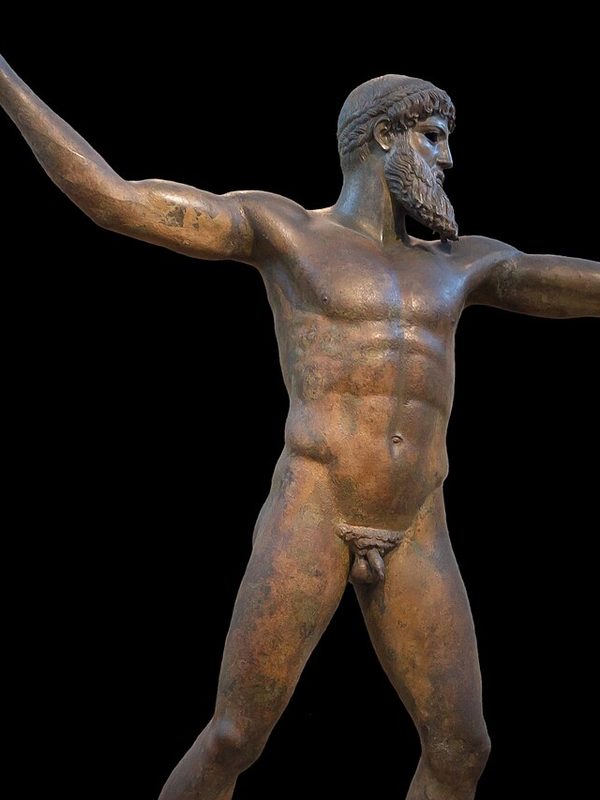
Greece
The king of the Greek gods is a Greek athlete: bearded, muscled, sculpted the way Greeks sculpted their own best men.
Zeus or Poseidon, bronze, about 460 BC. National Archaeological Museum, Athens. Photo: Jebulon, CC0.
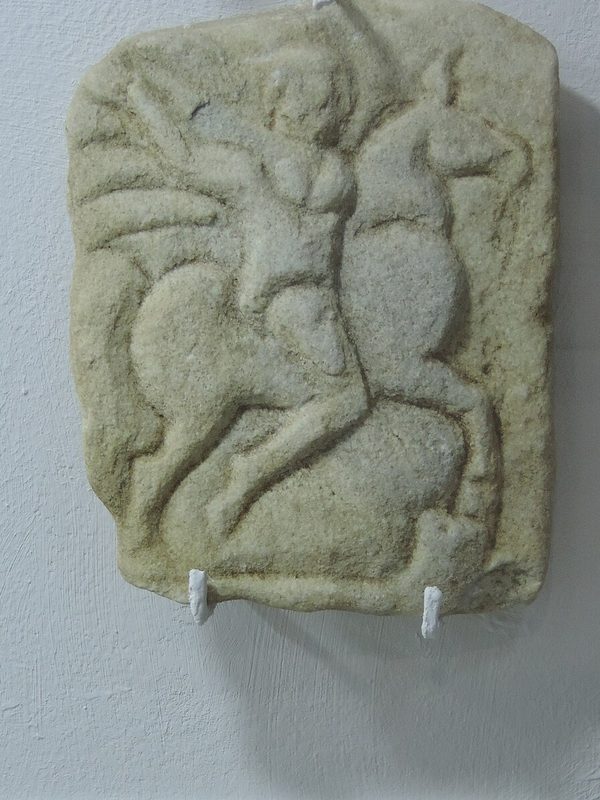
Thrace
Cross the border north, and god becomes a Thracian hunter on horseback.
The Thracian Horseman, stone tablet. Burgas Archaeological Museum, Bulgaria. Photo: Vassia Atanassova, CC BY-SA 4.0.
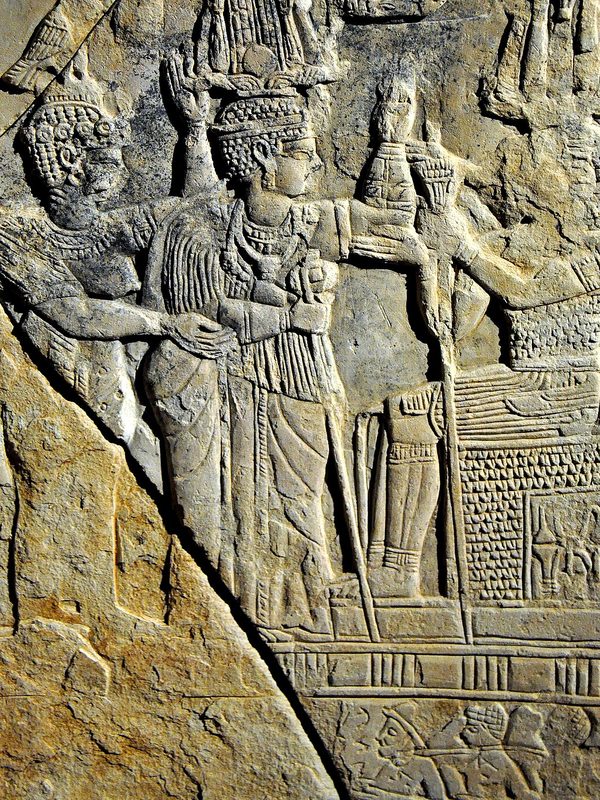
Kush, the Greeks’ “Ethiopia”
In Kush, the gods wear the same dress, in the same carved style, as the Kushite queen standing between them.
Stele of Queen Amanishakheto, Naqa, Sudan, 1st century AD. Photo: Osama Shukir Muhammed Amin, CC BY-SA 4.0.
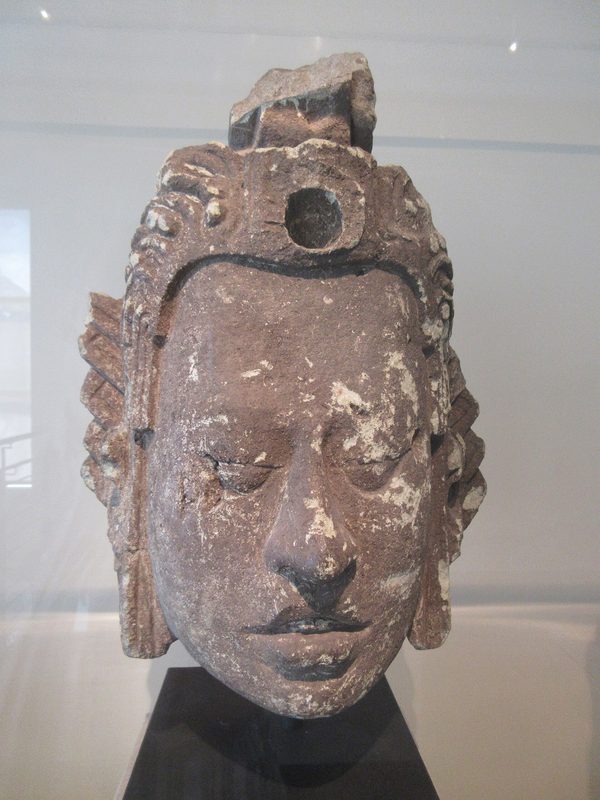
The Maya, in the Americas
The Maya bound their babies’ heads into this long shape, and scholars such as Vera Tiesler link the practice to the maize god. They did not just draw their god like themselves. They shaped their children to look like their god.
Maize god, Copán, Honduras. New Orleans Museum of Art. Photo: Infrogmation, CC BY 2.0.
Four peoples, three continents, mostly no contact. Every one made the divine in its own image.
The same Buddha, three countries
Maybe those were just different gods. So follow one man, the Buddha, as his religion crosses borders.
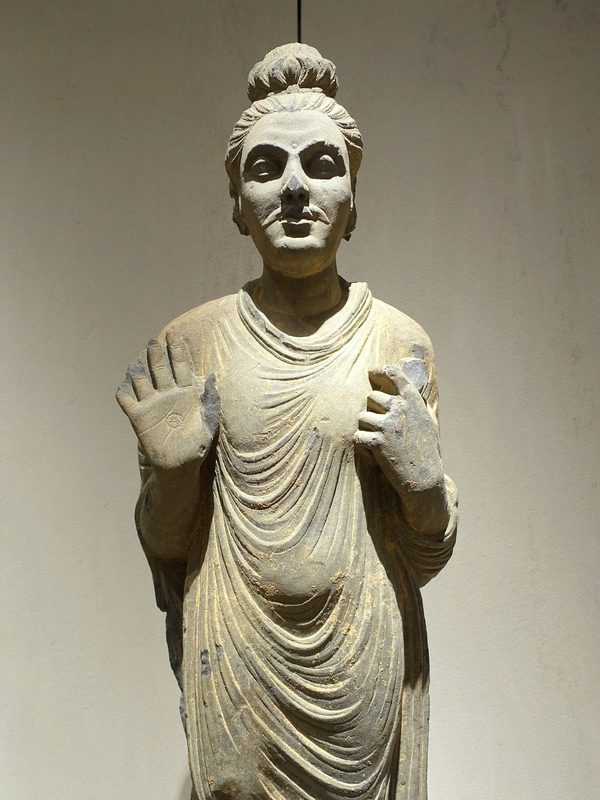
Gandhara, 1st century AD
Where Greek kingdoms ruled after Alexander, he gets a Greek robe and the hair of the Greek god Apollo.
Ethnological Museum, Berlin. Photo: Daderot, CC0.
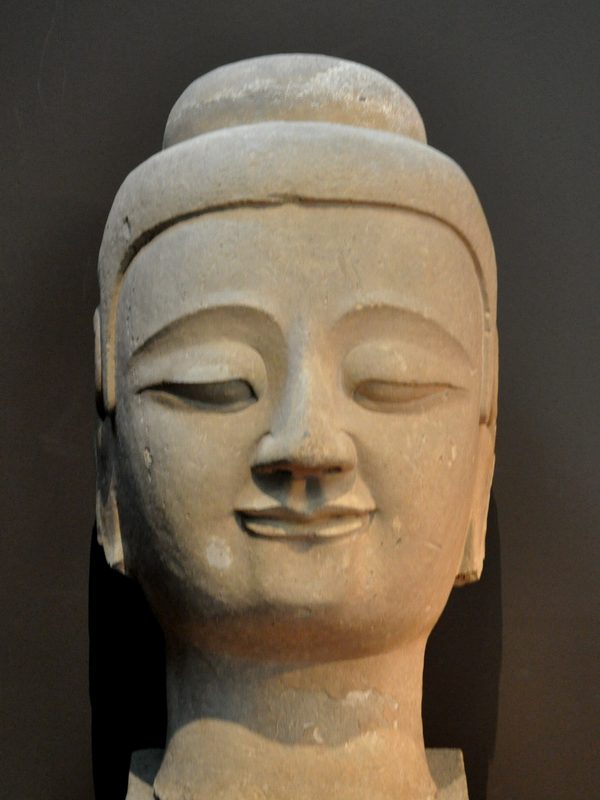
China, 6th century
In China, he gets Chinese robes and proportions, and a face to match.
Western Wei dynasty. Liebieghaus, Frankfurt. Public domain.
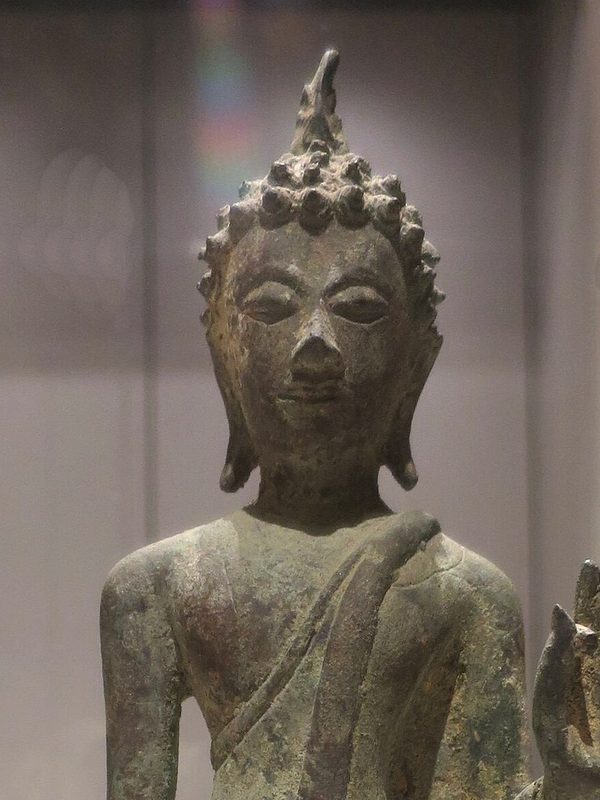
Thailand, 15th century
In Thailand, he becomes unmistakably Thai.
Sukhothai kingdom. Honolulu Museum of Art. Photo: Hiart, CC0.
One man. Three faces. The divine does not change at the border. The artists do.
The same Jesus, three peoples
Christianity does it to its own founder, a first-century Jew from Galilee.
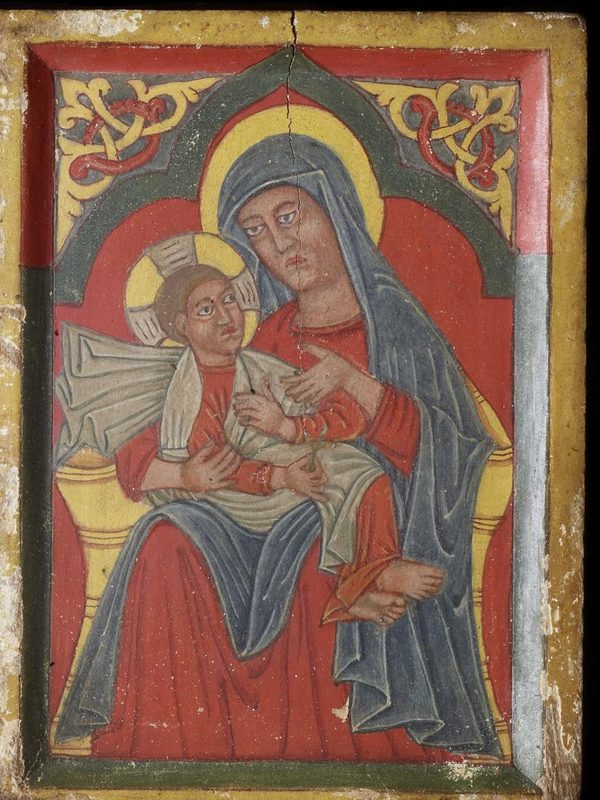
Ethiopia, early 1400s
Ethiopia, Christian since the 300s, paints Mary and the child as Ethiopians.
Diptych icon. Walters Art Museum. Public domain.
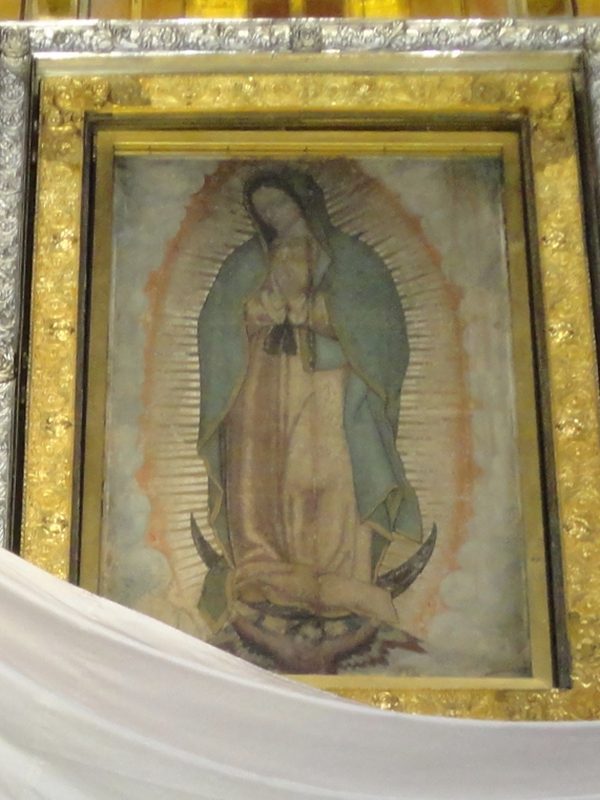
Mexico, 1531
In Mexico, Mary appears to an Indigenous man, in his own Nahuatl, olive-skinned. Mexicans call her La Virgen Morena, the dark Virgin.
The tilma, Basilica of Guadalupe, Mexico City. Photo: Juan Carlos Fonseca Mata, CC BY-SA 4.0.
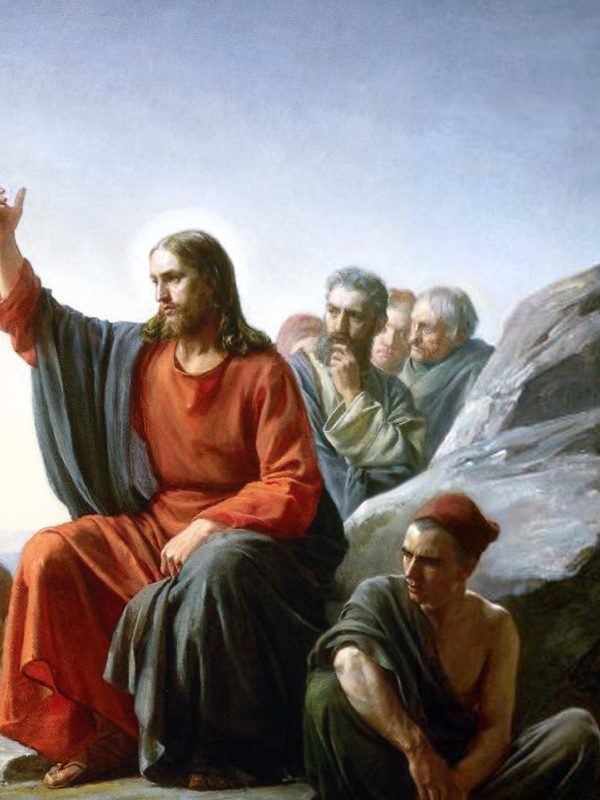
Denmark, 1877
In Denmark, the Galilean becomes a fair-skinned northern European.
Carl Bloch, The Sermon on the Mount. Public domain.
One man. Three continents. Three faces.
So what did Jesus actually look like?
The Gospels never say. Not his height, not his hair, not his face. What historians can say is what a Jewish man from first-century Galilee looked like. Joan Taylor, a professor of Christian origins at King’s College London, wrote a book on exactly this question. Her answer, as one reviewer summarizes it: about five foot five, “with olive-dark skin, brown eyes and short dark brown to black hair.”
The earliest picture, and the familiar one
Sixteen centuries apart. Only one was painted in his part of the world.
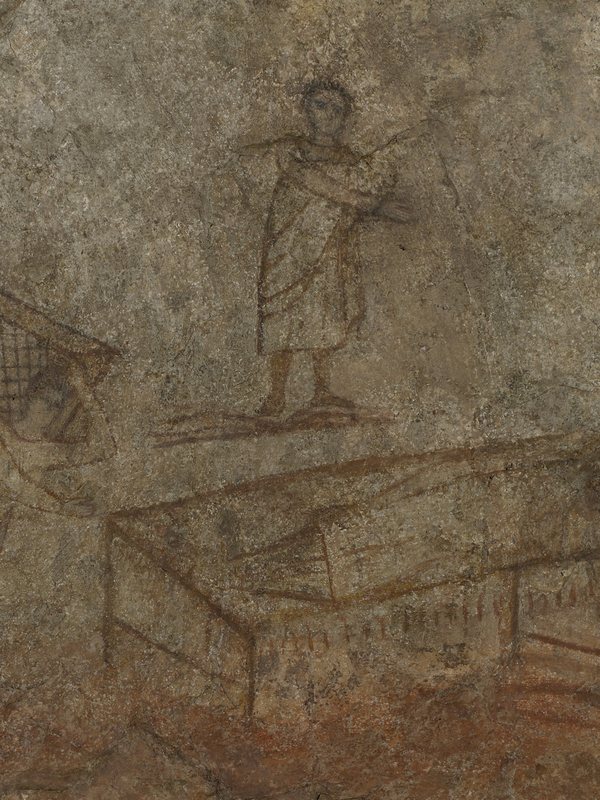
Syria, about 232 AD
One of the earliest pictures of Jesus ever found, on a church wall in Dura-Europos, two centuries after his death. A short-haired man in a plain tunic.
Christ Healing the Paralytic. Yale University Art Gallery. Public domain.
Denmark, 1877
Long light-brown hair, fair skin, a northern European face. The Jesus on Latter-day Saint walls.
Carl Bloch, The Sermon on the Mount. Public domain.
An olive-skinned, dark-haired Jew from Galilee was painted, again and again, as a fair European. Not because anyone found new evidence of what he looked like. There was none to find.
He was made to look like the people in the pews: the face they could most easily picture as God’s.
That face spread across Europe and America. And it is the face the Restoration inherited.
You saw the pattern in every one of those pictures. Nobody had to explain it to you.
Now one more.
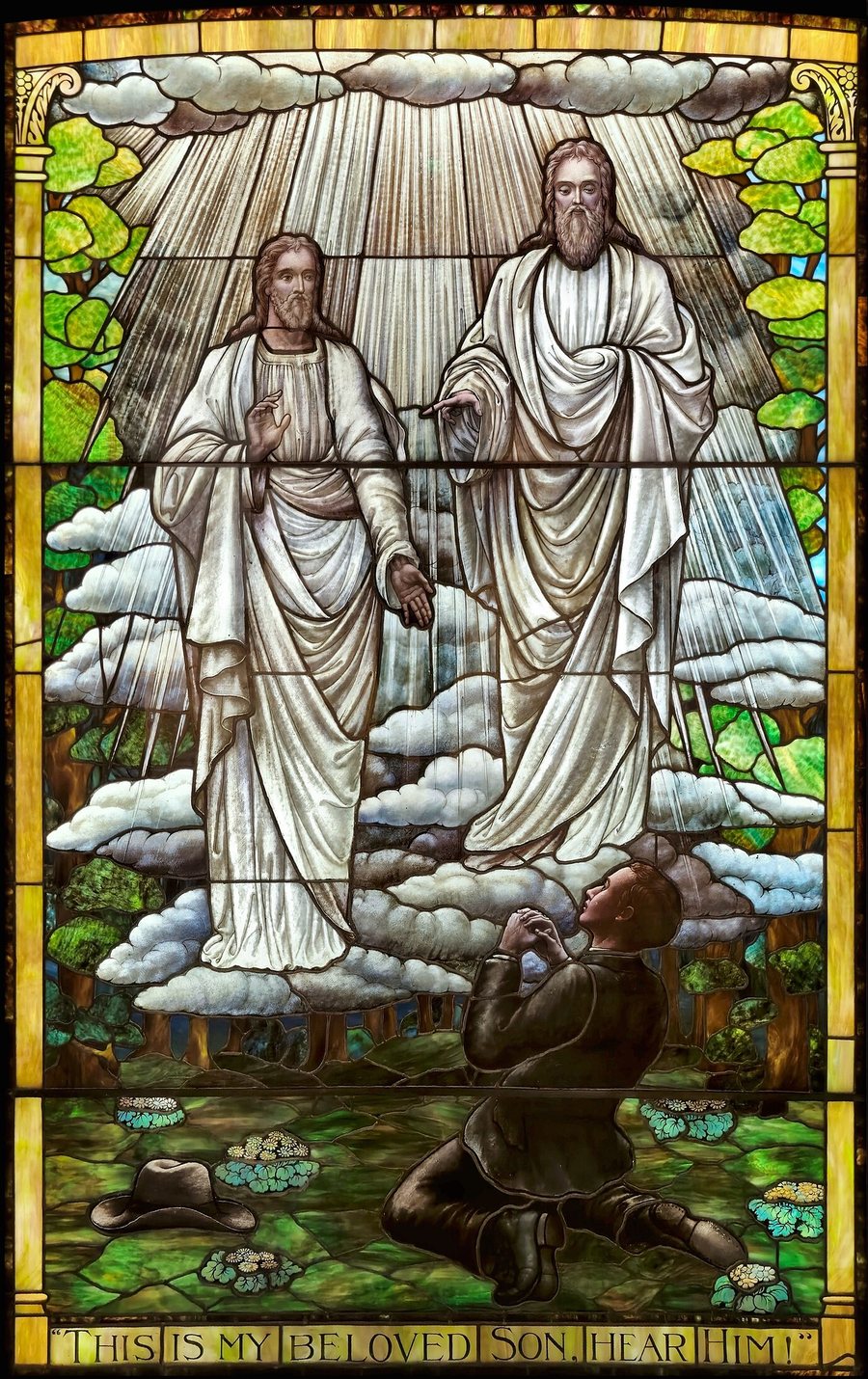
The Father and the Son, in the Church’s own art. The same northern European face as Carl Bloch’s Jesus, whose paintings, the Church’s April 2011 Ensign notes, “hang in LDS temples, meetinghouses, visitors’ centers.”
And it is not only the artists. In Alexander Neibaur’s 1844 journal, recording Joseph’s own telling of the vision, the first personage has “light complexion blue eyes.”
From the inside, it looks like God. From the outside, it is one more picture in the row.
The outsider test is only this: look at this one the way you looked at all the others.
In 1859, the English philosopher John Stuart Mill said it in one line:
John Stuart Mill, On Liberty, chapter 2
…the same causes which make him a Churchman in London, would have made him a Buddhist or a Confucian in Pekin.
In plain words: everything that made an Englishman a devout member of the Church of England, his parents, his church, his country, would have made him just as devout a Buddhist had he been born in Beijing. And, Mill adds, “it never troubles him.”
The full text, on Project GutenbergBorn in Riyadh, you would feel exactly what that girl feels, with the same warmth and the same certainty. That is not a guess. Here is the whole world:
Belief tracks birthplace
If a spiritual witness identified the true religion, belief would not cluster this precisely by where people are born.
The same process gives opposite answers with identical confidence. So the confidence cannot be what tells you which answer is true.
But a Latter-day Saint has an answer to all of this. The Church does not ask you to trust your upbringing. It gives you a way to check.
3. The Church’s own test gives everyone a yes
The Church’s method, the one missionaries give to everyone, is Moroni 10:4: ask God “with a sincere heart, with real intent, having faith in Christ,” and “he will manifest the truth of it unto you, by the power of the Holy Ghost.”
And what it confirms is exclusive. D&C 1:30 calls this “the only true and living church upon the face of the whole earth.”
So run the method, and watch what it does.
- It says yes to everyone. Muslims, Catholics, evangelicals, and Hindus pray and report the same warmth, the same calm, the same certainty, for beliefs that cannot all be true.
- Even to the ones the Church calls wrong. FLDS members defending polygamy report the same witness.
- Contradicting witnesses cancel out. The Stanford Encyclopedia of Philosophy makes the courtroom comparison: religious experiences that contradict each other undermine each other, the way wildly conflicting eyewitness reports do.
- The misses never count. A 2025 study in Cognitive Science found the same pattern in every faith group measured: answered prayers strengthen faith more than unanswered prayers weaken it.
- And a no is never allowed. If the witness comes, the method worked. If it does not, the seeker was not sincere enough. No possible outcome counts against it.
The method returns yes for every religion that uses it, including the ones the Church teaches are false.
A test that cannot produce a no cannot tell you what is true.
Now watch where the yes comes from. Nobody stands up once a month to bear testimony that gravity is real. Nobody closes a physics class by saying, “I know with every fiber of my being that what goes up must come down.” Things the evidence settles do not need to be affirmed out loud, together, over and over. The Church teaches the opposite order for its own claims. In 1982 Elder Boyd K. Packer told new mission presidents that missionaries ask how they can testify before they have a testimony, and he answered: “Oh, if I could teach you this one principle. A testimony is to be found in the bearing of it!”
The kindest reading is that faith grows by acting on it, the way courage grows by acting brave. But look at what the instruction is: say you know, and the knowing will follow. Psychologists tested this in 1959. Festinger and Carlsmith found that people paid $1 to tell someone a dull task was enjoyable later rated it more enjoyable than people paid $20 to say the same thing. Saying something with little outside reason to say it can pull your own opinion toward it. That is what the $1 group did. A feeling produced by saying the words cannot also be the evidence that the words are true.
Ask yourself one question. Is it possible for a sincere person to have this feeling and be led by it to the wrong conclusion? The honest answer is yes, because a devout Muslim feels it about the Quran. But once the answer is yes, the feeling by itself cannot be what shows you have the right conclusion.
A common reply reaches for the eleventh Article of Faith, as if it said every belief deserves equal respect. What it actually says is narrower: “We claim the privilege of worshiping Almighty God according to the dictates of our own conscience, and allow all men the same privilege, let them worship how, where, or what they may.” That is about the right to believe. It says nothing about whether every belief is true.
So the feeling cannot settle it, and where you were born so clearly predicts what you believe. Then why does saying so feel like an attack?
4. Believers said it first
Because we usually hear it from critics. But for twenty-five centuries, the people who noticed it were mostly believers, many of them looking hard at their own faith.
The same observation, five times
Five people, twenty-three centuries. Notice who is in the middle.
Sources: Stanford Encyclopedia of Philosophy; Montaigne, Essays II.12 (Florio); Joseph Smith-History 1:10; Mill, On Liberty; Prometheus Books
Asking this of your own faith is not an attack invented by unbelievers. It is the oldest honest question in religion.
And the most important name on that list is the one in the middle.
5. Joseph Smith ran it first of all
Read the founding story plainly. It is the outsider test, start to finish.
Joseph Smith-History 1:10, Pearl of Great Price
the canonized 1838 account, describing spring 1820
What it establishes: The Restoration opens with a boy who refuses to simply inherit the faith around him.
Joseph Smith-History 1, on churchofjesuschrist.orgJoseph Smith-History 1:19, the answer he reports receiving
the same account
What it establishes: He ran the test on every church, and every church failed. The Church’s own scripture judges other faiths from the outside.
The verse, on churchofjesuschrist.orgMoroni 10:4, Book of Mormon
the invitation printed at the end of every copy
What it establishes: Written to people of other faiths, asking them to step outside the one they were raised in. It is also the phrase this site is named for.
Moroni 10, on churchofjesuschrist.orgPreach My Gospel, Lesson 1, the missionary manual
current edition
What it establishes: Every missionary asks Catholics, Muslims, and Buddhists to question the faith of their parents. The Church believes that is a fair thing to ask. It is.
Lesson 1, on churchofjesuschrist.orgThe outsider test is not an attack on the Restoration. It is the Restoration’s own first chapter.
The only new thing this page asks is that the question Joseph put to every church in Palmyra be put, once, to his.
What is true on the other side
That is the case. Here is the strongest of what stands against it.
- It proves nothing by itself. Philosopher Thomas Talbott argues the test only shifts the burden of proof onto the believer. It is not a knockdown argument, and a faith could in principle pass it. That is fair. The test does not prove any religion false. It removes the home-field advantage.
- Some believers accept the test and say their faith passes. That is the right response to it. The question that follows, what the evidence would look like to a neutral observer, is exactly the one worth asking.
The common rebuttals
“Other people’s experiences might be real too, just incomplete.”
This is a thoughtful answer. But it does not solve the problem. If the same feeling confirms “Joseph Smith was a true prophet” for one person and “Joseph Smith was a false prophet” for another, the feeling cannot be what tells them apart.
“You are supposed to doubt your doubts before you doubt your faith.”
That is President Uchtdorf, October 2013: “please, first doubt your doubts before you doubt your faith.” Now hand the same advice to a devout Catholic the missionaries are teaching. She doubts her doubts, keeps her faith, and never opens the Book of Mormon. The advice protects every religion equally. A rule that protects all of them cannot tell you which one is true.
And in the same talk he acknowledged that “there have been times when members or leaders in the Church have simply made mistakes.” The talk concedes the very thing most doubts are about, then asks you to aim your skepticism at the doubts instead of the mistakes.
Skepticism that only ever points one direction is not a test of anything. It is a way of never running the test.
“The test is rigged. It assumes every religion is false from the start.”
It assumes nothing. It asks for one standard, any standard, used everywhere. If the Restoration is true, it survives any fair standard, the way a real event survives being checked. The only thing it rules out is being strict with everyone else’s faith and easy on your own. And it was Joseph’s own vision that looked at every church in western New York and called their creeds an abomination.
“Philosophers have answered this. It does not prove anything.”
Correct. Thomas Talbott calls it “relatively trivial and adds little or nothing of substance” to the debate between theists and atheists. Notice why: it adds no argument at all. No claim about God, no evidence about Joseph. It is only a request to be consistent, and there is no fair way to refuse that.
What this means
You already run the outsider’s test, every day. Faith follows birthplace, visibly, in stone, in bronze, and in the Church’s own stained glass. The Church’s own method says yes to every faith that tries it. Believers have said so for twenty-five centuries. And the Restoration began with a boy running this exact test on everyone around him.
The feeling of certainty cannot settle which faith is true, because everyone has it. That includes the feeling the Church points to as proof of its claims. It cannot be that proof.
I ran the Church’s experiment exactly as prescribed, for months, and got the opposite of the promise. The only explanation the Church had was that something was wrong with me.
So there are two possibilities. Your faith survives the scrutiny you give everyone else’s, and testing it costs nothing. Or it survives only when it is kept from that scrutiny, and that is the most important thing to know about it.
Joseph asked whether all of them were wrong together. The test asks only that the question include his.
An invitation
If you are where I was, you do not owe anyone a conclusion tonight. This site is not going anywhere.
All I ask is the thing I was asked my whole life: keep asking, with a sincere heart and real intent. One topic at a time, checking every source yourself, letting the answer be whatever it is.