The God question
The Case Against the God You Were Taught
The Church’s answers explain why choices exist. They do not explain a fawn burning in a forest, a seeker who never hears back, or why a miracle story cannot settle which church is true.
The point in one sentence
The God you were taught is all-powerful, perfectly good, and close to anyone who sincerely asks. The Church’s own answers explain why choices exist. They do not explain a world where children and animals suffer with no choice involved, where open seekers are left without an answer, and where equally sincere people are taught opposite faiths, and a miracle story, as Hume showed, cannot found a religion. That God is not the kind of God who would have made this world.
This page does not say no god of any kind could exist. It says something narrower, and that is why it cannot be waved off. The specific God described in Sunday School and in the scriptures is not the God this world shows. We take the believing answers one at a time, at their full strength, and say plainly what each one leaves unanswered.
The world these arguments came from
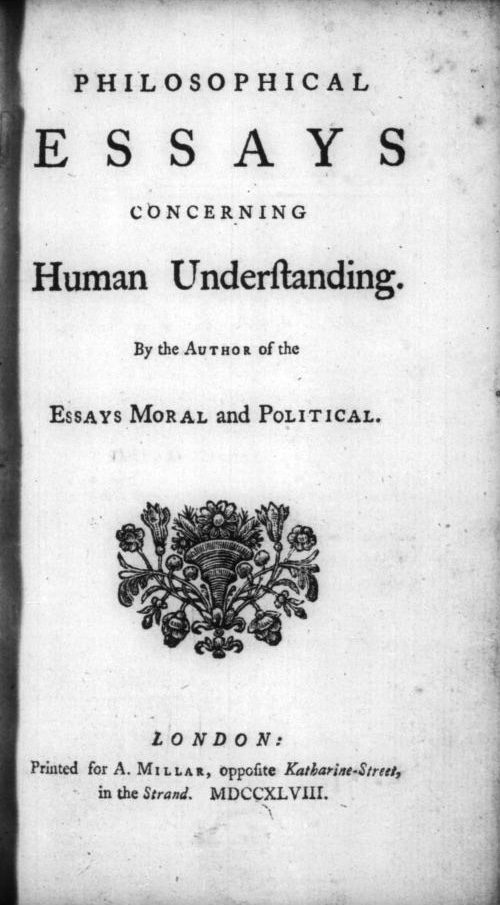
In 1748, in London, a Scottish philosopher named David Hume published a book with a plain title page: Philosophical Essays concerning Human Understanding. Hume asked a question that sounded polite and turned out to be hard to put down: how much evidence should it take before you believe something that goes against everything people have ever seen?
He kept writing about God for the rest of his life. He finished another book, Dialogues Concerning Natural Religion, in 1776, shortly before he died, and it was published in 1779 with no author’s or publisher’s name. In it three men argue over God in a conversation. Most scholars read one of them, Philo, as the voice closest to Hume’s own view. Philo repeats a very old set of questions about evil that he credits to the Greek thinker Epicurus (scholars doubt that Epicurus wrote them). You will meet those questions below.
Then, in 1955, a philosopher named J. L. Mackie wrote a paper called “Evil and Omnipotence.” Mackie argued that a believer could not hold three things at once: God is all-powerful, God is perfectly good, and evil exists. Philosophers have argued about that paper ever since. The best-known reply to it is the free-will defense you will meet below, and it worked against what Mackie claimed. What it left alone is most of this page. The arguments last because they are hard, not because they are loud.
What you were taught
If you grew up in the Church you already know the answer to the biggest of these questions, because you learned it in Primary, in seminary, or in a Sunday School lesson on Lehi’s words to his son Jacob. Why is there suffering? Because, as Lehi says, without opposition “righteousness could not be brought to pass.” Here is that answer in the scriptures’ own words.
2 Nephi 2:11, Lehi teaching his son Jacob
For it must needs be, that there is an opposition in all things. If not so, my firstborn in the wilderness, righteousness could not be brought to pass, neither wickedness, neither holiness nor misery, neither good nor bad.
One of the Church’s main scriptural answers to why there is pain. Good cannot exist unless something opposite to it exists too.
2 Nephi 2 on churchofjesuschrist.org2 Nephi 2:16 and 2:25
Wherefore, the Lord God gave unto man that he should act for himself. Wherefore, man could not act for himself save it should be that he was enticed by the one or the other. … Adam fell that men might be; and men are, that they might have joy.
Choice needs real options. Joy is the purpose. Verse 23 adds that without the fall, Adam and Eve “would have remained in a state of innocence, having no joy, for they knew no misery.”
Same chapterAlma 42:8, Alma teaching his son Corianton
Now behold, it was not expedient that man should be reclaimed from this temporal death, for that would destroy the great plan of happiness.
Notice what this says: death is part of the design. It is not an accident God failed to prevent.
Alma 42 on churchofjesuschrist.orgMosiah 4:9, King Benjamin
Believe in God; believe that he is, and that he created all things, both in heaven and in earth; believe that he has all wisdom, and all power, both in heaven and in earth; believe that man doth not comprehend all the things which the Lord can comprehend.
Three claims in one verse: all power, all wisdom, and a reminder that we will not see all his reasons.
Mosiah 4 on churchofjesuschrist.orgAbraham 3:24-25, the Pearl of Great Price
We will go down, for there is space there, and we will take of these materials, and we will make an earth whereon these may dwell; And we will prove them herewith, to see if they will do all things whatsoever the Lord their God shall command them.
Latter-day Saints take this to mean we lived with God before birth and were part of the plan for this life. A related line is Job 38:7 (KJV): “the morning stars sang together, and all the sons of God shouted for joy.”
Abraham 3 on churchofjesuschrist.orgDoctrine and Covenants 93:29-30
Man was also in the beginning with God. Intelligence, or the light of truth, was not created or made, neither indeed can be. All truth is independent in that sphere in which God has placed it, to act for itself, as all intelligence also; otherwise there is no existence.
This is a distinctly Latter-day Saint answer. God did not make our basic selves, so he could not simply program us to choose well. Alma 42:13 adds that “the work of justice could not be destroyed; if so, God would cease to be God.”
D&C 93 on churchofjesuschrist.orgChurch of Jesus Christ, Gospel Topics: “Adversity” (a Gospel Topics essay is an official Church explainer on a subject)
Other trials are simply a natural part of life and may come at times when people are living righteously. … Adversity may sometimes come because of others’ poor choices and hurtful words and actions.
The Church itself says not all suffering is a lesson or a punishment. Some of it is simply how life goes.
Adversity on churchofjesuschrist.orgThat is a real answer, from people who thought hard. It deserves its full strength: a world with no hard choices would have no courage, no forgiveness, and no love that cost anything. Many people have found comfort in it, and nothing on this page says they were foolish to.
And the scriptures do not pretend suffering is easy. When Joseph Smith was held in Liberty Jail in 1839, he prayed the prayer in D&C 121:1-3, and the Lord answered him (121:7-8).
Doctrine and Covenants 121:1-3 and 121:7, Liberty Jail, 1839
O God, where art thou? And where is the pavilion that covereth thy hiding place? How long shall thy hand be stayed, and thine eye, yea thy pure eye, behold from the eternal heavens the wrongs of thy people … My son, peace be unto thy soul; thine adversity and thine afflictions shall be but a small moment.
The prayer is the problem of evil, asked by a prophet. The reply is that it is short, and that it is good for him. D&C 122:7 adds, of every trial: “know thou, my son, that all these things shall give thee experience, and shall be for thy good.” And 122:8: “The Son of Man hath descended below them all. Art thou greater than he?”
D&C 121 on churchofjesuschrist.orgThese verses explain why choice exists and why hard times can shape us. None of them mentions a sick child or an animal in a fire.
That gap is where the philosophers go to work.
More than 270 years of the same question, asked better each time
Each step below is a real text you can read for yourself.
Sources: Hume, Enquiry and Dialogues; Mackie, “Evil and Omnipotence” (Mind, 1955); Internet Encyclopedia of Philosophy, “The Problem of Evil”; Stanford Encyclopedia of Philosophy
The exhibits
Here is each argument in its own author’s words, with the sentence before or after where it matters. One of the quotes below is from a character in a dialogue, not from Hume himself, and the exhibit says so.
Moroni 7:16, the Book of Mormon (printed in your scriptures today)
The Church’s own teaching
What it establishes: The Church teaches that everyone, in every place, can tell right from wrong. Verse 15 says the way to judge is “as plain, that ye may know with a perfect knowledge, as the daylight is from the dark night.” The verse goes on to say that what invites to do good and to believe in Christ comes from Christ. Hold onto the first part when we get to the question of where morality comes from.
Moroni 7 on churchofjesuschrist.orgDavid Hume, An Enquiry concerning Human Understanding, Section X, “Of Miracles” (E 10.12)
1748
What it establishes: Hume’s starting point. Notice he does not say miracles are impossible. He says the evidence against one starts very high.
Hume, Enquiry, Section XSame section (E 10.13)
1748
What it establishes: The test, in one sentence. A witness is believed if it would take a bigger miracle for the witness to be wrong than for the event to have happened.
Same sectionSame section (E 10.13)
1748
What it establishes: Hume applies the test to the resurrection of a man. It is the same test you use on any other story you hear.
Same sectionSame section (E 10.24)
1748
What it establishes: Every religion has miracle stories, and each religion says the others’ stories are false. By your own church’s reasoning about them, your church’s stories face the same test from everyone else.
Same sectionSame section (E 10.36), Hume stating the limits of his own claim
1748
What it establishes: This is the claim that matters for a church. Hume is not saying no one has ever seen anything wonderful. He is saying testimony about a wonder cannot carry the weight of a whole religion. A church is a system of religion built on miracle stories.
Same sectionDavid Hume, Dialogues Concerning Natural Religion, Part X. Spoken by the character Philo
1779 (published after Hume’s death)
What it establishes: The oldest form of the question, in plain words. Impotent means powerless; malevolent means wishing harm. This is a character speaking in a dialogue, not Hume himself. Just before it, Demea, the devout speaker in the dialogue, describes the world this way: “The whole earth, believe me, Philo, is cursed and polluted. A perpetual war is kindled amongst all living creatures.” Demea says it to show that people need religion. Philo uses the same picture to ask what it says about the God who made it. Most scholars read Philo as the voice closest to Hume’s own view, but Hume never said so.
Dialogues, Part XJ. L. Mackie, “Evil and Omnipotence,” Mind
1955
What it establishes: Omnipotent means all-powerful. Mackie adds that the contradiction needs extra rules to show: “that good is opposed to evil, in such a way that a good thing always eliminates evil as far as it can, and that there are no limits to what an omnipotent thing can do.”
Mackie, full paperSame paper, on the free-will answer
1955
What it establishes: Mackie asks why God could not have made people who freely choose well every time. This is the part of his argument that most philosophers now think Plantinga’s free-will defense answered (next exhibit), so this page does not rest on it.
Same paperInternet Encyclopedia of Philosophy, “The Problem of Evil,” on Plantinga’s free-will defense (1974)
Reference entry
What it establishes: The encyclopedia explains that Plantinga showed it is at least possible that every free person God could create would misuse their freedom at least once. This page concedes the point. The same encyclopedia says Rowe’s argument on the other question, how much suffering and of what kind, “has a strongly resilient character.”
IEP, The Problem of EvilStanford Encyclopedia of Philosophy, “The Problem of Evil,” presenting William Rowe’s argument
Entry quoting Rowe (1991)
What it establishes: Omnipotent means all-powerful; omniscient means all-knowing. Rowe’s point is not that evil exists. It is that some suffering is of a kind and size that no reason we can name could justify. Nobody chose it.
SEP, The Problem of EvilStanford Encyclopedia of Philosophy, “Divine Hiddenness,” presenting J. L. Schellenberg’s argument
Premise (1)
What it establishes: If a perfectly loving God wants a relationship with each of his children, people like this should not exist. Schellenberg says they do. This is his starting claim, and believers dispute it (see below).
SEP, Divine HiddennessPlato, Euthyphro (Jowett translation). Socrates is speaking
Written about 2,400 years ago
What it establishes: Pious means pleasing to the gods. The question was asked in Greece about many gods; philosophers later asked it about one. Change “the gods” to “God,” and “holy” to “good,” and it asks: is something good because God says so, or does God say it because it is already good?
Plato, EuthyphroThe five arguments, one at a time
For each one: what you were taught, the question, the main believing replies, and what they do not answer.
1. Why do the innocent suffer?
You were taught: opposition in all things, agency, the plan of happiness, and that we lived with God before we came here (Abraham 3:22-28). Above are the Church’s answers, at full strength.
The question: a philosopher named William Rowe gave this example. A fawn is caught in a forest fire and dies slowly and in terrible pain. No one chose anything in that story. The Book of Mormon plan explains why humans must be able to choose between good and bad. It says nothing about a fawn, a toddler with leukemia, or an earthquake.
First, a concession. Mackie went further and asked why God could not have made people who freely choose the good every time. The philosopher Alvin Plantinga answered that in 1974: it is at least possible that no group of free people God could create would always choose well. Most philosophers accept that this answers Mackie’s strict claim that God and evil cannot both exist. It says nothing about the fawn.
The Latter-day Saint replies come in four parts, and each deserves its full weight.
We agreed to the plan. Abraham 3 shows God laying out a plan before the earth was made. What it does not answer: a person who agreed to a plan before birth did not agree to be a fawn, and a toddler who dies has not yet been able to agree to anything. Consent to a plan is not consent to every cost in it. (That last step is this page’s own reasoning, not a quotation.)
God did not make our intelligence. D&C 93:29-30 says it “was not created or made.” So God could not simply make us always choose well. What it does not answer: the Church also teaches that God has “all power” (Mosiah 4:9). A God who did not make our wills still made a world of fire, disease and famine, and set it up with this much suffering in it. Our wills do not make an earthquake.
Children are saved, and the Son of Man suffered more. D&C 137:10 says “all children who die before they arrive at the years of accountability are saved in the celestial kingdom of heaven,” and D&C 122:8 says Christ “hath descended below them all.” Believers do not say a child’s suffering is pointless. They say it ends and is made right. What it does not answer: none of this says why it was allowed.
God knew us before we were born. The Church’s Foreordination page quotes Jeremiah 1:5: “Before I formed thee in the belly I knew thee; and before thou camest forth out of the womb I sanctified thee.” Set it beside childhood acute lymphoblastic leukemia. A research review says one early step, a gene fusion called ETV6-RUNX1, “predominantly, maybe even always, arises in utero,” and that it is not enough alone: “secondary postnatal mutations are necessary,” which is why most carriers stay healthy. Believers answer, fairly, that the verse was spoken to Jeremiah and that knowing is not causing. What that does not answer: a God with all power who knew the child before birth knew what had already begun in the womb, and the child had no part in it.
A world of steady laws is the only world where choices mean anything. The same laws that grow crops also burn forests. That explains why there is fire. It does not explain why so much of it falls on the young and the innocent.
2. Why would a loving God be hard to find?
You were taught: Moroni 10:4-5.
Moroni 10:4-5, the Book of Mormon’s closing promise
… if ye shall ask with a sincere heart, with real intent, having faith in Christ, he will manifest the truth of it unto you, by the power of the Holy Ghost. And by the power of the Holy Ghost ye may know the truth of all things.
The promise: if you ask “with a sincere heart, with real intent, having faith in Christ,” God will tell you the Book of Mormon is true.
Moroni 10 on churchofjesuschrist.orgThe question: a philosopher named J. L. Schellenberg asks about people who are open to God, want to know, and never come to believe. If a parent wanted a relationship with a child, the parent would make sure the child could tell the parent was there. This is harder than the question of evil, because the usual reply, human sin, does not fit people who are not resisting. Believers answer that only God can see whether someone is truly open, and the philosophers who reject Schellenberg’s starting claim say so (the Stanford Encyclopedia lists their replies).
The best reply: God stays hidden on purpose so that faith means something. The scriptures say “ye receive no witness until after the trial of your faith” (Ether 12:6) and “faith is not to have a perfect knowledge of things” (Alma 32:21). What it does not answer: a person can be sure their parents exist and still freely choose whether to love them. Being sure someone exists does not take away your choice about the relationship. The reply protects a freedom that was never at risk.
3. Why were so many sincere people taught opposite things?
You were taught: the First Vision.
Joseph Smith-History 1:19, the Pearl of Great Price
I was answered that I must join none of them, for they were all wrong; and the Personage who addressed me said that all their creeds were an abomination in his sight; that those professors were all corrupt…
And D&C 1:30 calls the Church “the only true and living church upon the face of the whole earth, with which I, the Lord, am well pleased, speaking unto the church collectively and not individually.”
Joseph Smith-History 1The question: a child born in Salt Lake City is taught the restored gospel. A child born in Riyadh, in Rome, in Varanasi is taught something else, and loves it just as sincerely. Hume saw that every religion’s miracle claims count against all the others (the exhibit above). They cannot all be right.
Here is how that looks in the scriptures themselves. Each is presented by its tradition as God’s own word (Qur’an quotes are the Sahih International translation).
| The question | One scripture says | Another says |
|---|---|---|
| Does God have a son? | “It is not [befitting] for Allah to take a son” (Qur’an 19:35) | “he gave his only begotten Son” (John 3:16, KJV) |
| Was Jesus crucified? | “they did not kill him, nor did they crucify him” (Qur’an 4:157) | “when they had crucified him” (Mark 15:24, KJV) |
| Does God have a body? | “God is a Spirit” (John 4:24, KJV) | “The Father has a body of flesh and bones as tangible as man’s” (D&C 130:22) |
The people who hold each row pray sincerely and report real answers. The rows cannot all be true, and a feeling from prayer does not tell you which one is.
The best reply: no one is lost for being born in the wrong place. Those who die without hearing the gospel will hear it in the spirit world, and baptisms for the dead let each one accept or refuse it (D&C 137:7-9). The Church says “the Lord does not damn those people who, through no fault of their own, never had the opportunity for baptism.” What it does not answer: this fixes the penalty, not the unevenness. It still does not say why birthplace decides who hears first, in a life where what you are taught shapes whom you love, or why a God who wants all his children to know leaves it to where a child is born. And the Church’s own scripture says the Spirit of Christ is given to every man (Moroni 7:16), so people everywhere already know what goodness is, with or without the Church.
4. Is it good because God says so?
You were taught: obey the commandments.
1 Nephi 4:10-13, Nephi at the gate of Jerusalem
And it came to pass that I was constrained by the Spirit that I should kill Laban; but I said in my heart: Never at any time have I shed the blood of man. And I shrunk and would that I might not slay him. … Behold the Lord slayeth the wicked to bring forth his righteous purposes. It is better that one man should perish than that a nation should dwindle and perish in unbelief.
You may remember the weight of this story. Nephi gives his reasons in verse 11: Laban “had sought to take away mine own life” and “had taken away our property.” The Bible has harder ones. In 1 Samuel 15:3 (KJV), the command to King Saul to destroy the Amalekites is to “slay both man and woman, infant and suckling.”
1 Nephi 4 on churchofjesuschrist.orgThe question, from Plato: if an act is right because God commands it, then any act would be right if God commanded it. If God commands it because it is already right, then right and wrong are a standard God did not make, and he is only following it.
The best reply: God does not command by whim. His commands come from his nature, which is perfectly good. The scriptures say God cannot lie (Hebrews 6:18, KJV), and believers take that to mean his word and his character always agree. What it does not answer: if “good” just means “what God is like,” then the question “Is this command good?” is empty. We can ask it, and it feels like a real question, because we already have an idea of good to measure God’s commands against. Moroni 7:15-16 says you do. Then Nephi’s order to kill Laban and the command to Saul can be held up against it.
5. Should we believe a miracle?
You were taught: miracles are how God shows his hand.
The question: Hume’s test is not that miracles cannot happen. It is that the testimony has to be stronger than the likelihood that the witness is mistaken. You probably already use it on miracle stories from other religions.
The strongest objection to Hume is that his phrase “firm and unalterable experience” seems to assume miracles never happen before he starts. Philosophers still argue about whether he avoids that circle (the Stanford Encyclopedia lists critics such as John Earman and defenders such as Peter Millican). Hume himself did not call miracles impossible. He wrote that a miracle “can never be proved, so as to be the foundation of a system of religion” (E 10.36). That is the claim that matters for a church, because a church is a system of religion built on miracle stories.
Taking the miracle as real would not settle which religion is true, because the Bible says a wonder can come from the wrong side. Deuteronomy 13:1-3 says that if a prophet gives “a sign or a wonder” and it “come to pass,” but tells you to follow other gods, “Thou shalt not hearken unto the words of that prophet.” Jesus said “false Christs, and false prophets” will “shew great signs and wonders,” so that “if it were possible, they shall deceive the very elect” (Matthew 24:24, KJV). Believers take that to mean the elect will see through it. Either way, the Bible’s own rule is that a sign alone does not prove who sent it.
The gold plates also end where Joseph Smith ends their story: “I delivered them up to him; and he has them in his charge until this day, being the second day of May, one thousand eight hundred and thirty-eight” (Joseph Smith-History 1:60, written in 1838). What is left for us to weigh is the testimony about them, and the book itself, which Moroni 10:4 invites you to test. Testimony is exactly what Hume’s test is for. (The separate page on the witnesses covers who they were and what they said.)
What the replies do not answer
Here is the same ground in a single table.
| The argument | The standard reply | What the reply does not answer |
|---|---|---|
| Evil and suffering (Philo, Mackie, Rowe) | Opposition in all things; we agreed to the plan; God did not make our intelligence; children are saved (2 Nephi 2; Abraham 3; D&C 93, 137); God’s reasons are beyond us (Mosiah 4:9). | Suffering nobody chose, such as a fawn in a forest fire or a child with leukemia. Plantinga answered Mackie’s logical claim. This is the other question. |
| Divine hiddenness (Schellenberg) | God stays hidden so faith can be free (Ether 12:6; Alma 32:21). | Believing a person exists does not take away your freedom to love them. Schellenberg says some people who are open to God never believe, which this reply does not explain. |
| Many faiths (Hume on rival miracles) | Those who never heard will hear in the spirit world, and the dead can accept or refuse (D&C 137:7-9). | No one is lost for where they were born, but birthplace still decides who hears first. The Spirit of Christ is already given to every man (Moroni 7:16). |
| Morality (Euthyphro) | God’s nature is good, so his commands are good. | “Good” has to mean something we can recognize on our own, or the question “is this command good?” is empty. Then it can be asked of Laban and of Saul. |
| Miracles (Hume) | Hume assumes miracles never happen, so his argument goes in a circle. | Hume says he does not (E 10.13). Whether his argument avoids the circle is still argued. What he claims is narrower: testimony cannot be the foundation of a religion (E 10.36). And a wonder can come from either side (Deuteronomy 13:1-3; Matthew 24:24). |
The plan of salvation, as an answer to evil
What it explains, and what it does not.
- Why a world with real choices must have bad options
- Why a person can grow through trouble they did not cause
- Why Jesus’s sacrifice is the center of the story (Alma 42:15)
- Pain in animals, which nobody chose (Rowe’s fawn)
- Children who suffer and die without having chosen anything
- Why a world of choice needs this much suffering, of this kind, falling on those who chose nothing
- Why people who are open and seeking never find
Sources: 2 Nephi 2; Alma 42; Rowe, via SEP
What is true on the other side
Three things on the believing side are strong.
First, the argument that God and evil cannot both exist is now widely seen as answered. The philosopher Alvin Plantinga’s free-will defense (1974) did it. The Internet Encyclopedia of Philosophy sums it up: “Mackie was wrong to think that it is logically impossible for both” to be true. That is why this page does not rest on it. What is still argued is the other question: how much suffering there is, of what kind, with no visible point. The same encyclopedia says Rowe’s argument on that question “has a strongly resilient character.”
Second, Mosiah 4:9 is right that a person cannot see the whole picture, and philosophers have turned that into a serious position (skeptical theism). There are good-faith limits on what anyone can know about God’s reasons.
Third, a believer who has read all of this can still say: I trust. That is a real position.
Where the famous modern writers fit
Three writers, Richard Dawkins, Christopher Hitchens, and Sam Harris, are often named together. For many members those names sound like an attack. This page does not rely on anyone’s tone. The useful part of each is a single argument you can weigh yourself.
- Dawkins argues that explaining a complex world by a designer raises the question of who designed the designer, because a being able to design a universe would be at least as improbable as the world it explains. The standard believing reply is that God is not complex at all, but simple: Christian philosophers say God has no parts, so there is nothing in him to explain. Latter-day Saints teach that the Father “has a body of flesh and bones as tangible as man’s” (D&C 130:22) and that intelligence was not created (D&C 93:29), so that reply is not theirs to give in the same way.
- Hitchens called the idea of vicarious redemption repulsive and said he would not want his sins carried by someone else (Letters to a Young Contrarian, 2001). The believing reply is that the gift is offered by God himself and takes effect on repentance. Alma 42:15 says: “God himself atoneth for the sins of the world, to bring about the plan of mercy, to appease the demands of justice.” Both sides are on the table.
- Harris argued that beliefs held on faith are, by definition, not held because of evidence, so evidence cannot correct them (The End of Faith, 2004).
The common rebuttals
“We just cannot understand God’s ways. He sees the whole plan.”
This is Mosiah 4:9 used as a final word, and it is the main philosophical reply to Rowe (philosophers call it skeptical theism). It deserves its full strength: we cannot expect to see every good a wise being might be aiming at. But look at what it asks. It asks you to treat the lack of any visible reason as very weak evidence, however much suffering there is. The plan of salvation does give reasons (the fall, death in Alma 42:8, opposition), and the reasons it gives do not reach the cases above. Critics add a cost: if we cannot judge whether a horror could be justified, we lose our grip on what a good God would do. Defenders reply that what God ought to do and what we ought to do are different questions. Both sides are in the Stanford Encyclopedia.
“Without the bad, there could be no good. That is the whole point of 2 Nephi 2.”
Some goods do need hard things. Courage needs danger. It does not follow that every bad thing is needed, and no one chose a toddler’s cancer. The Church’s own Adversity page says some trials “are simply a natural part of life and may come at times when people are living righteously.” Believers add that steady natural laws are the only kind of world where choices mean anything, and point 1 above shows what that leaves unanswered.
“I prayed, and I got my answer. That is better than any argument.”
That is a real experience, and nothing here says it was not. People in other faiths report real answers to prayer too, and what each of you was told contradicts what the other was told. Hume made the same point about miracle stories (E 10.24, above). A feeling that comes in answer to prayer cannot, by itself, separate the true one from the others. The separate page on testimony takes this up directly.
Each reply answers a smaller question than the one that was asked.
Why must there be choices? Why must faith come before knowing? Those are the questions the plan answers. The ones left over are the ones that matter.
What this means
You were taught that God is all-powerful, that he is perfectly good, that he is near to anyone who asks, and that his true church is on the earth. Then you read the strongest arguments against that, in their authors’ words, next to the main replies from your own scriptures.
The replies are good answers to why choices exist. They are not answers to suffering nobody chose, to people who seek and never find, to a world that teaches opposite religions to equally sincere children, or to a goodness that has to be recognized before it can be obeyed.
Every part of that is checkable. The verses are in your own scriptures, and the arguments are in books you can find in a library. The standard replies have been on the table for generations, and each one still leaves the gap described above. The question the evidence leaves is not whether God has a reason. It is whether the God who was described to you is the one who would have made this world.