Beyond religion
Health Claims and the Same Test
One retracted paper, a raw-milk ratio, and a vial with one small human study behind it. Run the same test on all of them, and count who pays.
The point in one sentence
When the evidence standard this site applies to religion is applied to popular health claims (vaccines and autism, raw milk, injectable peptides), the claims fail it. With measles, the people who paid were children.
The world it came from
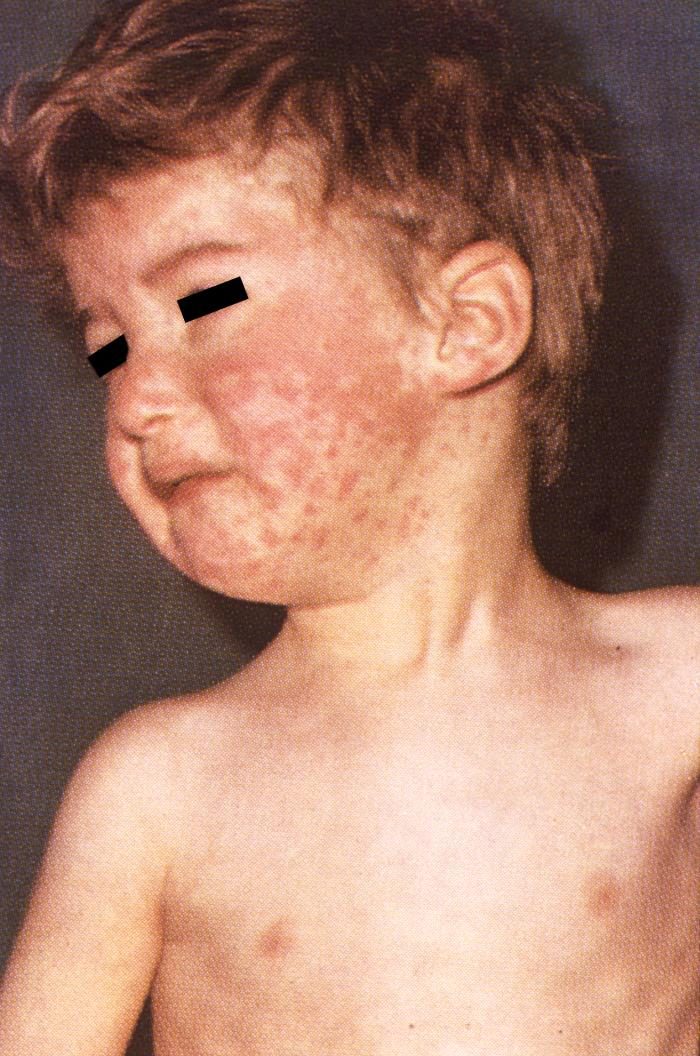
If you grew up in Utah, or in a Latter-day Saint family anywhere, you probably never saw a case of measles, or saw one only in an old photo. That was not an accident. It was the result of a vaccine that worked so well that people forgot what it was for. The United States declared measles eliminated in 2000, which means the disease was no longer spreading year after year inside the country.
Then, in 1998, a British doctor named Andrew Wakefield published a paper in The Lancet, a major medical journal, that raised the idea the MMR shot (measles, mumps, rubella) might be linked to autism. It was based on twelve children. Many parents of children with autism were looking for an explanation. A doctor in a respected journal gave them one. It is easy to see why that landed. Most people who believed it were trying to protect their kids.
What they did not know, and what took years to come out, was how the paper had been put together. A journalist named Brian Deer dug into it. He found that Wakefield had been paid £435,643 plus expenses by a solicitor building a lawsuit against vaccine makers, and that in June 1997, months before the press conference about the paper, he had “covertly filed for a patent on products, including his own supposedly ‘safer’ single measles vaccine.” The payment was never revealed to the journal’s editors or his colleagues.
The story did not end with the paper. It became a belief that lived on its own, among neighbors and friends, long after the evidence behind it was gone. The same pattern shows up in raw milk and, more recently, in injectable peptides sold online. Different products, same question: what is the evidence, and who checked it?
What was claimed, and what happened to it
The Lancet, retraction of the 1998 Wakefield paper, February 2, 2010 (as quoted on Wikipedia; the journal’s own page would not load for our fetch)
The claims in the original paper that children were “consecutively referred” and that investigations were “approved” by the local ethics committee have been proven to be false.
The Lancet then retracted the paper completely (per journalist Brian Deer), days after the UK General Medical Council’s findings. Note what the notice says: not that the conclusion was unproven, but that parts of the paper’s description of how the children were chosen and approved were false.
Quoted in the Wikipedia article on WakefieldRobert F. Kennedy Jr., HHS Secretary, cabinet meeting, February 26, 2025, on the measles outbreak that had begun in Texas (as reported by NBC News)
We are following the measles epidemic every day. Incidentally, there have been four measles outbreaks this year. In this country last year there were 16. So, it’s not unusual. We have measles outbreaks every year.
Said on the day Texas announced the first measles death in the country in ten years. That day he also said two people had died, when the Lubbock health department had confirmed one (NBC News). By April a second child in Lubbock had died. Texas health officials said of the two children: “The children were not vaccinated and had no known underlying conditions.” In April 2025 he also said that “the most effective way to prevent the spread of measles is the MMR vaccine.” Both are quoted so you can see the whole picture.
NBC News report of the meetingA claim can be sincere and still be wrong. The only way to tell is to check it.
Here is what happened when each of these claims was checked.
From one paper to thousands of measles cases a year
Dates are from the record: the GMC, the Lancet, the BMJ, the CDC, the First Presidency, and Utah’s health department.
Sources: Brian Deer; Wikipedia (Wakefield, Samoa, New Mexico death); CDC; Texas DSHS; Utah DHHS; KSL (First Presidency statement)
The exhibits
The Church’s own words come first, as published by KSL (the Church’s own newsroom page for this statement could not be found), then Utah’s health department and the CDC, then the studies. Every quote is word for word, and every one is linked.
The First Presidency of The Church of Jesus Christ of Latter-day Saints (Russell M. Nelson, Dallin H. Oaks, Henry B. Eyring), statement released August 12, 2021, as published by KSL
August 12, 2021
What it establishes: This was about COVID-19, not measles. It does not say the Church takes a position on every vaccine. The statement also asks members to wear masks; that sentence is skipped above. What it does show is how the Church’s highest leaders described the principle: vaccines are safe and effective, and protection depends on a very high percentage of people being immunized. It says “we urge,” not “we require.” If you are hesitant about vaccines in general, this is not a statement about the MMR, but it is the Church’s own wording of the idea.
Read the full statement as published by KSLUtah Department of Health and Human Services, measles outbreak response page
As of October 13, 2026
What it establishes: The 12% is the MMR exemption rate for the 2025 to 2026 school year (the page also reports nearly 12% for any school-required vaccine). Utah’s health department does not say which families these are or why, and this page does not claim to know. The page also says 9.4% of confirmed cases were breakthrough infections in vaccinated people, which is what you expect from any vaccine: it lowers risk a great deal without erasing it.
Utah DHHS measles pageCenters for Disease Control and Prevention, SchoolVaxView, 2025-2026 school year
Kindergarten data, 2025-2026 school year
What it establishes: Utah’s figure (nearly 12% with an exemption to a school-required vaccine, in-person students) is nearly three times the national one. Measles needs very high coverage to stay out of a community, which is why a number like this matters.
CDC SchoolVaxViewMadsen et al., “A population-based study of measles, mumps, and rubella vaccination and autism,” New England Journal of Medicine
2002
What it establishes: The study’s group was children born in Denmark from 1991 through 1998, followed through national records. Not a survey and not a volunteer group. This kind of study is called a cohort study: it follows a large group of people over time and counts who gets sick.
The paper on PubMedHviid et al., “Measles, Mumps, Rubella Vaccination and Autism: A Nationwide Cohort Study,” Annals of Internal Medicine
2019
What it establishes: In plain words: vaccinated children were diagnosed with autism about as often as unvaccinated children (a ratio of 0.93, where 1.00 would mean no difference). A second, larger Danish study, with a check on children who may be more susceptible. Same answer.
The paper on PubMed“Measles virus infection diminishes preexisting antibodies that offer protection from other pathogens,” Science
2019
What it establishes: This speaks to one version of “natural immunity is better.” Catching measles can erase part of what the body already knew how to fight, and vaccinated infants did not show this.
The paper on PubMedThe visual breakdown
Here is the most checkable thing on the page: the numbers. First, how many children stood behind each answer.
One paper, then the studies that checked it
Number of children in each study, drawn on a true scale. Wakefield’s paper, retracted by The Lancet, used twelve.
Sources: PubMed records for each study; the Wakefield bar is a sliver because twelve out of over a million is a sliver
Second, the claims people actually repeat, set against what the evidence shows.
| The claim | What the evidence shows | Source |
|---|---|---|
| “The MMR shot causes autism.” | Two large Danish studies (537,303 and 657,461 children) and a review that pooled five studies (1,256,407 children, all vaccines) found no link. The one paper that said otherwise was retracted and its author struck off. | NEJM 2002; Annals 2019; Vaccine 2014; The Lancet 2010; GMC 2010 |
| “Natural immunity is better than the shot.” | In 77 unvaccinated children, measles erased 11 to 73% of the antibodies they already had to other germs. This was not seen in vaccinated infants. | Science, 2019 |
| “Infants get too many vaccines, too soon.” | A 2002 review found infants “actually encounter fewer antigens in vaccines today than they did 40 or 100 years ago.” | Pediatrics, 2002 |
| “Raw milk is safer and healthier.” | Unpasteurized milk (drunk by 3.2% of people) and cheese (1.6%) caused 96% of the illnesses from contaminated dairy in outbreaks. Per serving, that is 840 times the illnesses and 45 times the hospitalizations of pasteurized dairy (model estimates from 2009 to 2014 outbreak data). | Costard et al., Emerging Infectious Diseases, published 2017 (outbreak illness only; modeled) |
| “BPC-157 heals injuries.” | Of 36 studies found, 35 were in animals or cells. One was in people: 12 patients with knee pain. FDA reviewers called a 53-person ulcerative colitis (UC) report “inadequate to support the efficacy and safety of BPC-157 given as an enema for two weeks for the treatment of UC.” | HSS Journal, 2025; FDA briefing document, July 2026 |
Third, what happened when fewer children were protected.
Measles cases in the United States, by year
CDC counts. 2026 is a partial year, through October 8. The disease was declared eliminated in 2000.
Source: CDC, Measles Cases and Outbreaks. For comparison, 2019 had 1,274 cases.
Utah is part of this story
Share of kindergartners with an exemption from one or more school-required vaccines. Drawn on a true scale against 100% of kindergartners.
Sources: CDC SchoolVaxView; Utah DHHS measles response page. Utah reports 12.7% when online students are included. The US figure covers all kindergartners; Utah’s covers in-person students.
The same test, on the other claims
Raw milk
Share of people who drank it, against share of the illness
Costard et al., CDC. Years 2009 to 2014. On a true scale.
Source: Costard et al., Emerging Infectious Diseases, 2017. Outbreak-related illness only; modeled.
The study analyzed 87 outbreaks and estimated, with a model, an average of 760 illnesses and 22 hospitalizations a year. Per serving, it found unpasteurized products caused 840 times more illnesses (range 611 to 1,158) and 45 times more hospitalizations (range 34 to 59) than pasteurized ones. The authors note that outbreak illnesses are only a fraction of all dairy illness in the country. They report that more than 95% of these illnesses were salmonellosis and campylobacteriosis, which are infections with Salmonella and Campylobacter bacteria.
The CDC says plainly who is at higher risk: “children under 5, adults over 65, pregnant women, and people with weakened immune systems.” It also says that “more severe outcomes like Guillain-Barré syndrome or hemolytic uremic syndrome can occur, potentially leading to paralysis, kidney failure, stroke, or even death.”
A 2025 Nature Medicine study added one more thing. Bird flu virus stayed infectious in raw-milk cheese “up to 120 days of aging” when the milk was at certain acidity levels. In the same study, ferrets fed contaminated raw milk became infected, but ferrets fed the cheese did not (four ferrets in each group). The authors wrote that this “underscor[es] the potential public health risks.”
Peptides: the same standard, run in both directions
Being careful about what goes into your body is a good instinct, and this page does not argue with it. It asks you to use it the same way twice.
The COVID vaccine was tested on tens of thousands of people before approval. BPC-157, an injectable peptide sold online, has far less human testing behind it.
The same standard, applied to both
What stands behind each one.
| Pfizer COVID vaccine (Comirnaty) | BPC-157 | |
|---|---|---|
| Human evidence | FDA review of about 22,000 people aged 16 and older who got the vaccine and 22,000 who got a placebo | A handful of small reports, mostly meeting abstracts: 12 people with knee pain, 53 with ulcerative colitis, 32 healthy volunteers, 17 chart-review patients. FDA staff: “insufficient clinical safety information to characterize the safety profile.” |
| What reviewers said | Approved August 23, 2021: “Today, the U.S. Food and Drug Administration approved the first COVID-19 vaccine.” | FDA staff: the abstract data “are therefore inadequate to support the efficacy and safety of BPC-157 given as an enema for two weeks for the treatment of UC.” |
| Where it was tested | Placebo-controlled trial, before approval | 35 of 36 published studies were in animals or cells |
Sources: FDA, August 23, 2021; Vasireddi et al., HSS Journal 2025; FDA briefing document, July 2026
On July 23 and 24, 2026, an FDA advisory committee voted on seven peptides. According to STAT, BPC-157 was recommended 8 to 6, and six of the seven were recommended. FDA’s own roster shows eight of the eleven regular voting members began their terms in April or May 2026, and STAT reports that several panelists “had ties to the peptide industry and were appointed by the Health and Human Services Department.” The vote is advisory: STAT notes the FDA does not have to follow it. FDA’s own staff proposed not adding BPC-157 to the list and wrote that the BPC-157 data were inadequate.
And what is actually in a vial? A 2024 study bought semaglutide, the drug in Ozempic, from online sellers with no prescription and tested three vials. Purity was “between 7.7% and 14.37%” against the 99% on the label, and endotoxin (a bacterial contaminant) “was detected in all samples.” That is three vials and a different drug, so it proves nothing about BPC-157 specifically. It shows what a label on a vial sold online without a prescription can be worth. A trial gives you a measured dose. That kind of vial gives you a label.
The man now in charge of the department
Robert F. Kennedy Jr. is the Secretary of Health and Human Services. This section sticks to his own words and official actions, with dates.
CDC, “Autism and Vaccines” page (cdc.gov/vaccine-safety/about/autism.html), as read October 13, 2026
The claim “vaccines do not cause autism” is not an evidence-based claim because studies have not ruled out the possibility that infant vaccines cause autism.
This is the CDC’s own page, dated July 22, 2026. Read two things together. The same page says reviews by the Institute of Medicine and the Agency for Healthcare Research and Quality “maintain with a high strength of evidence that there is no association” between the MMR vaccine and autism. And its new claim is about the full infant schedule: no study has proven those doses do not cause autism. That is a statement about what has not been tested, not a finding that a link exists. The page also says studies supporting a link have been ignored by health authorities. The large Danish studies above followed about 1.2 million children combined and found no link, and the one paper that said otherwise was retracted.
The CDC pageIn 2019 Kennedy traveled to Samoa and met local anti-vaccine activists (Wikipedia, citing news reports). Samoa’s coverage had collapsed to about a third after a nurse error in July 2018 killed two infants and the government suspended its program for ten months. That collapse was not Kennedy’s doing. But the outbreak that followed, from October 2019 into early 2020, was about 5,700 cases and 83 deaths. Wikipedia reports that 61 of the first 70 deaths were children aged four and under. The full account of what he has done in office, including the vaccine panel, is on Vaccines Under Kennedy.
What is true on the other side
- Trust in public health really did drop. Guidance changed fast during COVID, and some of it turned out wrong. Being slow to trust an agency is not stupid.
- Myocarditis after mRNA COVID vaccines is real. In a large English study, the extra cases per million in the 28 days after a dose were 1 after a first Pfizer dose, 6 after a first Moderna dose and 10 after a second Moderna dose. But the same study found “an extra 40 (95% CI 38, 41) myocarditis events per 1 million patients in the 28 days following a SARS-CoV-2 positive test.” Catching the virus carried more of that risk than the shot did. (Nature Medicine, 2022.)
- Some peptides are real medicines. Semaglutide went through large trials. And BPC-157 is no longer on FDA’s highest-concern list as of the page dated April 22, 2026: its nomination was withdrawn by the people who proposed it. The same page still says compounded drugs with BPC-157 “may pose risk for immunogenicity.” That is not an approval. The 2025 review authors also wrote that BPC-157 “shows promise for promoting recovery from musculoskeletal injuries,” while warning that unregulated manufacturing makes harm possible.
- Kennedy has said the MMR vaccine works. On April 6, 2025 he said that “the most effective way to prevent the spread of measles is the MMR vaccine.”
- Vaccinated people can still catch measles, but far less often. In Utah’s outbreak about 9.4% of confirmed cases were in vaccinated people, and most cases were in unvaccinated people, who are a small minority of the state’s population.
- Vaccines are not risk-free. The myocarditis numbers above are one example. The question is how the risks compare to the disease.
The common rebuttals
“The government and the drug companies have lied before. Why trust them now?”
It is a fair question, and it should be asked of every source, including the ones that tell you what you want to hear. The Danish studies above were not run by one company; they covered children across a whole country. The retraction was done by the journal that printed the original claim. And the same question has to be asked of an online seller: in one 2024 test of three semaglutide vials, purity was between 7.7% and 14.37%. If you are careful about what goes into your body, that instinct is worth keeping. The test is whether you use it on every product, including the ones you like.
“It is my choice, and my family’s. The Church teaches agency.”
It is your choice. This page does not argue otherwise. It asks only what the evidence says about the choice. The First Presidency’s statement, which was about COVID, not measles, urged and did not require: “we urge individuals to be vaccinated. Available vaccines have proven to be both safe and effective.” It leaves the decision with you.
“Natural immunity is better.”
People who say this usually mean immunity to the same disease, and for measles itself, catching it does leave lasting protection. The Science study asks a different question: what else the disease costs. In 77 unvaccinated children, measles erased 11 to 73% of the antibody types they already had against other germs. Vaccinated infants did not show this. That is a reason the disease is not a free way to get protection.
“I know someone it happened to.”
That is a real experience, and nobody is saying it did not feel real. When you are frightened, you look for a cause, and that is exactly why the studies above follow hundreds of thousands of children and compare. It is also why “it worked for me” cannot be the test for a peptide.
The test has no side.
It is the same test whether the claim is about a vaccine, a glass of milk, a vial, or a church.
What this means
Strip it down to what you just saw. One paper, with twelve children, was retracted by the journal that printed it, and the man who wrote it was struck off. Large studies, including two Danish studies of about 1.2 million children combined, found no link between MMR and autism. The country that had measles “a memory” counted 2,289 cases in 2025 and 4,080 so far in 2026 (as of October 8). Two unvaccinated school-age children died of measles in West Texas in 2025. In Samoa the number was 83 deaths, most of them small children. In Utah, 724 people have had measles in this outbreak, in a state where nearly 12% of in-person kindergartners have an exemption (2025-26 school year), nearly three times the national rate.
Many people who skip the shot, drink raw milk, or buy an unregulated vial do so for one reason: a feeling that the evidence does not apply to them this time.
The First Presidency’s 2021 statement about COVID-19 said vaccines “have proven to be both safe and effective” and told members to follow “the wise and thoughtful recommendations of medical experts and government leaders.” That is an appeal to evidence outside the Church’s own authority. Whether your family’s feeling of certainty was ever a reliable test is the question Why Smart People Keep Believing asks, and Flat Earth shows the same pattern in its purest form. If a feeling of certainty cannot be trusted over a vaccine trial, a measles count or a lab test, what makes it the right test for the claim that matters most?
Numbers on this page were checked October 13, 2026 and will change.