The institution
Race and the Priesthood
For 126 years the Church withheld the priesthood from Black men. The First Presidency called it God’s commandment. In 2013 the Church disavowed some of the reasons.
The point in one sentence
For 126 years the Church withheld the priesthood from Black men and the temple endowment from Black members. The First Presidency told members the restriction was a commandment from the Lord and gave reasons for it, and the Church’s own 2013 essay now disavows some of those reasons and describes a policy that Brigham Young announced in 1852. That essay also says Black men were ordained under Joseph Smith.
If you grew up in the Church, you were probably taught that the restriction came from God, or else that no one knows why it existed. This page starts with what the First Presidency itself wrote, and sets it beside what the Church’s own essay says today.
What is true on the other side
The believing position here is stronger than on most pages, and it should be stated at full strength first.
The restriction ended by a revelation the Church holds to be real. The Church’s essay describes it: “In June 1978, after ‘spending many hours in the Upper Room of the [Salt Lake] Temple supplicating the Lord for divine guidance,’ Church President Spencer W. Kimball, his counselors in the First Presidency, and members of the Quorum of the Twelve Apostles received a revelation.” Official Declaration 2 is now scripture, sustained “unanimous in the affirmative” at general conference on September 30, 1978.
The Church has also said, in plain words and in its own name, that it no longer holds the reasons that were given: “Today, the Church disavows the theories advanced in the past that black skin is a sign of divine disfavor or curse, or that it reflects unrighteous actions in a premortal life; that mixed-race marriages are a sin; or that blacks or people of any other race or ethnicity are inferior in any way to anyone else.” It adds: “Church leaders today unequivocally condemn all racism, past and present, in any form.”
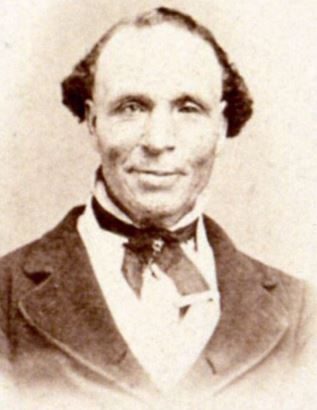
And the essay says the restriction did not begin with the founder. “During the first two decades of the Church’s existence, a few black men were ordained to the priesthood,” and “There is no reliable evidence that any black men were denied the priesthood during Joseph Smith’s lifetime.” Elijah Abel is the best-documented example.
The essay disavows the theories and condemns racism. It does not contain an apology: the words “apologize,” “forgive” and “mistake” do not appear in it. Believers also point out that the Book of Mormon, in the Church’s own words, “declared that the gospel message of salvation should go forth to ‘every nation, kindred, tongue, and people,’” that the essay closes on 2 Nephi 26:33 (“[The Lord] denieth none that cometh unto him, black and white, bond and free, male and female; … all are alike unto God, both Jew and Gentile”), and that the revelation of 1978 ended the temple restriction as well as the priesthood one.
All of that is on the record and none of it is disputed here. This page asks something narrower: what did the First Presidency, the Church’s top leadership, tell its members the restriction was while it was in force, and what is left of those statements now?
The world it came from
The Church’s essay opens this part of the story by describing the country: “The Church of Jesus Christ of Latter-day Saints was restored amidst a highly contentious racial culture in which whites were afforded great privilege.” It gives the markers: in 1790 Congress “limited citizenship to ‘free white person[s].’” In 1857 the Supreme Court “declared that blacks possessed ‘no rights which the white man was bound to respect.’” Not until 1967 “did the Court strike down laws forbidding interracial marriage.”
Utah arrived into that country in 1850. The essay: “In 1850, the U.S. Congress created Utah Territory, and the U.S. president appointed Brigham Young to the position of territorial governor. Southerners who had converted to the Church and migrated to Utah with their slaves raised the question of slavery’s legal status in the territory.” Two years later came the speeches: “In two speeches delivered before the Utah territorial legislature in January and February 1852, Brigham Young announced a policy restricting men of black African descent from priesthood ordination.” At the same time, the essay says, Young “said that at some future day, black Church members would ‘have [all] the privilege and more’ enjoyed by other members.”
The essay is direct about where the reasons came from: “The justifications for this restriction echoed the widespread ideas about racial inferiority that had been used to argue for the legalization of black ‘servitude’ in the Territory of Utah.” And it is direct that the policy outlived its stated setting: “Although slavery was not a significant factor in Utah’s economy and was soon abolished, the restriction on priesthood ordinations remained.”
What came before 1852 matters just as much. Abel was ordained in 1836, and the essay adds that “In a private Church council three years after Joseph Smith’s death, Brigham Young praised Q. Walker Lewis, a black man who had been ordained to the priesthood, saying, ‘We have one of the best Elders, an African.’” After 1852 the Church’s history page says Abel “retained his priesthood office and standing,” but his request for the endowment was denied, and a second request in 1879 was denied by President John Taylor. He “remained faithful until his passing on December 25, 1884.”
What the First Presidency said
The next two documents are the center of the page. Both are from the First Presidency. Neither was a sermon.
First Presidency statement, August 17, 1949 (signed George Albert Smith, J. Reuben Clark, David O. McKay)
The attitude of the Church with reference to Negroes remains as it has always stood. It is not a matter of the declaration of a policy but of direct commandment from the Lord, on which is founded the doctrine of the Church from the days of its organization, to the effect that Negroes may become members of the Church but that they are not entitled to the priesthood at the present time. … Under this principle there is no injustice whatsoever involved in this deprivation as to the holding of the priesthood by the Negroes.
Provenance: the site wasmormon.org reproduces the text and says that a Church Historian’s communication in August 2020 confirmed it “was used by the First Presidency in responses to inquiries about the priesthood restriction for several years beginning in 1949,” and that it “was never issued publicly but, rather, was used as standard language in private correspondence.” This page has not seen that communication itself. So this was not a public proclamation: on that account it was the First Presidency’s standing answer to inquiries. The words “at the present time” leave the door open, which is the believing reading, and it is a fair one. Bold is added.
The 1949 text, as reproduced by wasmormon.orgFirst Presidency statement, December 15, 1969, addressed “To General Authorities, Regional Representatives of the Twelve, Stake Presidents, Mission Presidents, and Bishops”
From the beginning of this dispensation, Joseph Smith and all succeeding presidents of the Church have taught that Negroes, while spirit children of a common Father, and the progeny of our earthly parents Adam and Eve, were not yet to receive the priesthood, for reasons which we believe are known to God, but which He has not made fully known to man. … The seeming discrimination by the Church toward the Negro is not something which originated with man; but goes back into the beginning with God…
Read the first sentence against the Church’s 2013 essay, which says Black men were ordained under Joseph Smith and that there is “no reliable evidence” any were denied the priesthood in his lifetime. The verbs differ (“taught” against “denied”), but the 1969 letter places the teaching at “the beginning of this dispensation,” and the essay’s record places the first announcement in 1852. The same letter also says “Until God reveals His will in this matter, to him whom we sustain as a prophet, we are bound by that same will,” and it says that the Negro, as well as those of other races, “should have his full Constitutional privileges.” Bold is added. The text is reproduced by FAIR (the letter is signed by Hugh B. Brown and N. Eldon Tanner), which gives no archive or newspaper citation; this page has not found the letter in a Church publication.
The 1969 statement, reproduced by FAIRIn 1949 and 1969 the First Presidency said the restriction came from God.
The Church says in 2013 that none of the explanations is accepted today, and calls the restriction a policy that began in 1852.
From Abel to the essay
The restriction and its reversal, with the dates that matter.
Sources: Gospel Topics essay “Race and the Priesthood”; Church History topics on Elijah Able and Jane Elizabeth Manning James; the 1949 and 1969 statements; Official Declaration 2
The exhibits
These come from the Church’s own pages first. Each quote is word for word. Bold is added for emphasis.
Gospel Topics essay, “Race and the Priesthood,” the opening on the length of the restriction
Published 2013
What it establishes: The Church states the scope itself: priesthood for men, and the temple endowment and sealing for men and women. The essay’s own dating is “from the mid-1800s until 1978.” This page counts 126 years from the 1852 announcement to the June 1978 revelation.
Read the essayThe same essay, on the explanations
Published 2013
What it establishes: The word “today” carries weight. This sentence does not say that these explanations were never official. It says they are not accepted as official doctrine now. The essay also calls the people who advanced them “Church leaders and members.”
Same essayThe same essay, on the origin of the restriction
Published 2013
What it establishes: The believing point, and a strong one: whatever the restriction was, it was not Joseph Smith’s practice. It also means the 1969 letter’s statement about “the beginning of this dispensation” and the essay describe the Church’s early years differently.
Same essayOfficial Declaration 2, in the Doctrine and Covenants
Letter dated June 8, 1978; sustained September 30, 1978
What it establishes: The reversal is scripture, and it names the temple as well as the priesthood. The page says it was presented by N. Eldon Tanner, signed by Spencer W. Kimball, N. Eldon Tanner and Marion G. Romney, and sustained at the 148th Semiannual General Conference.
Official Declaration 2Elder Jeffrey R. Holland, interview for the PBS series The Mormons
Interview, March 4, 2006
What it establishes: An apostle says the folklore must not be perpetuated and that the reason for the restriction is not known. In the same interview he says “I have to concede to my earlier colleagues” and that they were, in their own way, “doing the best they knew.” Both halves belong together.
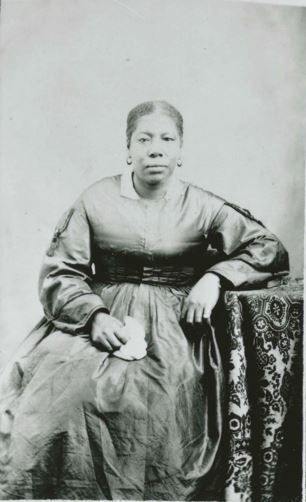
The interview, PBSTwo more things from the Church’s own history pages. First, the 1836 ordination described under the photograph above: a Black man ordained and anointed in the Kirtland Temple while Joseph Smith led the Church. Second, a detail that cuts the other way, from Jane Manning James’s entry: she was a friend of Joseph and Emma and lived in their household in Nauvoo, and even so, the history page says, between 1884 and 1904 she “periodically contacted Church leaders” asking to receive her endowment, and was given a proxy sealing “as a servant.”
Every explanation, and where it stands now
This is the part to check yourself. The left column is what the First Presidency said while the restriction was in force. The right column is what the Church’s essay says now.
| Explanation given | What was said, and by whom | What the Church says now |
|---|---|---|
| Black skin is the sign of a curse | Brigham Young, quoted by the First Presidency in 1949: “Why are so many of the inhabitants of the earth cursed with a skin of blackness? It comes in consequence of their fathers rejecting the power of the holy priesthood, and the law of God.” | The essay: “The curse of Cain was often put forward as justification for the priesthood and temple restrictions.” And it disavows the theory “that black skin is a sign of divine disfavor or curse.” |
| Premortal conduct explains it | First Presidency, 1949 (a general principle, then applied to the priesthood: “Under this principle …”): “the conduct of spirits in the premortal existence has some determining effect upon the conditions and circumstances under which these spirits take on mortality.” First Presidency, 1969: “Revelation assures us that this plan antedates man’s mortal existence, extending back to man’s pre-existent state.” | The essay: “blacks were said to have been less than fully valiant in the premortal battle against Lucifer,” and it disavows the theory that skin color “reflects unrighteous actions in a premortal life.” |
| It is not unjust | First Presidency, 1949: “there is no injustice whatsoever involved in this deprivation as to the holding of the priesthood by the Negroes.” | The essay does not quote the 1949 statement. It says that “Church leaders today unequivocally condemn all racism, past and present, in any form.” |
| It came from God, from the beginning | First Presidency, 1969: “From the beginning of this dispensation, Joseph Smith and all succeeding presidents of the Church have taught” it; it “goes back into the beginning with God.” | The essay: Abel was ordained in 1836, and “There is no reliable evidence that any black men were denied the priesthood during Joseph Smith’s lifetime.” The announcement is 1852. |
| Interracial marriage is a sin | Brigham Young, 1863. His words are on the page on fallible prophets, along with the 1978 correction by Elder McConkie. | The essay disavows the theory “that mixed-race marriages are a sin.” |
| Why it existed at all | Elder Holland, PBS interview: “we simply do not know why that practice, that policy, that doctrine was in place.” | The essay says it echoed the era’s “widespread ideas about racial inferiority,” and describes the end of the restriction as a revelation. |
Read the table across. Two of the rows, the skin-as-curse explanation and the premortal explanation, are described in the essay and disavowed in its own words; the 1949 and 1969 texts state the premortal point as a general principle. Then set two descriptions of the same restriction side by side. The 1949 statement calls it a “direct commandment from the Lord, on which is founded the doctrine of the Church.” The essay describes a policy that Brigham Young announced in 1852, with justifications that “echoed” the ideas of the day. The page on doctrines that changed sets this beside other cases.
126 years
Years of the Church’s existence, 1830 to 1977
One dot per year. The lit dots are the years of the restriction, 1852 through 1977.
22 years (1830 to 1851) with no announced restriction, and Abel ordained in 1836. 126 years (1852 to 1977) of restriction. Then more than 48 years since June 1978.
Counted from the dates in the Gospel Topics essay: 1852 announcement, 1978 revelation
Verses that come up
Three passages in the Church’s scriptures speak of curses, skin, or lineage and priesthood. They are quoted here exactly, because readers meet them in discussions of the restriction.
| Passage | What it says | What to notice |
|---|---|---|
| 2 Nephi 5:21 | “And he had caused the cursing to come upon them, yea, even a sore cursing, because of their iniquity. For behold, they had hardened their hearts against him, that they had become like unto a flint; wherefore, as they were white, and exceedingly fair and delightsome, that they might not be enticing unto my people the Lord God did cause a skin of blackness to come upon them.” | The chapter heading says the Lamanites “are cut off from the presence of the Lord, are cursed, and become a scourge unto the Nephites,” and verse 14 names the “Lamanites.” The verse mentions neither Africa nor the priesthood. Brigham Young, in the sentence the First Presidency quoted in 1949, used the same phrase, “a skin of blackness,” for the world’s inhabitants. |
| Moses 7:22 | “And Enoch also beheld the residue of the people which were the sons of Adam; and they were a mixture of all the seed of Adam save it was the seed of Cain, for the seed of Cain were black, and had not place among them.” | The verse says nothing about the priesthood. Verse 8 of the same chapter says “a blackness came upon all the children of Canaan.” |
| Abraham 1:26-27 | “… and also of Noah, his father, who blessed him with the blessings of the earth, and with the blessings of wisdom, but cursed him as pertaining to the Priesthood. Now, Pharaoh being of that lineage by which he could not have the right of Priesthood, notwithstanding the Pharaohs would fain claim it from Noah, through Ham, therefore my father was led away by their idolatry;” Verse 21 identifies the king as “a descendant from the loins of Ham, and was a partaker of the blood of the Canaanites by birth.” | This is the one passage of the three that speaks of lineage and the priesthood. It is about the Pharaoh of Egypt, in an aside within the account of Abraham’s early life in Chaldea. It does not say anything about later generations or about Black people in general. It is also in the book whose source papyri, the Church’s own essay on its translation says, have characters none of which “mentioned Abraham’s name or any of the events recorded in the book of Abraham”: see the Book of Abraham page. |
The common rebuttals
“Every church and every institution in America was like this at the time. It was just the culture.”
The essay agrees with the first half. It says the Church was restored in a “highly contentious racial culture,” and that the justifications “echoed the widespread ideas about racial inferiority.” So this page makes no claim about the people who lived then. It looks at what the First Presidency said the restriction was. A policy that is only culture does not call itself a “direct commandment from the Lord, on which is founded the doctrine of the Church.” Neither does it say it “goes back into the beginning with God.” And the Church ordained Elijah Abel in 1836, in that same country.
“The 1949 statement was never made public. It was private letters, so it isn’t official doctrine.”
The provenance is given above, as reported by wasmormon.org from a 2020 Church Historian communication: the text “was never issued publicly.” But on that same account it was the First Presidency’s standard language, used in responses to inquiries “for several years.” The 1969 letter was addressed to General Authorities, regional representatives, stake presidents, mission presidents and bishops. Elder Holland, in his PBS interview, said “we simply do not know why that practice, that policy, that doctrine was in place.” The essay says the explanations are not accepted “today” as official doctrine, which is a statement about now.
“Prophets aren’t infallible. The Church has said so itself.”
That is correct, and nothing on this page depends on infallibility. The narrower question is the one the table asks: when the First Presidency tells members something is a commandment from the Lord, how does a member know whether it will later be described as a theory? The page on fallible prophets takes up that question for the Church’s own test of doctrine.
The reasons were disavowed in 2013. Why the restriction existed at all is, in Elder Holland’s words, not known.
The 1949 and 1969 statements say a commandment. The essay says a policy that began in 1852.
What this means
Here is what the Church’s own pages show. A Black man, Elijah Abel, was ordained and anointed in the Kirtland Temple in 1836. Eight years after Joseph Smith’s death, in 1852, Brigham Young announced that men of black African descent could no longer be ordained, and the Church’s essay says the justifications “echoed” the ideas of the day. Abel kept his priesthood and was refused the endowment, twice. Jane Manning James, who lived in the Smith household, asked for years and was given a proxy sealing as a servant. In 1949 the First Presidency used the standing phrase “direct commandment from the Lord” in private correspondence. In 1969 it wrote that it “goes back into the beginning with God.” In 1978 it ended, by a revelation the Church holds to be real, and the essay says that Church leaders today “unequivocally condemn all racism.” In 2013 it said that the theories behind the restriction are disavowed, and that no explanation “is accepted today as the official doctrine of the Church.”
What the First Presidency called a commandment from the Lord, the Church now describes as a policy announced in 1852, and it disavows the reasons that were given.
Believers hold that the revelation of 1978 was the correction, and that earlier leaders were, in Elder Holland’s words, “doing the best they knew.” Nothing on this page asks anyone to give that up. But that is how the Church now describes those leaders: men doing their best. It is not how the First Presidency described the restriction in 1949 and 1969, when it said the restriction came from God, with reasons attached. Those reasons have been set aside, and an apostle says “we simply do not know,” why it existed. For 126 years Black men were refused the priesthood and Black members the temple on that word. A member can weigh that the next time the same body says “commandment from the Lord”