Beyond religion
Four Conspiracies, One Test
Flat earth, the Moon landing, chemtrails, and September 11 can each be checked with the same three plain questions. Anyone can run them, on any claim.
The point in one sentence
Flat earth, the Moon landing hoax, chemtrails, and the “inside job” story about September 11 all fail the same three plain questions. What would we see if it were true? What do we actually see? And how many people would have to keep the secret?
This page is about a way of judging evidence, not about how smart anyone is. The same three questions apply to every claim you hold, including the ones you like, and including the ones the person who wrote this page holds.
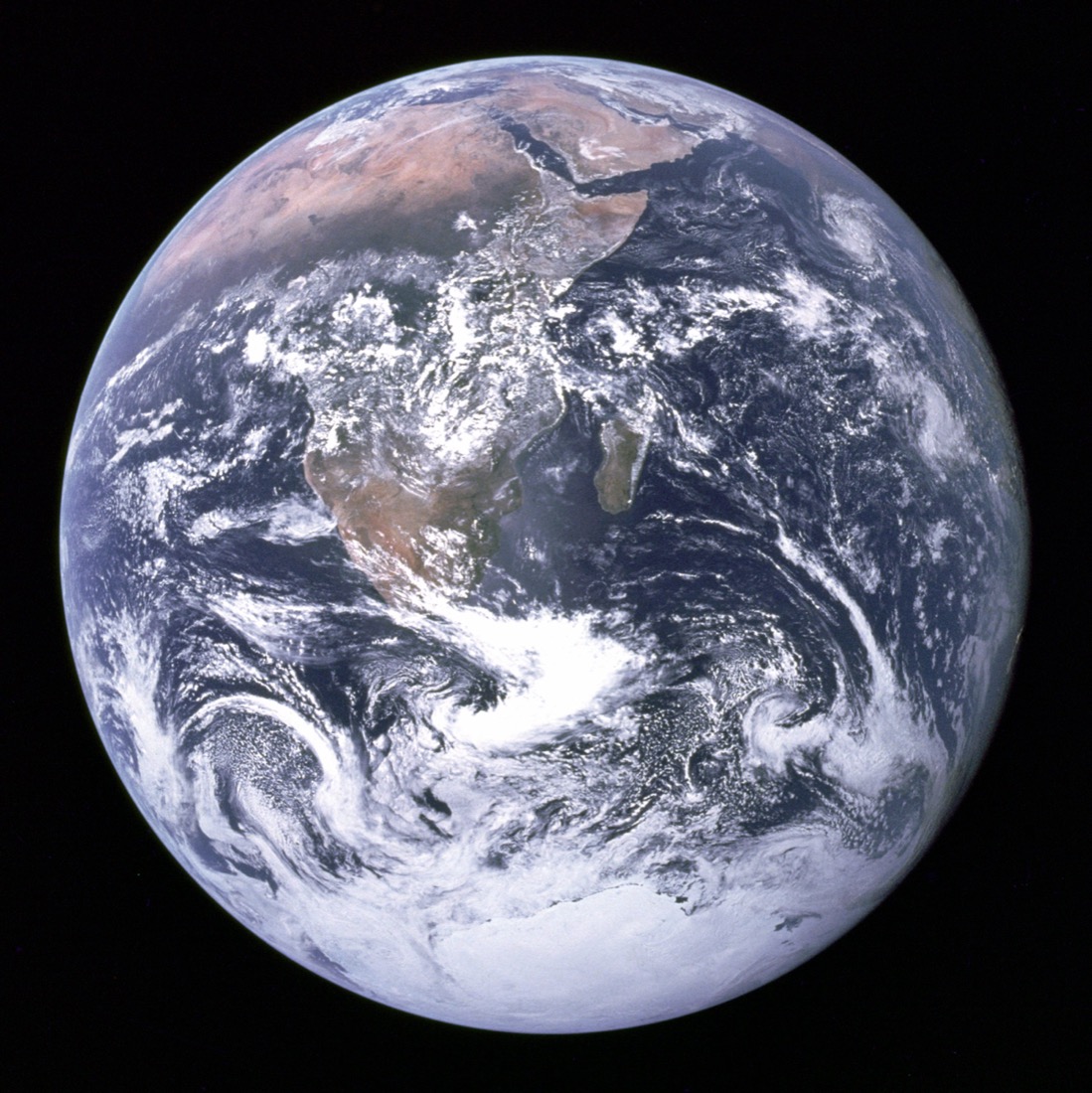
The world these stories came from
Start with the part the believers have right. You may have a cousin, a neighbor, or a parent who holds one of these ideas, and almost none of them are fools. They are people who learned that the people in charge sometimes lie. They were right to learn it.
In 1932 the U.S. Public Health Service, working with the Tuskegee Institute, began a study of syphilis. In the CDC’s words, it enrolled 600 Black men, “399 with syphilis, 201 who did not have the disease.” Then: “By 1943, penicillin was the treatment of choice for syphilis and becoming widely available, but the participants in the study were not offered treatment.” The study ran until 1972. In August 1964 the Gulf of Tonkin “attack” of August 4 was used to win a war resolution from Congress (an earlier clash on August 2 did happen). The Wikipedia summary of the record says: “Later investigation revealed that the 4 August attack did not happen; no North Vietnamese vessels had been present.” An NSA study declassified in 2005 said that incident was “based on bad naval intelligence and misrepresentations of North Vietnamese communications.”
So distrust is earned. Hold on to that, because the rest of this page does not ask you to trust anyone. It asks you to run a test that does not depend on trusting any one source.
When the authorities really did lie, how we found out
Every real cover-up on this list came out through documents, insiders, or investigators, though it often took decades.
Sources: CDC Tuskegee timeline; Wikipedia, Gulf of Tonkin incident; Grimes (2016); Shearer et al. (2016)
The test, in three questions
You do not need a lab or a degree. You need three questions that work on any big claim, and you already use them every time a friend forwards you something wild.
How big a secret can a group keep
Grimes counted the people who would have had to stay silent. Bars are on one true scale.
Source: Grimes, PLOS ONE 11(1): e0147905, Table 2 and abstract. His model gave the Moon hoax 3.68 years until a 95 percent chance of exposure (Table 3). His model covers the Moon hoax, a climate hoax, a vaccine cover-up and a hidden cancer cure. It does not cover flat earth, chemtrails or September 11, so those three rest on questions 1 and 2.
The paper’s abstract says: “large conspiracies (≥1000 agents) quickly become untenable and prone to failure.” Grimes used the lowest leak rate he could justify from three real exposed secrets, so the model leans in the conspirators’ favor. It also assumes everyone on the payroll would have to be in on it, which he states as an assumption. His Table 4 lists 1,257 people as the most who could keep a secret for 10 years and stay under a 5 percent chance of exposure (the paper’s text rounds this to “less than 1000”). He also tested the model on real exposed secrets: the Tuskegee study involved about 6,700 people by his count and lasted 25 years before it came out. A Moon hoax would need 411,000.
Four stories, one test
What each theory says, what you would expect, and what is actually there.
| The story | If it were true we would see | What is actually there |
|---|---|---|
| Flat earth | Ships would shrink to a dot without losing their hulls; sticks would cast matching shadows everywhere; the horizon would never curve | Far ships lose their hulls first, though air can blur the view (photo above). Sticks in two cities cast different shadows at the same moment, which only points to a round Earth if the Sun is far away. Both can be checked. |
| The Moon landing was faked | No hardware on the Moon, and other countries unable to find anything | Reflectors on the Moon since 1969 that observatories in several countries still use. NASA’s orbiter photographs the landing sites (Wikipedia, Lunar Reconnaissance Orbiter). |
| Chemtrails | A spraying program would need aircraft, chemicals, and the people who load and fly them, and scientists who study the sky finding traces | Contrail physics explains the trails, and 76 of 77 atmospheric experts surveyed said they had seen no evidence of a spraying program. |
| September 11 was an inside job | Loud blasts on the video audio, steel that melted, and demolition crews who stayed quiet for the 25 years since | NIST: steel did not melt, it weakened. NIST says a blast big enough would have been 130 to 140 decibels at half a mile, and that no blast sounds were heard on the video audio or reported by witnesses. |
Sources: all linked below; each number is quoted from its own source.
The exhibits
These are primary sources, so you can read the words yourself: a physics paper, a peer-reviewed survey of experts, two pages from the federal institute (NIST) that investigated the World Trade Center, and the project page of a university team that fires lasers at the Moon. NIST and NASA are the agencies the stories accuse, so each claim also sits next to a check from somewhere else.
Grimes, “On the Viability of Conspiratorial Beliefs,” PLOS ONE
Published January 26, 2016
What it establishes: Counting the NASA workforce at its 1965 peak (411,000), the paper gives the Moon hoax 3.68 years until a 95 percent chance of exposure. It models four claims: the Moon landing, a climate hoax, vaccine danger, and a suppressed cancer cure. It does not model flat earth, chemtrails, or September 11.
Read the paper on PLOS ONEShearer et al., “Quantifying Expert Consensus Against the Existence of a Secret, Large-Scale Atmospheric Spraying Program,” Environmental Research Letters
Published August 2016
What it establishes: These are researchers who publish on contrails and on what falls out of the air: 49 contrail experts and 28 atmospheric deposition experts, drawn from the authors of the most-cited papers in their fields. 76 of 77 said they had not seen evidence. The one who said yes pointed to high levels of barium in a remote area. (SLAP is the paper’s abbreviation for a secret, large-scale atmospheric spraying program.)
Read the paperNIST (the U.S. National Institute of Standards and Technology), WTC Towers FAQ
NIST investigation of the World Trade Center
What it establishes: The popular line, “jet fuel cannot melt steel beams,” is true and beside the point. Nothing had to melt. NIST also reports upper-layer air temperatures of about 1,000 degrees Celsius in the towers.
NIST Towers FAQNIST, WTC 7 FAQ, on whether explosives could have done it
NIST investigation of Building 7
What it establishes: A checkable consequence: a sound like that, in lower Manhattan, with cameras rolling. These are NIST’s statements, so they are worth checking against the videos yourself. NIST says it also looked at thermite and found it “highly unlikely that it could have been used to sever columns in WTC 7.”
NIST WTC 7 FAQAPOLLO, the lunar laser ranging project led from the University of California, San Diego
Project page
What it establishes: A team using a telescope in New Mexico fires a laser at the reflectors on the Moon and gets the light back. The same page lists a French-built reflector that the Soviet Union landed without a crew.
APOLLO project pageFlat earth: two checks you can make
This is the oldest of the four, and the easiest to test, which is why it is useful. People have measured the Earth since ancient Greece.
In the old account of Eratosthenes, on the summer solstice at noon, a rod at Syene cast no shadow while a rod in Alexandria did. Wikipedia’s summary: “At noon on the summer solstice, there were still shadows in Alexandria. However, in Syene, rods cast no shadows, and the Sun’s rays shone straight down into the city-center well.”
A flat-earth believer can answer that the shadows would also differ if the Sun were close and the ground flat. Eratosthenes’s method assumes the Sun is very far away, so on its own it does not settle the question. That is why there is a second check.
The second check is the photo at the top. A ship that is far away sinks from the bottom up. Sail out of a harbor and watch the hull go first. On a flat table, a ship just gets smaller and smaller. It never loses its bottom half. Believers answer that air bends light and makes ships look lower or higher than they are. It does, and the early frames of that photo show it. So neither check is the whole case alone. Each has a known weak spot, and each can be checked by someone who disagrees with you.
Wikipedia describes the situation this way: “Modern believers in a flat Earth face overwhelming publicly accessible evidence of Earth’s sphericity… To satisfy these tensions and maintain their beliefs, they generally embrace some form of conspiracy theory.” Firm belief is rare: “less than 2% acceptance in all age groups” (a 2018 study reported by Scientific American).
The Moon landing: mirrors you can ping
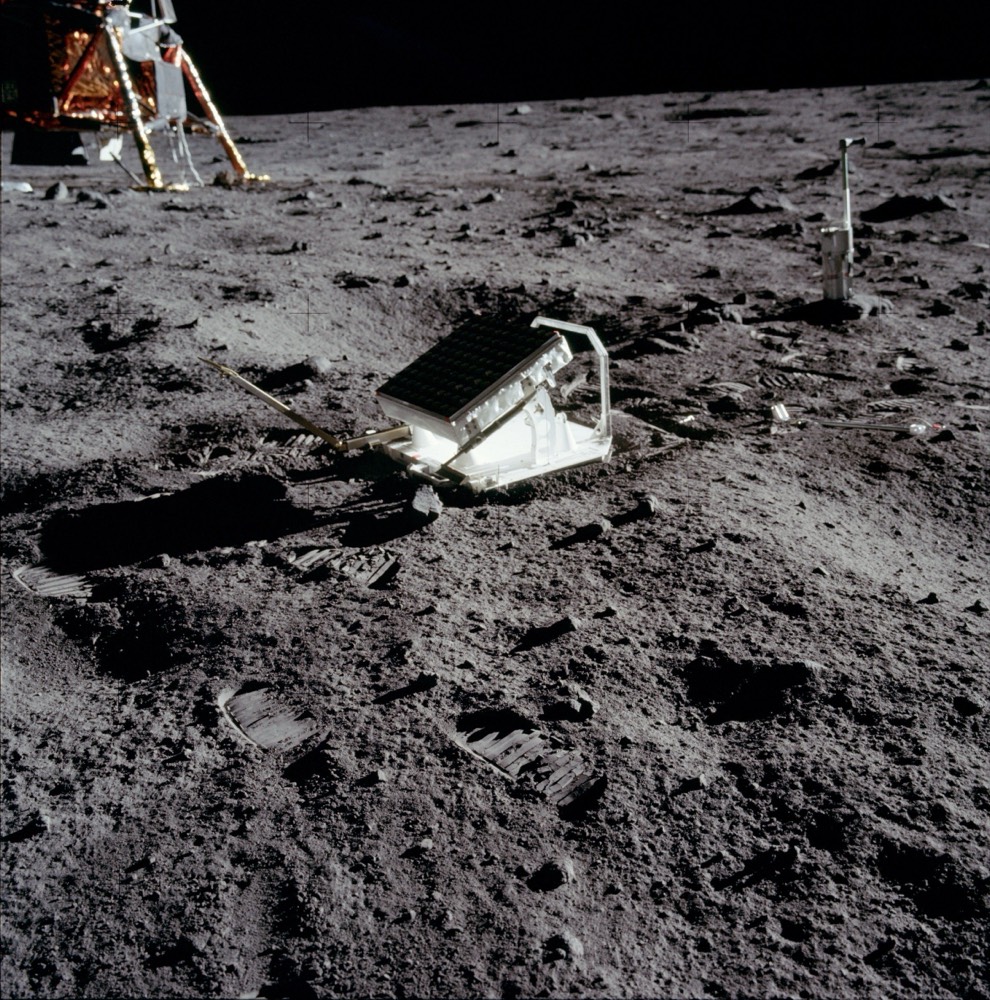
Reflectors prove there is hardware on the Moon. They do not, by themselves, prove people carried it there. Wikipedia’s Lunar Laser Ranging page says: “Three were placed by the United States’ Apollo program (11, 14, and 15)… two by the Soviet Lunokhod 1 and 2 missions.” Unmanned Soviet landers put two of them there, and the APOLLO page above says so itself. So the mirrors answer one question: whether a hoax staged on Earth could have put working reflectors on the Moon, and observatories in several countries have bounced light off them since 1969. For the question of people, add the other checks below, and remember that NASA is the source for some of them, so treat each as one more thing to check, not the last word.
Who has checked the Moon without NASA staff
Ranging stations that fire lasers at the reflectors on the Moon.
| Who | What they did | Source |
|---|---|---|
| Lick Observatory, California | First reported a successful return on August 1, 1969 | Wikipedia, Lunar Laser Ranging experiment |
| Pic du Midi (France), Tokyo Astronomical Observatory, McDonald Observatory (Texas), and a U.S. Air Force lab in Arizona | Early detections that soon followed | Same |
| Côte d’Azur Observatory, France | Listed as an active ranging station | Same |
| Matera, Italy | Active since 2003 | Same |
| APOLLO, Apache Point, New Mexico (UC San Diego) | About one millimeter of precision. Also bounces light off a Soviet-landed reflector | UCSD APOLLO project page |
| Wettzell, Germany | Operational since 2018 | Wikipedia, Lunar Laser Ranging experiment |
The Wikipedia entries summarize the observatories; the APOLLO page is the project’s own. Some of these stations are American, so the point is that they are not NASA staff, not that no one in the U.S. is involved.
On radiation, the numbers are NASA’s, and they are public: anyone can read the same report. NASA’s 1973 report, TN D-7080, lists the average skin dose for each flight crew from Apollo 7 through 15. That includes Earth-orbit and lunar-orbit flights as well as the landings. The smallest was 0.16 rads, the largest 1.14 (Apollo 14). Apollo 11’s was 0.18. The report says the maximum operational dose limit for each mission was 400 rads to the skin. So the “Van Allen belts would have killed them” argument runs into NASA’s own dosimeter readings.
The believers have a real point here too. The same report says a large solar flare could have given the crews much more, especially inside the thin-walled lunar module or outside on the surface, and that the doses were small because “no major solar-particle events occurred.” Radiation was a real risk. It did not happen on those flights.
Chemtrails: real science next door
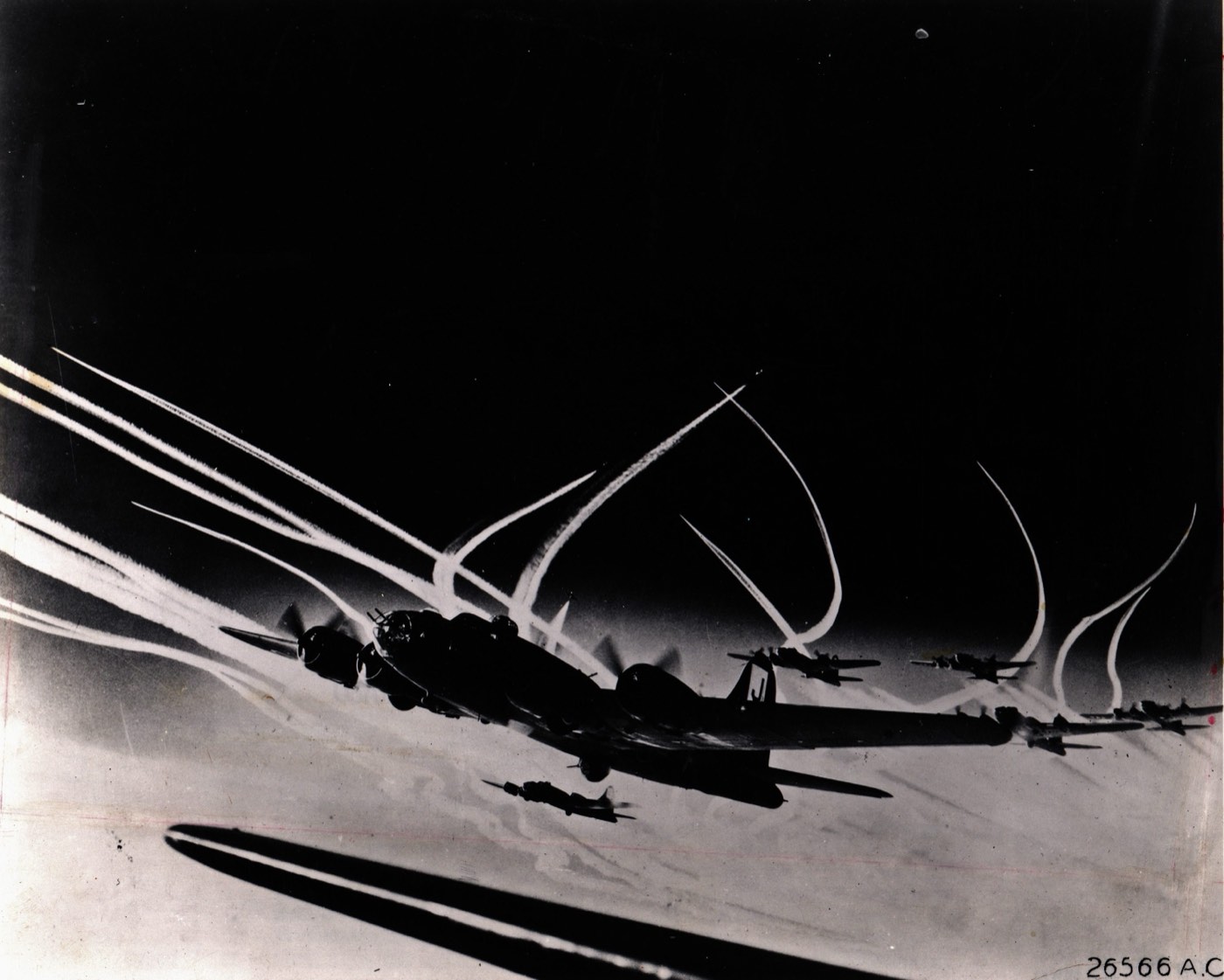
Start with what the believers are half-remembering, because it is true. Cloud seeding is real: in November 1946 a researcher named Schaefer caused snow to fall near Mount Greylock in Massachusetts by dropping dry ice into a cloud, and today China runs the largest seeding system in the world. Solar geoengineering research is real too. Harvard’s SCoPEx was a balloon experiment on stratospheric aerosols, and Harvard says “SCoPEx was cancelled in March 2024.” Wikipedia also reports that in 2013 the CIA, NASA, and NOAA “intended to provide funds to the National Academy of Sciences to conduct research into methods to counteract global warming with geoengineering.” All of that was named, funded, and published. None of it is a secret spraying program.
A contrail is the trail left by water vapor in jet exhaust in cold, high air. Why some vanish and some last, in Wikipedia’s words: “Depending on the temperature and humidity at the altitude where the contrails form, they may be visible for only a few seconds or minutes, or may persist for hours and spread to be several kilometres/miles wide.” Same plane, different air.
What the people who study the sky say
A 2016 peer-reviewed survey asked 77 experts, 49 on contrails and 28 on what settles out of the air, picked from the authors of the most-cited papers in their fields.
Source: Shearer et al., Environmental Research Letters 11(8), 2016, abstract. One of the 77 said yes, pointing to high barium in a remote area.
September 11: what NIST measured
Here is the part the believers have right. NIST says Building 7 fell freely for a stretch. It split the fall into three stages: Stage 1 (0 to 1.75 seconds), “acceleration less than that of gravity (i.e., slower than free fall)”; Stage 2 (1.75 to 4.0 seconds), “gravitational acceleration (free fall)”; Stage 3 (4.0 to 5.4 seconds), “decreased acceleration, again less than that of gravity.” By NIST’s own stage times, the free-fall stage lasts about 2.25 seconds. In NIST’s words: “During Stage 2, the north face descended essentially in free fall, indicating negligible support from the structure below.” NIST says the question came up during public comment on its draft report, when it “was asked to confirm this time difference and define the reasons for it in greater detail,” and its final report includes the stages.
Building 7, 18 stories, on one scale
NIST: “the north face of the building descended 18 stories (the portion of the collapse visible in the video) in 5.4 seconds.”
Source: NIST WTC 7 FAQ. NIST says the measured time was “40 percent longer than the 3.9 seconds this process would have taken if the north face of the building had descended solely under free fall conditions.”
NIST says what started the collapse was a girder on Floor 13 that “lost its connection to a critical column, Column 79,” and that “The unsupported Column 79 then buckled and triggered an upward progression of floor system failures.” In its model, the exterior columns had buckled by the free-fall stage. NIST’s conclusion: “Heating of floor beams and girders caused a critical support column to fail, initiating a fire-induced progressive collapse that brought the building down.” For the towers, NIST says the first exterior panels took “approximately 11 seconds for WTC 1 and approximately 9 seconds for WTC 2” to reach the ground. NIST’s answer to why it was that fast is that the structure below where the collapse started offered minimal resistance to the falling mass above.
What is true on the other side
- Distrust was earned. Tuskegee and Tonkin were real deceptions. The lost Apollo tapes were carelessness, not a lie. Anyone who says institutions never lie is wrong.
- This is about a method, not about intelligence. Smart, sincere people hold ideas for reasons other than evidence. That includes everyone reading this page.
- Some of what they half-remember is real. Cloud seeding, geoengineering research, a free-fall stretch in Building 7, a lost tape, radiation that really is a hazard. Each is a true fact attached to a story the evidence does not support.
- Doubt is good. Asking whether a claim is true is the whole point of the three questions.
When a feeling is asked to settle a fact
Before the scriptures, one thing plainly. Smart, sincere people believe things for reasons other than evidence, and so does everyone: a skeptic can hold a pet theory on a hunch too. The comparison here is about one method, trusting a feeling to settle a factual question. It says nothing about anyone’s intelligence or character. A feeling can tell you what you value. It cannot tell you how far away the Moon is, and the three questions are how you find that out.
You were probably taught, as a child, how to know something is true. Here are the words in your own scriptures and a conference talk, exactly as printed.
Moroni 10:4-5, a verse many members memorized in seminary or Sunday School
“And when ye shall receive these things, I would exhort you that ye would ask God, the Eternal Father, in the name of Christ, if these things are not true; and if ye shall ask with a sincere heart, with real intent, having faith in Christ, he will manifest the truth of it unto you, by the power of the Holy Ghost. And by the power of the Holy Ghost ye may know the truth of all things.”
The test offered here is a spiritual witness, and many sincere people have felt something real. The question is only whether a feeling can settle which of two competing factual claims is true. People in every religion, and in some of the four stories on this page, report the same certainty.
Moroni 10 on churchofjesuschrist.orgDoctrine and Covenants 9:8-9
“But, behold, I say unto you, that you must study it out in your mind; then you must ask me if it be right, and if it is right I will cause that your bosom shall burn within you; therefore, you shall feel that it is right. But if it be not right you shall have no such feelings, but you shall have a stupor of thought that shall cause you to forget the thing which is wrong; therefore, you cannot write that which is sacred save it be given you from me.”
The order matters: study it out in your mind first, then ask. That is a good order. The question this page asks is what you do when the study and the feeling point in different directions. On a factual question, the study has to win, as it did when you checked the Moon for yourself. (That last line is this page’s view, not the Church’s.)
D&C 9 on churchofjesuschrist.orgPresident Dieter F. Uchtdorf, “Come, Join with Us,” general conference, October 2013
“It’s natural to have questions…” “There are few members of the Church who, at one time or another, have not wrestled with serious or sensitive questions.” “Faith is to hope for things which are not seen but which are true.” “…please, first doubt your doubts before you doubt your faith.” And the sentence after it: “We must never allow doubt to hold us prisoner and keep us from the divine love, peace, and gifts that come through faith in the Lord Jesus Christ.”
This is a kind appeal, and it starts by saying that questions are natural. The only point here is the order of operations he recommends: question the doubt first. A method for finding out what is true would put the doubt and the belief through the same test.
Read the talkRun those questions on the Church’s claims that can be checked, and see what you find. The Book of Abraham page does it with the Church’s own essay and the original papyri. The How We Know Things page explains why a witness of the Spirit cannot settle between faiths, and Motivated Reasoning shows why smart people defend what they already hold. The sunk cost page shows why a bet is hard to walk away from, and a lifetime is harder.
The common rebuttals
“It looks flat to me. I can see for miles and the ground does not curve.” Over a few miles the curve is too gentle for the eye. At about 18 km the geometry says the sea has dropped about 23 meters below a level line from the camera, which is why a ship keeps rising out of the haze as it comes closer. Believers answer that the air bends light and makes ships look lower or higher than they are. It does, and the photo above shows it. That is why ships are only one of the two checks.
“The government has lied before. Why would I trust NASA or NIST?” Don’t take any one source’s word. Ask who else can check. Observatories in France, Italy, Germany, and New Mexico fire their own lasers at the Moon. Tuskegee and Tonkin were real, and they came out through an Associated Press story, an advisory panel, and a declassified study, though only after decades. Grimes’s math says a secret needing 411,000 people would not last nearly that long.
“The scientists are paid off.” Then no scientist could ever tell you anything, and no evidence could ever count against the story. A belief that no answer can touch cannot be tested. Ask a different question: what would a spraying program have to leave behind? Pilots, tanker planes, chemical purchases, and people who handle the chemicals.
“Jet fuel can’t melt steel.” Correct, and NIST never said it did: “In no instance did NIST report that steel in the WTC towers melted due to the fires.” Steel at 1,000 degrees Celsius keeps roughly 10 percent of its room-temperature strength. Softening is enough.
You do not have to take any one source’s word for it.
What would we see, what do we see, and how many would have to keep quiet.
What this means
A ship comes up over the horizon the way a round Earth says it should, though air can blur the view. Observatories in several countries bounce light off reflectors on the Moon that were put there between 1969 and 1973, and NASA’s orbiter photographs the landing sites. Seventy-six of seventy-seven sky experts say they have seen no evidence of a spraying program. NIST says Building 7 came down in three stages over 5.4 seconds, one of them free fall for about two and a quarter seconds, and that it found no evidence of a blast. In each case the believers were not stupid and the evidence was not hidden.
Four stories about the world, and the first two questions took each one apart. The third, the headcount, is Grimes’s math on the Moon story only.
The three questions do not care who is asking. They can be run on any claim, including your own.
When a feeling and a measurement disagree, which one do you let decide?