The institution
The Unchanging Ordinances Changed
Taught as eternal and not to be altered. The Church’s own pages now list adjustments from Joseph Smith’s lifetime to 2024, and one ordinance is not described in the Church’s manuals.
The point in one sentence
If you grew up in the Church, you were probably taught that temple ordinances were set in place before the foundation of the world and “are not to be altered or changed,” but the Church’s own history page, First Presidency statements and spokesmen now say that the endowment (the temple ceremony), the garment and the way temple work is run have been adjusted again and again, from Joseph Smith’s own lifetime to the First Presidency in 2024. The ordinances were not unchanging, and the Church’s own pages say so. A further ordinance, the second anointing, is one the Church tells its institute teachers not to discuss.
The world the ordinances came from
Everything on this page starts in Nauvoo, Illinois, in the last two years of Joseph Smith’s life. The Church’s own history page puts it this way: “Understanding of temple ordinances was revealed to Joseph Smith ‘line upon line, precept upon precept.’ Acting under divine direction, he introduced all the ordinances associated with temples today: baptisms for the dead, the initiatory and endowment ceremonies, and temple sealings.” On May 4, 1842, according to the Church’s page on the Anointed Quorum, “Joseph Smith introduced the temple endowment to a group of nine close associates in an upper room of his Nauvoo store.”
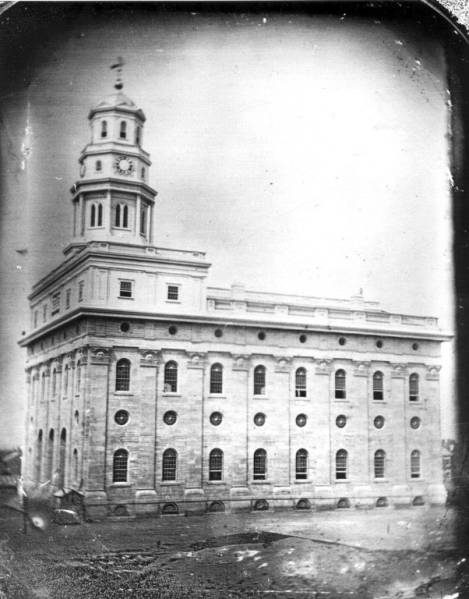
The ordinances were not finished when Joseph died in 1844. The same Church page says: “Before his death, Joseph directed Brigham Young to ‘organize and systematize’ the endowment so it could be administered within the temple. Accordingly, Brigham Young introduced changes in late 1845 to establish ‘better order in conducting the endowment’ as it was being administered in a temple for the first time.” So adjusting the endowment is not a modern story. By the Church’s account it began with Joseph himself and with the first time the endowment was administered in a temple.
What Joseph and the Church said
Here is what Latter-day Saints believe about this, at its strongest. They do not say that every word, gesture or fabric in temple worship came down unchanged. They say the covenants, the promises made to God, are fixed, and that the ordinances and procedures through which they are made can be adjusted by the prophets who hold the keys. The same page gives the reason: “These changes were made in response to revelation, to the changing needs of Church members, and to practical concerns.” It says the endowment was shortened over time to make it possible for members to perform more endowments for the dead. The Church’s history page puts it this way: “While many adjustments have occurred over time, the core doctrine and central covenants of the temple ordinances have remained consistent.” Elder Harold B. Lee of the Twelve (later Church president), speaking to Salt Lake Temple ordinance workers in 1959 and quoted on the same page: “We are having new methods, but the truths are the same regardless of how they are presented.” He added that “the fundamentals will not be changed.” The Church’s January 2019 statement asks that the matter be discussed with reverence: “Its ordinances are sacred and are not discussed outside a holy temple.”
Here is the sentence members are taught, and what it actually says.
Joseph Smith, sermon at the Nauvoo temple stand, June 11, 1843, as recorded by Willard Richards (Joseph Smith Papers, p. 242; spelling modernized, punctuation as in the manuscript)
Ordinances were instituted in heaven before the foundation of the world of in the priesthood. for the salvation of man. not be altered. not to be changed. all must be saved upon the same principle.
These are Richards’s notes of the sermon, not a polished transcript. In the same sermon, Wilford Woodruff’s report has Joseph speaking of a house “to prepare them for the ordinances & endowments & washings & anointings &c.” and of baptism for the dead as “one of the ordinances of the house of the Lord.”
Joseph Smith Papers, Richards report, page 3The same statement as the Church prints it today (a compiled version, in Teachings of the Prophet Joseph Smith): Introduction to Family History Student Manual, chapter 10, section 10.2.3 ("Eternal covenants have an accompanying ordinance")
The Prophet Joseph Smith taught: “Ordinances instituted in the heavens before the foundation of the world, in the priesthood, for the salvation of men, are not to be altered or changed. All must be saved on the same principles.” (Teachings of the Prophet Joseph Smith, p. 308)
The manual prints it right after: “The sacred ordinances of the gospel as requirements for salvation and exaltation were ‘instituted from before the foundation of the world’ [D&C 124:33]. They have always been an immutable part of the gospel.” Latter-day Saints are taught this as a statement about the ordinances of salvation. The wording is the Church’s compiled version of Joseph’s sermon, not the words in Richards’s notes.
Chapter 10 on churchofjesuschrist.orgThe sentence says “not to be altered or changed.” The Church’s own history page lists the alterations.
The Church says the covenants are fixed and the methods are not. Here is what actually moved.
From the first endowment to the open-sleeve garment
Every entry below comes from a Church source or is attributed to the outlet that reported it. Dates are the dates the Church or the outlet gave.
Sources: Church History Topics, “Adjustments to Temple Work” and “Anointed Quorum”; Joseph Smith Papers; Church newsroom; Salt Lake Tribune; KUER; the Church’s online store listing as reported by the Tribune; New York Times via contemporaneous summaries (see sources file)
The exhibits
Church sources come first, then the press. Each quote below is word for word from the page linked.
Church History Topics, “Adjustments to Temple Work”
Published 2022
What it establishes: The Church itself says the person credited with the 1843 sentence adjusted the ordinances during his own lifetime. By the Church’s own account, “not to be altered” was never applied to every detail, beginning with Joseph himself.
Read the Church’s pageSame page, on the garment in 1923
Published 2022
What it establishes: The Church’s account is that clothing styles changed, that the shifts were also seen as healthier and freer, and that leaders wanted to help members honor their temple covenants. That is a plain, sympathetic account. It also shows the form of the garment adjusting to the surrounding culture.
Same pageStatement from the Church, January 2, 2019, as published by KJZZ (Salt Lake City)
January 2, 2019
What it establishes: Issued as members were reporting changes online. It names categories of adjustment and does not describe what changed.
Statement as published by KJZZThe First Presidency, newsroom message on temples
July 20, 2020
What it establishes: The First Presidency confirms that the endowment ceremony was changed and that the methods of instruction in the temple have changed many times. The same message says: “Part of the temple experience includes the making of sacred covenants, or promises, to God. Most people are familiar with symbolic actions that accompany the making of religious covenants … Similar simple, symbolic actions accompany the making of temple covenants.” It was issued while temples were closed, looking ahead to reopening. It also asks members not to discuss them, which is consistent with the Church’s view that the ceremony is sacred, and is why the details on this page come from the press and not from the Church.
Read the statementPresident Russell M. Nelson to Church leaders, General Conference leadership meeting
October 2, 2019
What it establishes: The Church’s most direct answer. It says ordinances and procedures can both be adjusted and that the covenants are the constant. The Newsroom report says Nelson was using both historic and recent changes to temple ordinances and procedures to illustrate the point.
Newsroom reportFirst Presidency letter on the garment, April 12, 2024, as reported by the Church News
April 12, 2024
What it establishes: Six months later the same First Presidency authorized changes in the garment. The Church spokesman, Doug Andersen, said in October 2024: “The First Presidency has authorized changes in the garment to bless those members and others who might benefit from the changes. Beyond this, the church does not comment on temple matters considered to be sacred.”
Church News, October 17, 2024The Salt Lake Tribune, on the 2023 changes
February 9, 2023
What it establishes: Reported from members’ accounts after the changes began. The Tribune wrote that “Church officials declined to comment this week on the fresh changes.”
Salt Lake TribuneThe visual breakdown: what was said to be fixed, what moved
Left, what is said to be fixed. Right, what the Church’s own pages or the press report as having changed, and whose announcement it was. Nothing below describes ceremony wording beyond what the Church itself has said, and the few press-reported details are labeled as press reports.
| Said to be fixed | What changed, when, and who announced it |
|---|---|
| Ordinances “are not to be altered or changed” (Joseph Smith, 1843; taught in Church manuals) | Joseph made adjustments himself, and Brigham Young introduced changes in late 1845 (Church History Topics, 2022). |
| The endowment as received from Joseph Smith | A single-room design for new temples was approved in the early 1950s, and a film for portions of the endowment was ready in September 1955. Press reports describe a revision in 1990 (penalties and the preacher portrayal removed, the wife’s vow changed), and in 2019 (Tribune: women no longer covenant to hearken to their husbands). In 2019 the Church issued a general statement that details of temple work are adjusted periodically; in July 2020 the First Presidency said “recent changes have been authorized to the temple endowment ceremony.” The Tribune reported more in 2023. The Church has not described the changes. |
| The garment, “a sacred symbol of Jesus Christ” (First Presidency, April 2024) | 1923: knee and elbow, collar removed, buttons (First Presidency and Twelve). 1979: two-piece style introduced. October 2024: the First Presidency authorized changes in the garment (Church spokesman); open-sleeve styles were listed in the Church’s online store (Salt Lake Tribune). |
| Healing blessings in temples (not claimed to be fixed; listed for completeness) | Discontinued in the 1920s (Church History Topics). |
| A further ordinance by invitation | The second anointing, first administered September 28, 1843. The institute teacher manual (Doctrines of the Gospel, ch. 19) says: “Do not attempt in any way to discuss or answer questions about the second anointing.” |
A piece most members have never heard named
The second anointing is a temple ordinance given by invitation. It sits apart from the others because the Church publishes the doctrine near it but not a description of the ordinance, and its own teacher manual tells teachers not to discuss it. The doctrine behind it is public: in the Doctrine and Covenants, Joseph Smith says, “The more sure word of prophecy means a man’s knowing that he is sealed up unto eternal life, by revelation and the spirit of prophecy, through the power of the Holy Priesthood” (D&C 131:5, May 17, 1843). The ordinance itself is documented by the Joseph Smith Papers, which says that in September 1843 “Joseph and Emma Smith were ‘anointed & ordd. to the highest and holiest order of the priesthood,’” and that Wilford Woodruff “often referred to” it in his journal as a “second anointing.”
The second anointing, in the standard scholarly account
David John Buerger, Dialogue: A Journal of Mormon Thought, 1983. Modern practice is not described by the Church, so nothing below is claimed about it.
Buerger: “When the temple was closed on 7 February 1846, over two thousand couples had been sealed for time and eternity, and just under six hundred persons had received the fulness of the priesthood through their second anointing.”
Buerger, writing in 1983, also says: “Aside from a few letters and other fragmentary bits of information, very little is known of recent LDS practice regarding second anointings,” and that members “typically do not understand such references or know of the ordinance.” The Church’s own words on it come from the Doctrines of the Gospel Teacher Manual (an institute course manual, Religion 430-431, copyright 1987 and 2000, still on the Church’s Gospel Library), chapter 19, on calling and election made sure: “Caution: Exercise caution while discussing the doctrine of having our calling and election made sure. Avoid speculation. Use only the sources given here and in the student manual. Do not attempt in any way to discuss or answer questions about the second anointing.” The Church’s published pages that name the ordinance give its history (the Joseph Smith Papers) and this caution; none that was checked describes it. The manual is a teacher manual for institute classes and its age matters, since it may predate current practice.
What is true on the other side
- The Church distinguishes the essential from the presentational, and says so openly. Its history page, a First Presidency message and President Nelson all state that adjustments happen and will continue. A claim that the Church denies change does not hold up. The sources above are the Church’s.
- Prophets hold keys to adjust how ordinances are administered. President Wilford Woodruff, quoted by the Church: “Joseph Smith and Brigham Young ‘did not receive all the revelations that belong to [temple] work; neither did President Taylor, nor has Wilford Woodruff. There will be no end to this work until it is perfected.’” On this view, change is the system working, not failing. The Church’s history page also says changes were made “in response to revelation, to the changing needs of Church members, and to practical concerns.”
- Sacredness is not secrecy. The Church describes the purpose of the temple openly and asks that details not be discussed outside it as a matter of reverence. Many religions keep rites for the initiated.
- Not every change is about doctrine. A fabric change is not an ordinance change, and treating it as a scandal would be the kind of overreach this site avoids.
The common rebuttals
“The ordinances never changed. Only the way they are presented did.”
This is the Church’s own position and it is coherent: the covenants are the constant and the procedures move. It is also not what the 1843 sentence says, and the sentence is what members are handed. “Not to be altered or changed” is printed in the Church’s manual as a statement about ordinances, and President Nelson told Church leaders in 2019 that “any adjustments made to ordinances and/or procedures” do not change the sacred nature of the covenants. Press reports on 1990 and 2019 describe changes to what the participant says and promises, not only how it is shown. The Church has not confirmed those details, so they cannot be called established. The question this leaves is plain: who decides which parts are the essential covenant and which are procedure? The same leaders who make the adjustments. Members are asked to accept that as revelation. Nothing outside the leaders’ own word shows where the line sits.
“It is sacred, not secret. That is why nobody talks about it.”
That is the Church’s stated view of the endowment, whose purpose it describes openly. The second anointing is a different case. The institute teacher manual does not say it is sacred and so should be discussed reverently. It says “Avoid speculation” and “Do not attempt in any way to discuss or answer questions about the second anointing,” and the standard scholarly account, written in 1983, says members “typically do not understand such references or know of the ordinance.” A child need not be taught everything. But the Church publishes the doctrine, a man “sealed up unto eternal life,” and not the ordinance behind it. A church is entitled to do that. A reader is entitled to notice it.
“The garment is just clothing. Of course it changed with fabrics and climate.”
For fabric, yes. The Church’s own Garment Changes help page also lists changes to sleeves as product updates (December 2017: “a new sleeve that eliminates fabric under the arm”; May 2019: “shorter sleeves”; March 2022: “Men’s sleeves shortened and crew neckline lowered to fit under conventional t-shirt”), without calling them anything but design changes. What is new in 2024 is that a Church spokesman said the First Presidency had authorized the change, after a letter in April describing the garment as “a sacred symbol of Jesus Christ.” The Church’s account of 1923 is that clothing styles changed, that the shifts were also “viewed as allowing freer movement and leading to a healthier lifestyle,” and that leaders wanted members to be able to honor their covenants; its 2024 account is that members in hot, humid places needed a different style. Those are sympathetic reasons and they may be the right ones. Both are reasons about how the garment is worn, and the Church’s position is that adjustments do not change the covenants.
“Not to be altered or changed.” And “no end to such adjustments.”
The Church teaches both. Its answer is that the first is about the covenants and the second is about the details.
What this means
The Church’s own pages show that Joseph Smith adjusted the ordinances. They show that Brigham Young introduced changes in late 1845, as the endowment was administered in a temple for the first time. They show the garment reshaped in 1923 as clothing styles changed, and again in 1979 and 2024, with sleeve changes on the Church’s help page from 2017. And the First Presidency confirmed changes to the endowment ceremony in July 2020 (after a general Church statement in 2019). The press reports more in 1990 and 2023. The same Church teaches the 1843 sentence. It describes one further ordinance, begun a year after the endowment, only through a caution to its teachers.
The ordinances you were taught could not be changed were changed. The Church says the covenants stayed fixed, and the same leaders who make the changes are the ones who say which parts are which.
A church that believes in a living prophet expects adjustments, and a change in fabric is not a scandal. The point is narrower. Members were taught that the ordinances cannot be altered, and the Church’s own pages show they were. The line between covenant and procedure has been drawn by the same leaders who make the adjustments, and nothing outside their word shows where it sits. For the wider pattern in doctrine and policy, see Doctrines That Changed.