The Bible underneath it
Slavery, Genocide, and the Moral Problem
The Church teaches that Jehovah is Jesus. Then read what the Old Testament says Jehovah ordered, what he did, and who he left outside.
The point in one sentence
The Church teaches that the God of the Old Testament, Jehovah, is Jesus Christ, and that he is perfectly merciful and perfectly just. The Old Testament says Jehovah told Israel to buy foreigners as slaves and keep them for ever, to save alive nothing that breathes in seven nations, and to shut a neighboring nation out of his assembly for ten generations. Those two things cannot both be true of one person.
The world these texts came from
Start with what a fair reader should concede, because it is real. The Church’s own manual on this subject says it first: “People in that time endured a more violent existence than many modern people can comprehend.” Slavery, conquest, and gods who ordered both were not an Israelite invention. They were the furniture of the whole region.
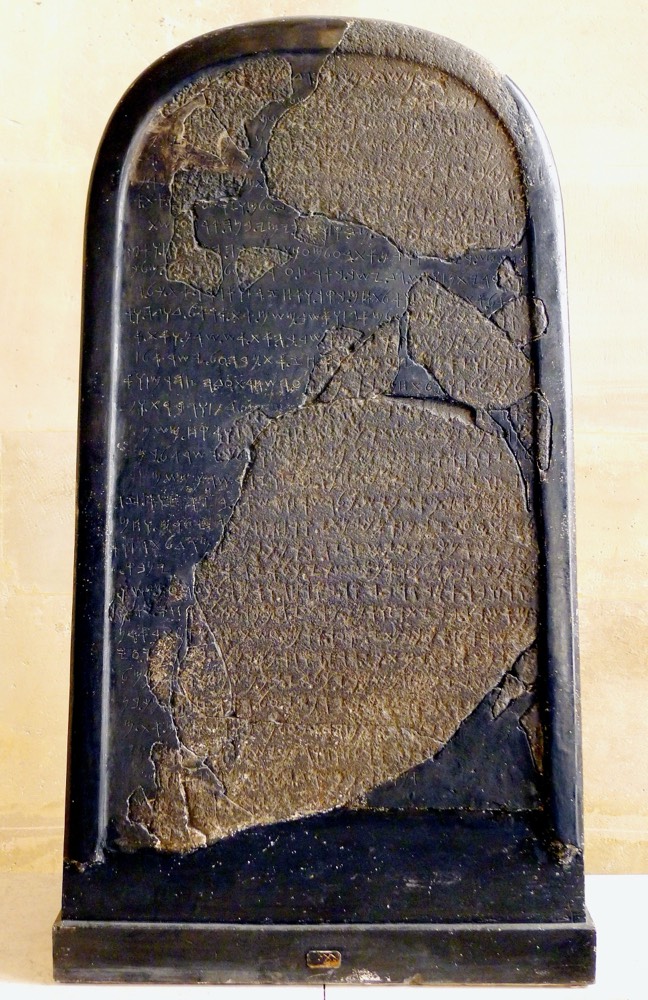
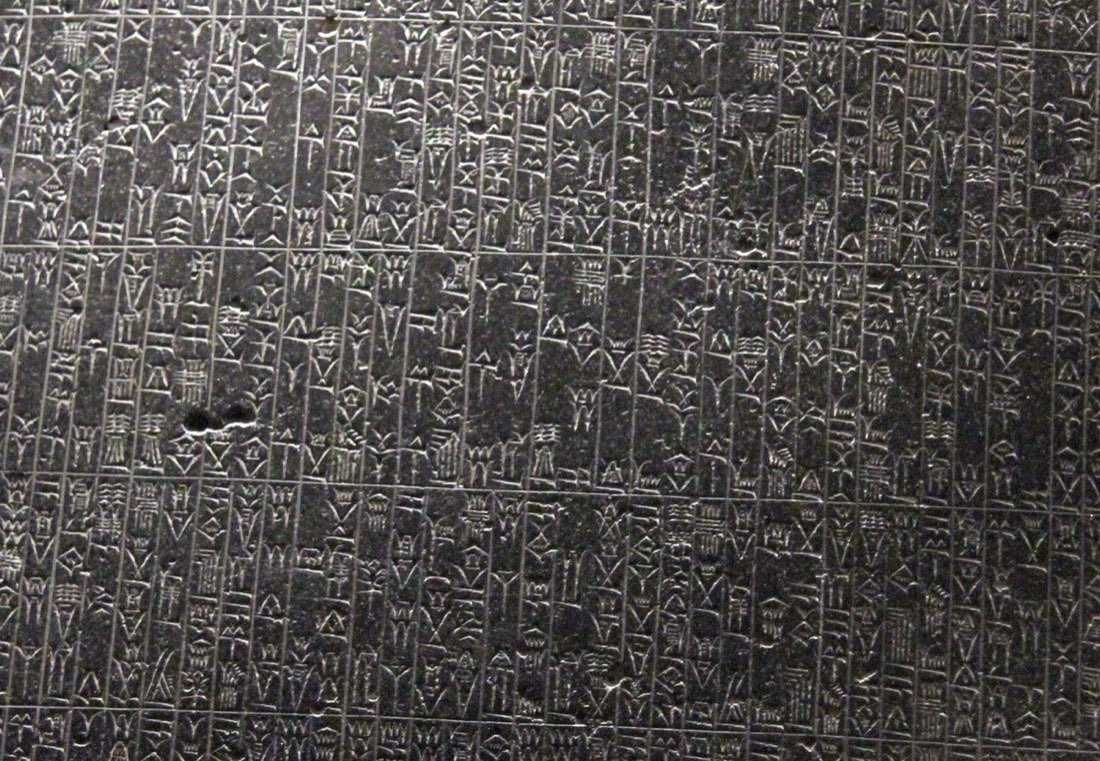
Centuries before Israel had kings, Hammurabi, king of Babylon, had a law code carved in stone (c. 1753 BC), and it already regulated slavery. Its law 117 limited debt slavery: “they shall work for three years in the house of the man who bought them, or the proprietor, and in the fourth year they shall be set free.” Its law 199 priced a slave’s eye or bone at half his value: “If he put out the eye of a man’s slave, or break the bone of a man’s slave, he shall pay one-half of its value.” Around 840 BCE a Moabite king carved on stone that his god Chemosh told him which Israelite city to take, and that he devoted its people to the god.
Set beside that background, some Israelite law is milder and some is not. Exodus 21:26-27 frees a servant whose eye or tooth a master destroys, where Hammurabi’s law 199 charges only half the slave’s value. But Hammurabi’s law 14 also makes stealing a man’s son a capital crime, and law 117 frees a Babylonian debtor and his family after three years, where Exodus 21:2 asks six. That is the best case for the context, and it is made in full here.
The way believers have read these same texts also matters. In 1856 a Virginia Baptist pastor, Thornton Stringfellow, published Scriptural and Statistical Views in Favor of Slavery. According to PBS, he argued that slavery had God’s sanction in the Patriarchal Age, that Christ never prohibited it but regulated its duties, and that it brought mercy to the heathens. PBS adds that views like his were “common in many southern churches.” They could point to the verses below. These verses were used to defend owning people.
What the Church says about who gave these commands
Everything below depends on one claim, so here it is in the Church’s own words.
“The Living Christ: The Testimony of the Apostles,” First Presidency and Quorum of the Twelve, January 1, 2000
He was the Great Jehovah of the Old Testament, the Messiah of the New. Under the direction of His Father, He was the creator of the earth.
Jehovah, the LORD of the King James Old Testament, is named as Jesus Christ. So the one giving the commands on this page is, in the Church’s own teaching, the one you know as Jesus.
The Living Christ, on churchofjesuschrist.org“The Father and the Son: A Doctrinal Exposition by the First Presidency and the Twelve,” 1916 (reprinted in the Ensign, April 2002)
Jehovah, who is Jesus Christ the Son of Elohim, is called “the Father,” and even “the very Eternal Father of heaven and of earth”
The 1916 statement is about the title “Father,” but it states flatly that Jehovah is Jesus Christ. This is the Church’s reply to “that was the Father, not Jesus.”
Read it on the Church’s siteOld Testament Seminary and Institute scripture helps, “Appendix: Violence and Destruction in the Old Testament”
It can be easy to wonder how Jesus Christ, “the Great Jehovah of the Old Testament,” could be associated with actions that seem so harsh or violent... However, it is important to remember that God, who “is the same yesterday, today, and forever,” has always been perfectly merciful and perfectly just.
The ellipsis skips the middle of the question (it goes on to mention His teachings of love, mercy, and forgiveness). The Church’s own manual raises this exact question and states the claim the rest of this page tests: not just that Jehovah is Jesus, but that his character has always been perfectly merciful and perfectly just.
The Church’s manualThe same manual, on violence in the Old Testament
...other passages describe violence or destruction that appears to have been permitted or caused by the Lord.
Even the Church does not say he only allowed it. The manual’s own words are “permitted or caused.”
The Church’s manualRussell M. Nelson, General Conference, October 2005, the talk on Jesus Christ as the Master Healer
Jesus is the Christ, the Messiah, the Son of God, the Creator, the great Jehovah, the promised Immanuel, our atoning Savior and Redeemer, our Advocate with the Father, our great Exemplar.
The same teaching, from the man who now leads the Church, in a sentence that also calls Jesus “our great Exemplar.”
The talkMany other Christians read John 8:58 (“Before Abraham was, I am,” John 8:58) and 1 Corinthians 10:4 (“that Rock was Christ,” said of Israel in the wilderness, 1 Corinthians 10:4) as saying Jesus was already there in the Old Testament. They do not all say the LORD of the Old Testament was the Son alone, but the Church does.
The God who ordered the Amalekite slaughter and the God who blessed the children are, in the Church’s teaching, the same person.
So “that was the Father, not the Son” does not work. The Church names Jesus as Jehovah, the one who spoke to Israel. Saying the Father directed him only puts both of them behind the commands.
From Hammurabi to The Living Christ
The commands sit in a long tradition of ancient law. The teaching that their speaker was Jesus is recent and explicit.
Sources: Avalon Project (Hammurabi); Wikipedia (Mesha Stele); PBS This Far by Faith; churchofjesuschrist.org
The exhibits
Each verse is the King James text, with the sentences around it. Leviticus 25 opens with the LORD speaking to Moses, and 1 Samuel 15:2 begins “Thus saith the LORD of hosts.” Deuteronomy is Moses speaking to Israel, but it ties its commands to the LORD: “as the LORD thy God hath commanded thee” (20:17), and “from following me” (7:4). Where a command is Moses’s own, the page says so.
Slavery
Leviticus 25:39-46 (KJV)
“And the LORD spake unto Moses in mount Sinai, saying” (Leviticus 25:1)
What it establishes: Two tiers in one passage. An Israelite who falls into debt serves as a hired servant until the year of jubilee, then goes free (25:40). The foreigner, here called “heathen” (the nations round about), is a possession, inherited by your children, “for ever.” Compare like with like. Leviticus 25:39-43 releases an Israelite debtor, as Hammurabi’s law 117 releases a Babylonian debtor in the fourth year. Leviticus 25:44-46 is about foreigners, who are a possession passed to your children “for ever,” and neither law 117 nor law 199 speaks to that.
Leviticus 25 (KJV)Exodus 21:20-21 (KJV)
The “judgments” Moses is to set before Israel (Exodus 21:1), after the LORD speaks to him (Exodus 20:22)
What it establishes: The first half is a real protection: a master who kills a servant on the spot is “surely punished.” The second half is the problem: if the servant lingers a day or two, there is no penalty, and the stated reason is that the servant is property. Verses 26-27 free a servant whose eye or tooth is destroyed, so the chapter is mixed, and it never asks whether the institution should exist.
Exodus 21 (KJV)Killing whole peoples
Deuteronomy 20:17 says “utterly destroy them; namely, the Hittites, and the Amorites, the Canaanites, and the Perizzites, the Hivites, and the Jebusites.” Destroying whole peoples is what the word genocide means.
Deuteronomy 20:10-18 (KJV)
Moses speaking to Israel; the passage itself says “as the LORD thy God hath commanded thee” (20:17)
What it establishes: This is a two-tier war law. A distant city that accepts peace must pay tribute and serve Israel; one that does not loses its men, while “the women, and the little ones” are taken as plunder (20:13-14). The seven nations inside the land get no offer of peace: nothing that breathes is saved. The reason the passage gives is that they would teach Israel “to do after all their abominations, which they have done unto their gods” (20:18).
Deuteronomy 20 (KJV)1 Samuel 15:2-3 (KJV)
Samuel to King Saul
What it establishes: The only reason in the command is something the Amalekites’ ancestors did on the road from Egypt. Verses 8-9 report that Saul “utterly destroyed all the people with the edge of the sword” but spared the king and the best of the animals; the LORD then says “he is turned back from following me, and hath not performed my commandments” (15:11).
1 Samuel 15 (KJV)Numbers 31:1-2, 14-18 (KJV)
The LORD commands the war; Moses gives the killing order
What it establishes: Be exact about who speaks. The LORD orders the war on Midian (31:1-2); the order to kill the boys and the women who have known a man is Moses’s, spoken to officers who had spared the women. It belongs on this list because the chapter presents the war as the LORD’s, but it is not a quotation of God’s voice.
Numbers 31 (KJV)What the text says God did himself
These are not commands to an army. The text says God did them, or sent the thing that did.
Genesis 6:7 and 7:23 (KJV): the flood
What it establishes: Everyone outside the ark. The text gives the reason first: “the wickedness of man was great in the earth” and “the earth was filled with violence” (Genesis 6:5, 11). It gives no number, so none is charted. The Church’s manual says “Noah warned the people for 120 years that a flood would come if they did not repent.”
Genesis 7 (KJV)Exodus 9:12 and 12:29-30 (KJV): Egypt
What it establishes: The text says Pharaoh hardened his own heart first (Exodus 8:15), then that his heart “was hardened” (9:7), and only at the sixth plague that “the LORD hardened the heart of Pharaoh” (9:12). Then, at midnight, the LORD killed the firstborn of every house, including the captive in the dungeon. The strongest defense is measure for measure: Exodus 1:22 reports Pharaoh ordering “Every son that is born ye shall cast into the river.” It still ends with the deaths of children for a king’s decision.
Exodus 12 (KJV)2 Samuel 6:6-7 and 24:15 (KJV)
What it establishes: One man for steadying the ark as it tipped; seventy thousand after a census. Second Samuel 24:1 says the LORD’s anger “moved David” to count the people. First Chronicles 21:1 says “Satan stood up against Israel, and provoked David.” Both books say the LORD sent the pestilence.
2 Samuel 24 (KJV)Some of the numbers the text itself gives
Deaths each passage attributes to the LORD or to his anger, as printed in the King James text. This is a selection, not a full list. The flood and the firstborn of Egypt give no number and are not charted. Bars are on one true linear scale, so small totals look small.
Source: the verses themselves (KJV). These are the text’s own figures; no outside estimate is used.
The chosen and everyone else
The same book draws a line around who is inside.
Deuteronomy 7:1-6 (KJV)
What it establishes: No treaty, no mercy, no intermarriage, and the reason is stated: the chosen people are holy, and the neighbors would draw them to other gods. Verse 4 slips into the first person: “from following me.” The text puts the command in the LORD’s mouth.
Deuteronomy 7 (KJV)Deuteronomy 23:3-8 (KJV)
What it establishes: Outsiders are graded. Edomites and Egyptians are tolerated (the text lets their descendants enter “in their third generation,” Deuteronomy 23:8). Moabites and Ammonites are barred for ever, for two reasons the text gives: they did not meet Israel with bread and water, and they hired Balaam to curse Israel (23:4). Verse 6 adds: “Thou shalt not seek their peace nor their prosperity all thy days for ever.” The “congregation of the LORD” means the assembly of God’s people.
Deuteronomy 23 (KJV)Ruth, the Moabite
Now read the Bible’s own counterpoint, because it is the best thing on the other side. Ruth 1:4 says the two sons of an Israelite family “took them wives of the women of Moab; the name of the one was Orpah, and the name of the other Ruth.” Ruth tells her widowed mother-in-law, “thy people shall be my people, and thy God my God” (1:16), and later asks Boaz, “Why have I found grace in thine eyes, that thou shouldest take knowledge of me, seeing I am a stranger?” (2:10). Boaz marries her. The book ends:
Ruth 4:17 (KJV), and Matthew 1:5 (KJV)
And the women her neighbours gave it a name, saying, There is a son born to Naomi; and they called his name Obed: he is the father of Jesse, the father of David... And Salmon begat Booz of Rachab; and Booz begat Obed of Ruth; and Obed begat Jesse.
Ruth, a Moabite, is David’s great-grandmother (Obed, Jesse, David). That is what the text shows: a Moabite’s great-grandson was king, well inside the “tenth generation” of Deuteronomy 23:3. Matthew puts her in the genealogy of Jesus. The book of Ruth never mentions the ban. It tells the story of a Moabite woman who became David’s great-grandmother, and it lets the reader see the conflict.
Ruth 4 (KJV)The ban was still read as the law after the exile. Nehemiah 13:1 says the people read in the book of Moses “that the Ammonite and the Moabite should not come into the congregation of God for ever,” and 13:23 records Jews who had “married wives of Ashdod, of Ammon, and of Moab.” In Ezra 10:3 there is a covenant “to put away all the wives, and such as are born of them,” though that verse does not name Moab. In Nehemiah 13:25 the governor reports, “I contended with them, and cursed them, and smote certain of them, and plucked off their hair.” Those are men acting on the law, not the LORD speaking, and the text does not call the beatings a divine order.
The New Testament has its own awkward case. A woman of Canaan asks Jesus to heal her daughter. At first “he answered her not a word” (Matthew 15:23). Then he says, “I am not sent but unto the lost sheep of the house of Israel.” She worships him and asks again, “Lord, help me,” and he says, “It is not meet to take the children’s bread, and to cast it to dogs.” She answers, “Truth, Lord: yet the dogs eat of the crumbs which fall from their masters’ table,” and he replies, “O woman, great is thy faith: be it unto thee even as thou wilt. And her daughter was made whole from that very hour” (Matthew 15:24-28). The text never says he was testing her. It says he ignored her, said he was sent only to Israel, and said it was not right to give the children’s bread to dogs. He changed his answer only after she accepted the word “dogs.”
Women in the law
You were probably taught that Jesus lifted up women. He did: Mary “sat at Jesus’ feet, and heard his word,” and he said she “hath chosen that good part” (Luke 10:39, 42). A woman was first to see him risen, and he sent her to tell the others (John 20:16-18). The Church teaches that this Jesus is the Jehovah who gave the laws below.
First, who speaks. Leviticus 12 and Numbers 5 open “the LORD spake unto Moses” (12:1, 5:11). Numbers 30 is Moses relaying “the thing which the LORD hath commanded” (30:1, 30:16). Deuteronomy is Moses speaking “according unto all that the LORD had given him in commandment” (1:1, 1:3), so Moses is the speaker of 21:10-14 and 22:28-29.
Deuteronomy 22:28-29 (KJV), Moses speaking
If a man find a damsel that is a virgin, which is not betrothed, and lay hold on her, and lie with her, and they be found; Then the man that lay with her shall give unto the damsel’s father fifty shekels of silver, and she shall be his wife; because he hath humbled her, he may not put her away all his days.
Verse 25 says that when a man “force her,” “the man only that lay with her shall die.” Verses 28-29 use a different phrase, “lay hold on her,” so the King James may not mean rape here. Either way, the verses fix the payment and the marriage, and do not ask her.
Deuteronomy 22 on churchofjesuschrist.org| Law | Who speaks | What it says |
|---|---|---|
| Leviticus 12:2-5 | The LORD to Moses (12:1) | A mother is unclean seven days after a boy and “two weeks” after a girl; sanctuary barred 33 days, or “threescore and six days.” |
| Numbers 30:3-8 | Moses, for the LORD | A father or husband can “disallow” a woman’s vow to the LORD; a man “shall not break his word” (30:2). |
| Numbers 5:12-31 | The LORD to Moses (5:11) | A jealous husband brings his wife to the bitter water that makes “thy thigh to rot.” If she is clean she goes free (5:28); either way “shall the man be guiltless” (5:31). |
| Deuteronomy 21:10-14 | Moses | A man may take a captive woman as wife after a month of mourning; he may not sell her. |
The believing answers are real. Numbers 5 frees an innocent wife (5:28). Deuteronomy 21:14 bans selling the captive, and 22:25-26 spares the victim and kills the attacker. Many believers read 22:29 as protection: the father is paid and the man cannot divorce her. All of it sits in an ancient world, and Jesus plainly treated women as people.
What they leave standing. They explain why the laws look as they do. They do not make them a perfect God’s. A girl’s birth counts as twice the uncleanness of a boy’s. A man’s vow stands; a woman’s can be cancelled by a man. Numbers 5 has no ordeal for a husband. The Church says Jesus gave these laws, and Hebrews 13:8 says he is “the same yesterday, and to day, and for ever.” Either his own law valued women below men, or the law was not his.
The command and the sermon, side by side
- “thou shalt make no covenant with them, nor shew mercy unto them” (Deuteronomy 7:2)
- “thou shalt save alive nothing that breatheth” (Deuteronomy 20:16)
- “slay both man and woman, infant and suckling” (1 Samuel 15:3)
- “they shall be your bondmen for ever” (Leviticus 25:46)
- “Ye have heard that it hath been said, Thou shalt love thy neighbour, and hate thine enemy: But I say unto you, Love your enemies” (Matthew 5:43-44)
- The Father “maketh his sun to rise on the evil and on the good, and sendeth rain on the just and on the unjust” (Matthew 5:45)
- “Be ye therefore perfect, even as your Father which is in heaven is perfect” (Matthew 5:48)
Matthew 5:43 is the saying Jesus sets aside, not his own teaching. It is also not Deuteronomy 7:2, which is a rule about war with seven named nations, not about personal enemies. What the Church’s teaching adds is that the speaker in the left column and the speaker in the right column are one person, and Hebrews 13:8 says of him: “Jesus Christ the same yesterday, and to day, and for ever.”
The visual breakdown: the command, the verse, the usual answer
Every row is a command or an act the text gives to God’s voice or hand, except where marked. The right-hand column is what believers most often say about it.
| The command or act | Verse (KJV) | The usual answer |
|---|---|---|
| Buy foreign slaves, keep them and their children for ever | Leviticus 25:44-46 | Ancient context: Israel’s law was milder than Babylon’s on a master who maims a slave, and no milder on kidnapping. The answer does not explain why foreigners were kept for ever. |
| No penalty if the beaten servant lives a day or two | Exodus 21:20-21 | Ancient context, plus verses 26-27 free a maimed servant. Silent on why the “day or two” rule exists. |
| Save alive nothing that breatheth in the seven nations | Deuteronomy 20:16-17 | Canaanite wickedness, God’s patience for centuries (Genesis 15:16), possible war rhetoric. Does not explain the infants. |
| Slay infant and suckling, Amalek | 1 Samuel 15:3 | Amalek’s attack on Israel. The stated reason is an ancestors’ act; Deuteronomy 24:16 says “neither shall the children be put to death for the fathers.” |
| Kill the boys and the women who have known a man (Moses speaking) | Numbers 31:17-18 | Peor (31:16). Not God’s own voice, but the war is the LORD’s (31:1-2). |
| No treaty, no mercy, no marriage | Deuteronomy 7:2-3 | Protecting the covenant people from idolatry. |
| No Moabite in the assembly for ten generations, “for ever” | Deuteronomy 23:3 | Ruth, a Moabite, is David’s great-grandmother, inside the ten generations. Believers say later revelation corrects the earlier law. The text never says the ban was lifted, and Nehemiah 13:1 reads it aloud as still in force. |
| Hardened Pharaoh, killed Egypt’s firstborn | Exodus 9:12; 12:29 | Pharaoh hardened his own heart first (8:15); measure for measure (Exodus 1:22). Still children, for a king’s decision. |
| Destroyed all outside the ark | Genesis 7:23 | Noah’s 120 years of warning; the Church’s manual says the people of Noah’s day had the chance to accept the gospel in the spirit world. |
| Struck Uzzah dead for steadying the ark | 2 Samuel 6:7 | The text says “God smote him there for his error” (6:7), and that “David was displeased” (6:8). |
What is true on the other side
This is the believing position as believers hold it, at full strength, with where each one stops.
“God revealed himself gradually, and Jesus is the fuller revelation.” Jesus himself says something like this about divorce: “Moses because of the hardness of your hearts suffered you to put away your wives: but from the beginning it was not so” (Matthew 19:8). The Church’s manual makes a version of it for violence: “While the Lord sometimes commanded the Israelites to go to battle, this was the exception rather than the rule.” If some of the Old Testament’s laws were concessions, then the harsher verses are the weaker ones. Where this stops working: the teaching that Jehovah is Jesus. If the speaker was Jesus and the laws were concessions to hardness of heart, then slavery “for ever” and the destruction of infants were what he allowed, and Hebrews 13:8 says he does not change. The text also does not mark which verses are wishes and which are concessions; that sorting is done afterward by the reader.
“It was the ancient world, and God met people where they were.” The Hammurabi and Mesha comparisons are real, and Exodus 21:26-27 really is milder than Hammurabi’s law 199. Where it stops working: this shows why the laws look the way they do. It does not show they came from a perfectly good God. The Church’s claim is not that Israel was a bit better than Babylon but that its God is perfect.
“The giver of life may take it.” If God creates and sustains every life, the word “murder” may not apply to him, and the Church’s manual takes this line when it quotes President Oaks: “God’s anger and His wrath are not a contradiction of His love but an evidence of His love.” Where it stops working: it is an argument that he has the right, and the claim in question is that he is perfectly good. If any killing is allowed because he gave life, then nothing he does could ever count against him, and his goodness is just something we are told.
“The Canaanites had rejected every word of God, and God waited for centuries.” This is the Church’s strongest specific reply, from Genesis 15:16 (“the iniquity of the Amorites is not yet full”), 1 Nephi 17:35 (“this people had rejected every word of God, and they were ripe in iniquity”), and the manual: the conquest was “a response to generations of rebellion against God.” The manual says this about the people of Noah’s day, who “had the opportunity to accept the gospel of Jesus Christ” in the spirit world. Where it stops working: the commands name infants and livestock. Deuteronomy 24:16 sets a rule for punishment: “neither shall the children be put to death for the fathers: every man shall be put to death for his own sin.” The Bible then tells Saul to kill Amalek’s infants for what Amalek’s ancestors did on the road (1 Samuel 15:2-3). An afterlife answers what the dead lose. It does not answer what the soldiers were told to do.
“Ruth and the prophets correct the harsh laws.” Ruth, Acts 10:34 (“God is no respecter of persons”), and Galatians 3:28 (“there is neither Jew nor Greek, there is neither bond nor free”) are real movement. The Book of Mormon goes further: “he denieth none that come unto him, black and white, bond and free, male and female... and all are alike unto God, both Jew and Gentile” (2 Nephi 26:33). Where it stops working: people grow in how they treat others. A book written by many people over many centuries would also show that growth. But a perfect God who never changes should not need to grow.
“The Fall and agency: God let us choose, and the choices are ours.” This is the Latter-day Saint answer, and it explains why human beings do terrible things. The manual quotes Elder Neal A. Maxwell that “corruption had reached [such] an agency-destroying point that spirits could not, in justice, be sent here.” Where it stops working: agency explains why people choose evil. It does not explain a command to kill, because that comes from God, not from a person’s choice.
“Our own scriptures say the Lord does not do evil.” The Book of Mormon says “the Lord God hath commanded that men should not murder” and “none of these iniquities come of the Lord” (2 Nephi 26:32-33). Doctrine and Covenants 101:79 says “it is not right that any man should be in bondage one to another.” Those are the Church’s strongest lines against slavery and murder. Where it stops working: the same Book of Mormon has the Lord say “Slay him, for the Lord hath delivered him into thy hands; Behold the Lord slayeth the wicked to bring forth his righteous purposes. It is better that one man should perish than that a nation should dwindle and perish in unbelief” (1 Nephi 4:12-13), and Leviticus 25:46, in the Bible the Church also holds, says “they shall be your bondmen for ever.” The Church’s own scripture holds both.
The other side of the ledger
Many members picture the Old Testament as a fight between God and Satan, with Satan doing the harm. Look at who the text says did the killing. In Job 1, God tells Satan “all that he hath is in thy power” (1:12), and the messengers name Sabeans, Chaldeans, “the fire of God,” and a wind. In 1 Chronicles 21:1 Satan provokes a census, and 21:14 says the LORD sent the plague. Other verses call the devil “a murderer from the beginning” (John 8:44), say he had “the power of death” (Hebrews 2:14), and place Antipas’s death “where Satan dwelleth” (Revelation 2:13), but none narrates a killing. Even in Job the terms are God’s: God says Satan “movedst me against him, to destroy him without cause” (2:3). Job says “the LORD gave, and the LORD hath taken away” (1:21), and the last chapter calls it “all the evil that the LORD had brought upon him” (42:11).
The common rebuttals
“That was the Father, not Jesus.”
The Church’s own sentences close this. The 1916 exposition says “Jehovah, who is Jesus Christ the Son of Elohim,” and The Living Christ says “He was the Great Jehovah of the Old Testament.” In the Church’s teaching, the LORD giving these commands is Jesus, not the Father.
“God did not make Satan evil. Satan chose.”
This is the Latter-day Saint answer: Satan chose. Doctrine and Covenants 76:25 calls him “an angel of God who was in authority in the presence of God,” and 29:36 says “a third part of the hosts of heaven turned he away from me because of their agency.” That puts the blame on the choice. It does not remove “knew”: D&C 38:2 says God “knoweth all things, for all things are present before mine eyes,” and 29:39 says “it must needs be that the devil should tempt the children of men, or they could not be agents unto themselves.” A God who knew and built a world that needed a tempter is part of the story, even if he did not make the tempter. And none of it touches Leviticus 25 or 1 Samuel 15, where Satan is not in the verse.
“You are judging the Old Testament by modern standards.”
Mostly yes, and the context section above grants it. But the standard is not modern. It is the Church’s own: “perfectly merciful and perfectly just,” the same Jesus who said “love your enemies.” A claim of perfection is a claim that can be tested against any standard, including the teacher’s own sermon.
“The conquest language is ancient war rhetoric, not a literal body count.”
This is the best reply, and the Bible partly backs it: Joshua 10:40 says Joshua left none remaining, and Judges 1:21 says the Jebusites still lived in Jerusalem. Joshua 6:21 reports Jericho in the same terms (“both man and woman, young and old, and ox, and sheep, and ass, with the edge of the sword”). But the sentence in the book is still a command to kill infants (1 Samuel 15:3), and Joshua 10:40 says he destroyed all that breathed “as the LORD God of Israel commanded.” Calling it exaggeration does not change what the LORD is said to have commanded. The Church’s manual does not call it rhetoric. It says “accounts of violence in the Old Testament tell us what did happen,” and that some passages describe violence “permitted or caused by the Lord.”
Either way the Church’s claim fails. If these are Jehovah’s words, he is not perfectly merciful. If they are not, the book does not give you his words.
The Church says the speaker is Jesus, the one who said “love your enemies.”
What this means
You have now read the verses and the sentences around them. Leviticus 25 makes foreign slaves inherited property “for ever.” Exodus 21 lets a master off if the servant lingers a day or two. Deuteronomy 20 says to save alive nothing that breathes in seven nations, and 1 Samuel 15 names the infants. Deuteronomy 7 bars treaty, mercy, and marriage, and Deuteronomy 23 bars Moabites for ten generations. The text also has God, in its own account, drown the world, kill Egypt’s firstborn, strike down a man who steadied the ark, and send seventy thousand to their deaths after a census. In 1856 those same verses were used to defend owning people. The context shows that Israel’s law was milder than Babylon’s in some places and no milder in others, and Ruth and the New Testament show movement toward the outsider. Neither changes who the book says gave the commands.
The Church does not say these verses are the work of a harsher, earlier God. It says the speaker is Jesus Christ and that he has always been perfectly merciful and perfectly just.
The question was never whether ancient wars were brutal. They were. The question is whether the one who said “Love your enemies” is the same one the book says commanded “save alive nothing that breatheth.” The Church says he is. A being who did both is not perfectly merciful, and the Church says he always was.