The Bible underneath it
The Flood and the Exodus: What the Ground Shows
The Church prints a flood over the whole earth and an Exodus of 600,000 men. Where the ground would have to show them, it does not.
The point in one sentence
You were probably taught two Old Testament stories as real history: a flood that covered the whole earth, and an Exodus of about 600,000 men plus their families. The Church’s own books print them that way, and no Church statement quoted here requires you to believe in a global flood. But where the ground would have to show these events, it does not: the rock record shows no worldwide flood, the Sinai desert shows almost no sign of anyone living there in that age, no Egyptian record mentions an Israelite escape, and the oldest mention of Israel anywhere, carved about 1208 BC, appears to place it already in Canaan. This page asks one question: if they happened that way, what should we find in the ground? Then it looks.
Two stories you grew up on
If you grew up in the Church, you know these two stories by heart. Noah builds the ark and the rain falls for forty days. Moses lifts his rod, the Red Sea divides, and a whole people walks through on dry ground. They are in Primary, in seminary (the daily Church class for teens), and in the Book of Mormon. You were probably taught they happened, and the Church’s own books treat them that way.
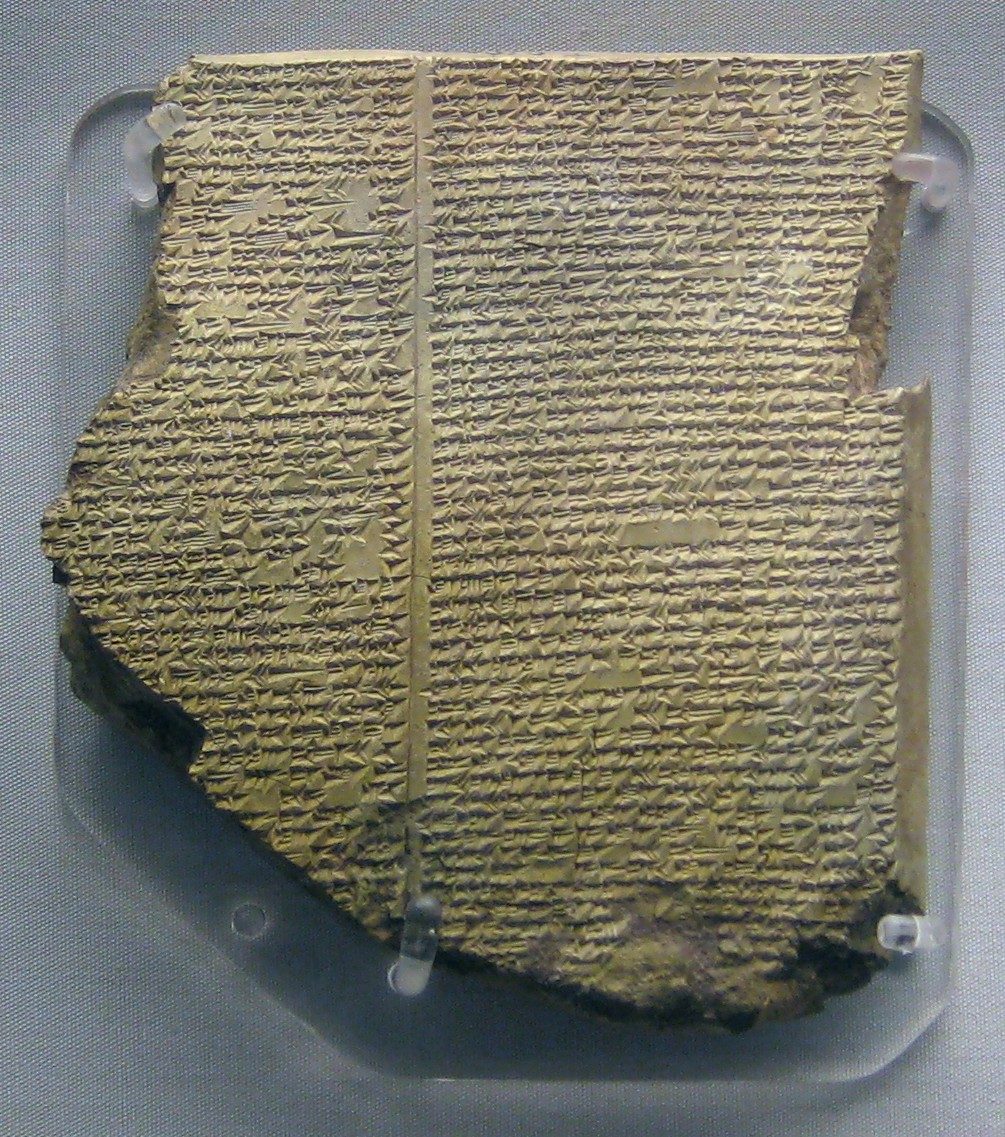
It helps to know what kind of world those stories came from. The people who first wrote these stories down lived in a world that already had flood stories, written on clay in Babylon. The Atrahasis epic, a Babylonian flood story, dates to about 1700 BC. The Epic of Gilgamesh has a flood on its eleventh clay tablet: the gods decide to send a great flood, the god Enki tells a man named Utnapishtim to build a boat, and a storm follows. After the flood, Utnapishtim sends out birds to see if the water is gone, and then offers a sacrifice. Prof. John Day, writing for TheTorah.com, says that “most biblical scholars agree that it is ultimately dependent on a Mesopotamian flood story.”
The Exodus has a setting too. Egypt has a real city that fits the story. Exodus 1:11 says the Israelites “built for Pharaoh treasure cities, Pithom and Raamses,” and Pharaoh Ramesses II (1279–1213 BC) built a delta capital called Pi-Ramesses. Scholars who defend the Exodus lean on this. It is real, and it is the strongest thing on their side.
What the Church’s own books print
Start with scripture itself. Then the Church’s classroom manual, then its magazine. On the flood, every one of them says the same thing.
Genesis 7, chapter heading in the Church’s edition of the King James Bible
…The Flood comes, and water covers the whole earth…
This is part of a longer heading. Chapter headings are written by the Church; they are not part of the Bible text. They say what the Church understands the chapter to say. The verse under it, Genesis 7:19, reads: “And the waters prevailed exceedingly upon the earth; and all the high hills, that were under the whole heaven, were covered.”
Genesis 7 on churchofjesuschrist.orgOld Testament Student Manual, Genesis–2 Samuel (1980), Genesis 4–11 (the Church’s manual for institute, its college-age religion classes), quoting President John Taylor (Journal of Discourses 26:74–75)
The section is headed “How Could the Flood Cover the Entire Earth, Including Mountains?” Under it, President Taylor is quoted: “It simply tells that ‘all the high hills that were under the whole heaven were covered. Fifteen cubits upwards did the waters prevail; and the mountains were covered.’ That is, the earth was immersed. It was a period of baptism.”
The heading presumes the answer: the question is how, not whether. The same manual quotes Brigham Young: the earth “has been baptized with water, will be baptized by fire and the Holy Ghost.” The apostle John A. Widtsoe, quoted in the Ensign article below (from Evidences and Reconciliations, 1960), wrote: “This has been repeatedly taught by the leaders of the Church. The deluge was an immersion of the earth in water.”
Read the manual chapterDonald W. Parry, assistant professor of Hebrew at Brigham Young University, Ensign (the Church’s magazine), January 1998
Verse 9 states, “The waters were on the face of the whole earth.” The phrase “on the face of the whole earth” refers to a worldwide flood. Taken altogether, these statements should convince every believer in the Bible that the great Deluge was a worldwide event, not a localized flood that filled only the Mesopotamian or some other region.
Parry is a BYU professor writing for members, not an apostle. But the Church ran it, and it matches what the manual above quotes from earlier leaders.
Read the Ensign articleEther 13:2, Book of Mormon (Moroni, on what the prophet Ether taught)
…and that after the waters had receded from off the face of this land it became a choice land above all other lands, a chosen land of the Lord;
In the usual Latter-day Saint reading, the waters are the Flood and “this land” is the Americas, so the Book of Mormon has the flood reaching America too. Readers who limit the Book of Mormon to a small region read it differently. The verse does not say how far the water went.
Ether 13 on churchofjesuschrist.orgExodus 12:37–38 (KJV), the Bible the Church publishes
And the children of Israel journeyed from Rameses to Succoth, about six hundred thousand on foot that were men, beside children. And a mixed multitude went up also with them; and flocks, and herds, even very much cattle.
Numbers 1:46 gives the count of men able to go to war as “six hundred thousand and three thousand and five hundred and fifty.” Add wives and children, and the “mixed multitude” of other peoples, and the figure Wikipedia’s summary of the scholarship gives is about 2 to 2.5 million people.
Exodus 12 on churchofjesuschrist.org1 Nephi 4:2, Book of Mormon (Nephi, to his brothers)
Therefore let us go up; let us be strong like unto Moses; for he truly spake unto the waters of the Red Sea and they divided hither and thither, and our fathers came through, out of captivity, on dry ground, and the armies of Pharaoh did follow and were drowned in the waters of the Red Sea.
Nephi names the Red Sea crossing and the drowning of Pharaoh’s army as events “our fathers” knew. And in Doctrine and Covenants 110:11 (the Kirtland Temple, April 3, 1836), Moses appears as a real person who “committed unto us the keys of the gathering of Israel from the four parts of the earth.” That verse says nothing about the size of the Exodus. It shows how seriously the Church takes Moses.
1 Nephi 4 on churchofjesuschrist.orgSo the question is fair and simple: if these two events happened the way the Church prints them, where is the evidence?
That is what archaeologists and geologists have been asking for a century and a half.
From the first flood stories to the Church’s print
What is known, in order.
Sources: Wikipedia (Genesis flood narrative; Pi-Ramesses; Merneptah Stele; Dırupınar site); churchofjesuschrist.org; Collins and Fasold 1996; see the sources list for each line
The exhibits
Here is what the geologists and archaeologists have actually said, with the sources linked. Some are outside scholars, and one is a believing group. Every quote is as printed. The science items test the worldwide flood the Church prints; they do not depend on any one view of the age of the earth.
FAIR, a volunteer group that defends the Church, “Global or local Flood”
Church-defending source
What it establishes: Even the Church’s most careful defenders concede the starting point: the flood that was taught is the worldwide one. They then offer a local reading, which is answered below.
Read the FAIR articleNational Center for Science Education (William Parkinson), “Questioning Flood Geology”
Science education group
What it establishes: NCSE says the rock record does not show the sudden, catastrophic deposition a worldwide flood would leave. The same layers are what the next item shows on Everest.
Read the NCSE articleInternational Union of Geological Sciences, “The Ordovician rocks of Mount Everest” (Ordovician means about 450 million years ago)
World geoheritage listing
What it establishes: Some people point to sea fossils on mountains as proof of a flood. The rock near the top of Everest is ancient sea floor, pushed up when India ran into Asia about 55 million years ago.
Read the IUGS pageWilliam G. Dever, on a 2013 lecture, as summarized by Wikipedia. Wikipedia calls him a centrist: neither a maximalist like Kitchen nor a minimalist
Mainstream archaeology
What it establishes: A scholar in the middle of the field, who criticizes the minimalists, still ends here.
Read the summaryWikipedia, “Historicity of the Exodus,” on the Sinai evidence
Summary of the field
What it establishes: Deuteronomy 2:14 puts ‘thirty and eight years’ between leaving Kadesh-barnea and crossing the brook Zered. The archaeologists who dug Kadesh-barnea found nobody there until the early 12th century BC.
Read the articleCheck it yourself: the first time anyone outside the Bible mentions Israel
Here is something you can check yourself. A stone monument in a Cairo museum has the earliest mention of Israel anywhere outside the Bible. A stele (STEE-lee) is a carved stone monument.
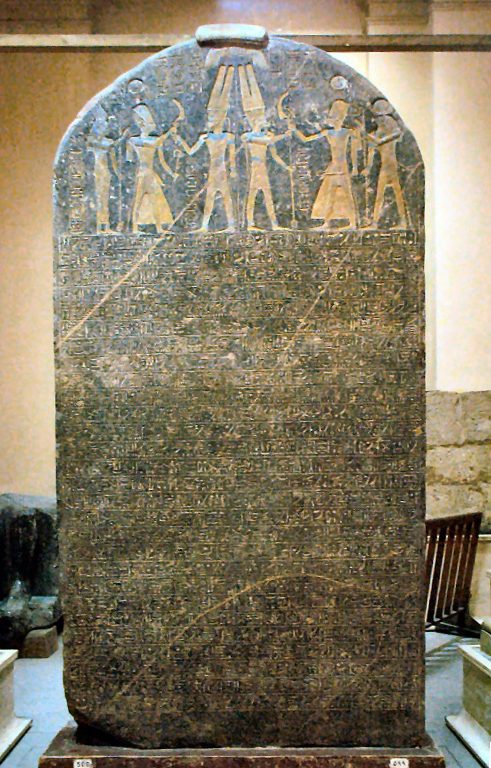
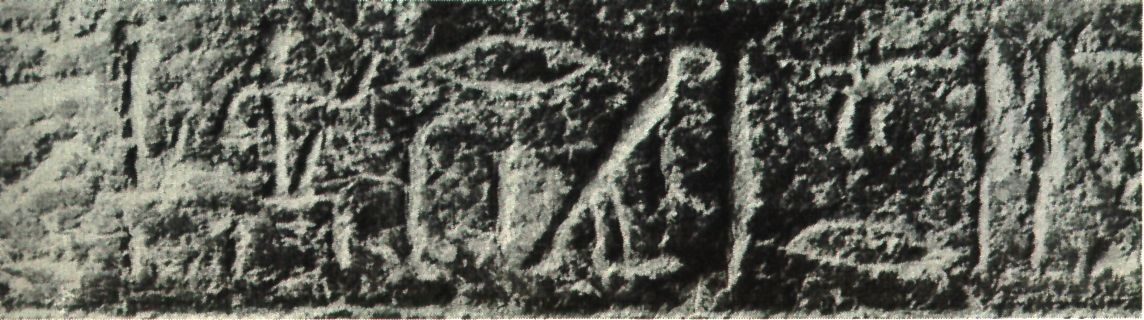
Look at what this one object does and does not say. It says a people called Israel existed by about 1208 BC, and it lists them with places in Canaan. The signs after a word are called determinatives. They tell the reader what kind of thing the word is. The cities on the stele (Ashkelon, Gezer, Yanoam) get the sign for “city.” Israel gets the sign for “people.” Wikipedia’s summary is that it “appears to place them in or around Canaan and gives no indication of any exodus.” It does not mention slavery, Moses, or a drowned army.
Believers have a fair answer, and it is covered in full below: a pharaoh carved his victories into stone and left his losses out, and the stele’s date fits a 13th-century Exodus. What it does show is that by the 13th century BC, Israel was already a named people in the region, not a nation about to cross a sea.
The archaeologists Israel Finkelstein and Neil Asher Silberman argue in their 2001 book The Bible Unearthed that, in Wikipedia’s summary, “instead of the Israelites conquering Canaan after the Exodus (as suggested by the book of Joshua), most of them had in fact always been there; the Israelites were simply Canaanites who developed into a distinct culture.” Dever, who criticizes the harshest skeptics, agrees the Exodus as written is largely myth, but holds that a small group from Egypt probably joined Israel.
What the text says, what we would find, what is found
Here are the main claims side by side.
| The text says | What we would expect to find | What is found |
|---|---|---|
| “all the high hills, that were under the whole heaven, were covered” (Genesis 7:19) | One worldwide layer of flood deposit, and no old rock layers sitting undisturbed under it. | NCSE: the fossil record “does not show evidence of the sudden, catastrophic deposition expected from a massive flood.” The summit of Everest is sea-floor limestone about 450 million years old (IUGS). |
| About 600,000 men, plus women and children (Exodus 12:37) | Egyptian kings did not record their losses, so silence in Egypt proves little. But a people this size crossing a desert for forty years should leave traces on the ground. | “There is no direct evidence for any of the people or events of Exodus in non-biblical ancient texts or in archaeological remains” (Wikipedia, The Exodus). |
| Forty years in the wilderness, with long stays at named places such as Kadesh | Campsites, pottery, and fire pits at the named stops. | “almost no sign of any occupation for the entire 2nd millennium BCE” (Wikipedia). Kadesh-Barnea was uninhabited before the early 12th century BC. |
| Israelites build the cities Pithom and Raamses (Exodus 1:11) | Pi-Ramesses should exist, and a foreign workforce should show up. | Pi-Ramesses exists and was built under Ramesses II. This is a real match. It does not show the people, the number, or the escape. |
| Israel enters Canaan as a conquering outsider (Joshua) | Israel should show up as a foreign culture arriving from outside. | Finkelstein and Silberman argue most Israelites had always been in Canaan. The Merneptah Stele puts Israel in or around Canaan by about 1208 BC, with no mention of an exodus. |
How big is the Exodus, really?
People, in millions, using the Bible’s count and the estimates Wikipedia gives. The bars are on one scale, so you can see them side by side.
Sources: Numbers 1:46 (KJV); Wikipedia, Historicity of the Exodus (“2 to 2.5 million”; Egypt “3 to 4.5 million”). The two Everyone rows are one range, not two studies. These are estimates.
What is true on the other side
The believing case deserves its strongest form, and it has real scholars behind it.
- The Exodus has a real Egyptian setting. Kenneth Kitchen, an Egyptologist whose On the Reliability of the Old Testament (2003) defends the Old Testament’s historical reliability, and James Hoffmeier, whose books are titled Israel in Egypt: the evidence for the authenticity of the Exodus tradition (1996) and Ancient Israel in Sinai: the evidence for the authenticity of the wilderness tradition (2005), defend the Exodus as history. Hoffmeier directed excavations at Tell el-Borg in North Sinai from 1998 to 2008. Raamses is Pi-Ramesses. That is real, and it is a good reason to say the story did not come from nowhere.
- Egyptian kings did not record defeats. A victory stele or temple wall celebrates wins. A runaway slave group, or an army lost in a sea, is exactly what a king would leave out. So “no Egyptian record” is what you would expect, and it proves little by itself.
- The 1208 BC stele fits a 13th-century Exodus. Defenders such as K. A. Kitchen argue for an Exodus under Ramesses II in the 13th century BC. Wikipedia notes that most scholars who accept a historical core also use that setting. On that dating, Israel could be settled in or near Canaan by about 1208 BC, so the stele is silent about the Exodus; it does not contradict it.
- The big number may be a misreading. Some scholars read the Hebrew word translated “thousand” as a clan or unit, not a count. J. W. Wenham put the fighting men closer to 20,000 on that reading. Critics reply that this assumes the text was misunderstood in every census list.
- Many members read the flood as local. FAIR lays out a reading in which the Hebrew word for “earth” can mean the land a writer knew, and Genesis is not a science text. Some also point to a flood in the Black Sea region as a possible historical seed. And many members will say they were never taught flood geology (a young earth with the fossils laid down by the Flood).
What Kitchen, Hoffmeier, and the 13th-century date leave standing. A story set in a real Egypt, a silence in Egyptian records that is easy to explain, and a stele that does not contradict the date. They do not remove the problem on the ground: about 600,000 men plus their families, forty years in Sinai, and, in Wikipedia’s summary of the field, almost no sign of anyone living there in that age. An Egyptian king may skip his losses. A desert does not skip two million campers.
What the small-number reading leaves standing. A group of thousands, perhaps hundreds. Avraham Faust, whom Wikipedia quotes for the 2023 academic view, says “most scholars agree that it was in the range of a few thousands, or even perhaps only hundreds.” It is not 600,000 men crossing a sea, and it is not the Moses who parted the Red Sea in 1 Nephi 4:2.
What the local-flood reading leaves standing. A big regional flood. It does not leave the flood the Church’s own scripture heading, institute manual and magazine describe. The Babylonian flood story is older, with the same boat, birds and sacrifice.
What you may have seen online: the Ark hill
The most famous claimed ark site is rock. No Church source quoted on this page claims it, and this page does not rest on it. It is here because you may have seen it on TV or online.
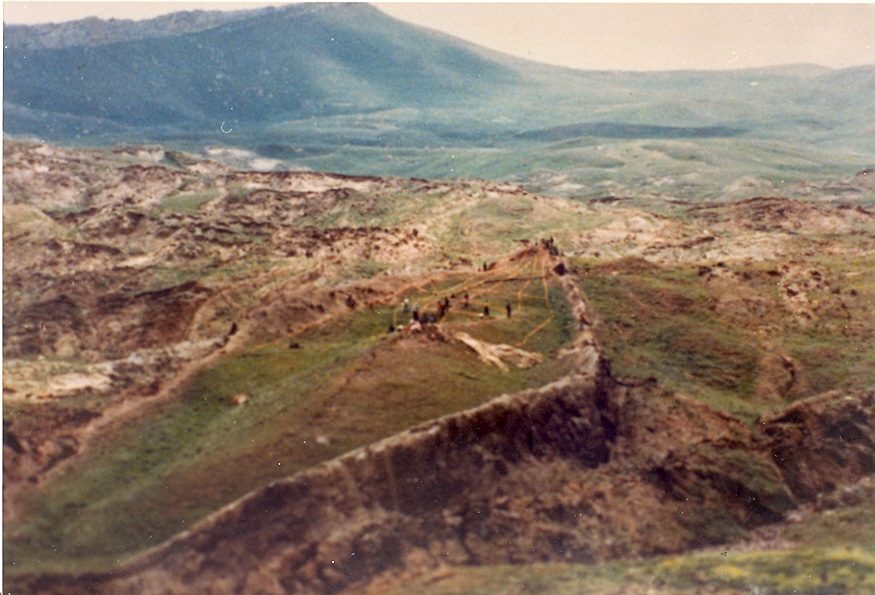
The history is short. A Turkish army captain, İlhan Durupınar, spotted the boat-shaped hill in an air photo for a NATO (military alliance) mapping mission in October 1959. A 1960 expedition found no archaeological remains and called it “a freak of nature and not man-made.” An amateur explorer, Ron Wyatt, revived it in 1977. David Fasold, a former merchant marine officer, joined in 1985 and became one of its leading champions. Then in 1996 Fasold and the geologist Lorence Collins published the paper below, after Fasold had visited with the geologist Ian Plimer and changed his mind. Some promoters say Fasold came back to believing before he died in 1998. Collins says he stayed a skeptic. What is not disputed is what he signed in 1996.
Lorence Collins and David Fasold, Journal of Geoscience Education 44 (1996), pp. 439–444, “Bogus ‘Noah’s Ark’ from Turkey Exposed as a Common Geologic Structure”
Evidence from microscopic studies and photo analyses demonstrates that the supposed Ark near Dogubayazit is a completely natural rock formation. … Fossiliferous limestone, interpreted as cross cutting the syncline, preclude the structure from being Noah’s Ark because these supposed ‘Flood’ deposits are younger than the ‘Ark.’
Fasold had been one of the hill’s own champions. The paper examines the main claims: the “iron brackets” are natural iron rust minerals, the “petrified wood” is twisted volcanic rock the explorers took for wood, and the “anchor stones” are local volcanic rock, not rock from Mesopotamia.
Read the paperThe common rebuttals
“Absence of evidence is not evidence of absence. Egypt only wrote down its wins, and wandering people don’t leave anything behind.”
Both points are fair. Egyptian kings did not record defeats, and a small group of herders leaves very little. But neither covers what Exodus 12:37 describes: 600,000 men, with families, around two million people, a large share of Egypt. A people that size does not leave nothing behind in a desert, and it does not camp for forty years at named places that archaeologists have dug and found almost empty. The believing answer to the missing evidence is to shrink the Exodus. That answer is allowed, but the thing it protects is no longer the Exodus the scriptures describe.
“The flood was local. Genesis just means the world as they knew it.”
Many sincere members hold this view, and it keeps the story. Here is what it asks you to set aside. A local flood does not fit the plain words of Genesis 7:19, “all the high hills, that were under the whole heaven, were covered,” or the Church’s own heading on that chapter, “water covers the whole earth.” It also departs from what the Church’s magazine and institute manual told members. Ether 13:2 and Moses 7:50 do not say how far the water went. And it still has the problem that a flood story with the boat and the birds sat in clay in Babylon before Genesis. A local flood is not the flood that was printed. It is a different story.
“The Church has never said I have to believe in a global flood.”
That is true as far as anything quoted here goes, and this page says so. But look at what was printed: a scripture heading that says water “covers the whole earth,” a manual that asks how the flood could cover mountains, and a magazine that says “not a localized flood.” Nobody had to order you to believe it. It was simply what you were handed.
“Maybe the Ark is on the real Mount Ararat, and that hill is just a mistake.”
Maybe so, and nobody can search all of a mountain. But a wooden boat is not a fair test anyway, and this page does not depend on one. What can be tested is the ground. Each ark claim has been announced and then examined, and the famous one has come up rock. That is a fair thing to weigh before the next announcement.
Two events printed as plain history. For a century, people have gone looking for the ground, and the ground has said no.
What this means
Here is what you just saw. The Church’s own scripture heading says water “covers the whole earth.” Its institute manual asks how the flood could cover the mountains. Its magazine says “not a localized flood.” The rocks on Everest and the layers of the earth show no worldwide flood, and the flood story itself sits on clay tablets that are older than Genesis. Exodus 12:37 says 600,000 men. No Egyptian record, no Sinai camp, and no sign of a nation suddenly arriving in Canaan has turned up, and the earliest mention of Israel appears to place it already there.
As the Church prints them, neither the worldwide flood nor the 600,000-man Exodus happened. For the Exodus, the most scholars leave is a small group of people. For the flood, the most they leave is a local flood.
This is not a verdict about whether you are a good person, or whether the stories mean anything. It is a verdict about whether they happened, and a church whose scripture builds on both of them has put real weight on them: Nephi points to the Red Sea in 1 Nephi 4:2, and in the usual reading Ether 13:2 has the flood waters recede from “this land.” If the two stories everyone learned as literal history are, in the end, retellings, then the question the evidence leaves is not how to rescue them. It is what else was taught the same way.